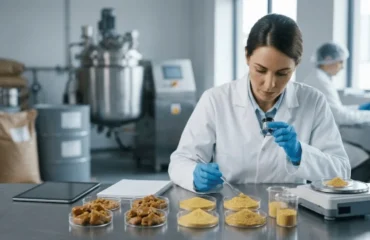

Emerging Hing Applications are expanding beyond traditional Indian cooking as food manufacturers, seasoning companies, FMCG brands, restaurants, and product developers look for distinctive ingredients that can create recognizable flavor profiles. Hing has traditionally been associated with dals, curries, vegetable preparations, pickles, and tempering, but modern food production creates opportunities to use the ingredient in a much wider range of commercial products.
The growth of convenience foods, packaged snacks, ready-to-cook products, plant-based foods, seasoning systems, and specialty food categories is creating new possibilities for Asafoetida as a commercial ingredient.
For manufacturers, the opportunity is not simply to add Hing to more products. The bigger opportunity is to understand where its distinctive aroma and flavor characteristics can solve a formulation need or create a differentiated sensory experience.
What Are Emerging Hing Applications?
Emerging Hing Applications refer to newer or expanding commercial uses of Asafoetida beyond its most established traditional applications.
These applications can develop when food companies identify new consumer preferences, new product formats, or new seasoning requirements.
Potential application areas include:
- Modern snack seasonings
- Ready-to-cook foods
- Plant-based products
- Instant meal systems
- Specialty spice blends
- Foodservice seasoning
- Private-label food products
- Application-specific seasoning systems
- New regional flavor concepts
The suitability of Hing depends on the formulation, dosage, processing method, and target sensory profile.
Why New Hing Applications Are Developing
Food manufacturers continuously develop new products in response to changing consumer preferences.
Consumers increasingly encounter traditional flavors in modern formats such as packaged snacks, instant meals, frozen foods, ready-to-cook products, and convenience foods.
This creates opportunities for ingredients that can provide recognizable flavor with very small inclusion levels.
Emerging Hing Applications are therefore connected to both ingredient functionality and changing food formats.
Hing in Modern Snack Seasonings
Snacks are one of the most promising areas for Emerging Hing Applications.
Snack manufacturers are constantly developing new seasoning profiles to differentiate products.
Hing can contribute a distinctive savory and aromatic character to seasoning systems used on:
- Potato-based snacks
- Extruded snacks
- Roasted snacks
- Namkeen
- Snack mixes
- Pulse-based snacks
- Specialty savory products
The key challenge is controlling dosage so that Hing complements the overall seasoning rather than overpowering it.
Hing in Ready-to-Cook Products
Ready-to-cook foods require convenient seasoning systems that deliver predictable flavor after preparation.
This creates opportunities for Emerging Hing Applications in products such as ready-to-cook dals, curry mixes, rice preparations, vegetable mixes, and other packaged meal solutions.
In these products, Hing can be incorporated into a dry seasoning system that consumers simply add during preparation.
Manufacturers should evaluate how the ingredient performs after rehydration, heating, and interaction with the other ingredients.
Hing in Instant Meal Products
Instant meals are designed around convenience, but convenience does not necessarily mean simple flavor.
Food manufacturers can use complex seasoning systems to recreate familiar culinary profiles in a convenient format.
Emerging Hing Applications can therefore include instant meal formulations where a small amount of Hing contributes an identifiable savory aroma.
The ingredient can potentially be used in seasoning sachets, premixes, instant gravies, rice products, and pulse-based meal systems.
Hing in Plant-Based Foods
The expansion of plant-based foods creates another interesting area for Emerging Hing Applications.
Plant-based products often require carefully designed seasoning systems to create satisfying savory profiles.
Hing can contribute a distinctive aromatic note in formulations where developers want greater flavor complexity.
Potential applications can include:
- Plant-based savory mixes
- Vegetable-based products
- Pulse-based foods
- Plant-based snacks
- Ready-to-cook vegetarian products
However, Hing should be evaluated according to the complete formulation because plant proteins, vegetables, grains, oils, and other ingredients can influence aroma perception.
Hing in Pulse-Based Food Products
Pulse-based foods have long been associated with Hing in Indian cuisine, but modern manufacturing creates new commercial formats.
Manufacturers can explore Emerging Hing Applications in packaged dal mixes, instant pulse products, roasted pulse snacks, and convenience meal systems.
Because Hing is traditionally associated with pulse-based dishes, it can also help maintain a recognizable flavor connection while the product format becomes more modern.
Hing in Specialty Seasoning Systems
Seasoning manufacturers are another important source of new Hing applications.
Instead of selling Hing as a standalone ingredient, manufacturers can incorporate it into carefully designed seasoning systems.
These systems may be created for:
- Snack manufacturers
- Foodservice businesses
- Ready-to-cook brands
- FMCG companies
- Private-label products
- Restaurant seasoning systems
This allows Hing to become one component of a broader flavor architecture.
Hing in Modern Indian Flavor Concepts
Indian food is increasingly represented in packaged food products, restaurant concepts, frozen foods, snacks, and international food markets.
This creates opportunities to translate familiar Indian flavor profiles into modern formats.
Emerging Hing Applications can support these products by contributing a characteristic aromatic note associated with many Indian seasoning profiles.
For manufacturers, this creates an opportunity to combine traditional sensory cues with contemporary product formats.
Hing in Foodservice Seasoning
Restaurants and institutional kitchens require consistent ingredients that can help standardize food preparation.
Commercial Hing blends can potentially be incorporated into foodservice seasoning systems to simplify preparation and maintain consistent flavor.
For large foodservice operations, consistency can be more important than simply purchasing a standalone spice.
This creates another potential area for Emerging Hing Applications.
Hing in Private-Label Food Products
Private-label food manufacturing allows retailers, distributors, and brands to develop products under their own labels.
This can create opportunities for specialized Hing-based seasoning products and finished foods containing Hing.
Private-label manufacturers may require:
- Specific product formulations
- Custom pack sizes
- Bulk ingredient supply
- Retail-ready packaging
- Consistent batch performance
- Application support
This model can accelerate the development of new commercial Hing applications.
Hing in International Food Products
As Indian cuisine becomes more familiar in international markets, food manufacturers outside India can experiment with Indian-inspired flavor profiles.
This creates opportunities for Emerging Hing Applications in international seasoning systems.
Potential products can include Indian-inspired snacks, sauces, spice mixes, ready meals, and plant-based foods.
International product developers may use Hing carefully because its aroma can be unfamiliar to consumers who have not previously encountered the ingredient.
Importance of Controlled Hing Dosage
One of the biggest challenges in developing new applications is determining the correct dosage.
Hing has a highly distinctive aroma, which means very small changes in inclusion level can influence the final product.
For Emerging Hing Applications, manufacturers should therefore conduct controlled dosage trials.
Product developers can compare several inclusion levels and evaluate aroma, flavor balance, aftertaste, and overall consumer acceptance.
Choosing the Right Hing Format
Different applications may require different Hing formats.
Manufacturers may consider:
- Compound Hing
- Hing Powder
- Hing Granules
- Application-specific formulations
Fine powders may integrate easily into some dry blends, while granules may offer different handling characteristics.
Emerging Hing Applications should therefore be developed with the physical form of the ingredient in mind.
Particle Size and New Product Development
Particle size can influence how evenly Hing distributes throughout a formulation.
In a dry seasoning system, large differences between ingredient particle sizes can affect blend uniformity.
This can become especially important when developing new products at commercial scale.
R&D teams should evaluate the compatibility of Hing particle characteristics with the rest of the formulation.
Hing and Flavor Layering
Modern product development increasingly focuses on layered flavor rather than relying on a single dominant ingredient.
Hing can contribute one layer within a broader flavor profile.
For example, a seasoning may combine:
- Hing for distinctive aroma
- Cumin for earthy warmth
- Coriander for aromatic freshness
- Chili for heat
- Black pepper for pungency
- Salt for overall flavor enhancement
The objective is to create balance.
This makes flavor architecture an important consideration when exploring Emerging Hing Applications.
Application Testing Is Essential
A new Hing application should not be approved based only on theoretical compatibility.
Manufacturers should conduct practical application trials using the intended production process.
Testing can evaluate:
- Aroma
- Flavor
- Dosage
- Blend uniformity
- Processing performance
- Packaging performance
- Consumer acceptance
Application testing provides evidence about whether the ingredient works effectively in the actual product.
Hing in Convenience Food Development
Convenience foods are designed to reduce preparation time while maintaining desirable flavor.
Seasoning systems are therefore critical to their performance.
Emerging Hing Applications can include convenience products where manufacturers want to provide traditional Indian flavor characteristics in a simplified preparation format.
Examples include instant mixes, ready-to-cook meals, seasoning sachets, and packaged pulse products.
Hing in Snack Innovation
Snack innovation is not limited to traditional flavors.
Manufacturers can combine familiar ingredients with new flavor concepts to create differentiated products.
Hing can be incorporated into innovative savory profiles when the dosage is carefully controlled.
This can help brands create distinctive flavor signatures without requiring Hing to dominate the final product.
Hing for FMCG Product Development
FMCG brands require ingredients that can perform consistently across large production volumes.
This means Emerging Hing Applications must be evaluated not only for sensory performance but also for supply reliability, specification control, packaging, documentation, and scalability.
A successful prototype must be capable of being converted into a repeatable commercial manufacturing process.
Scaling New Hing Applications
A formulation that performs well in a laboratory sample may behave differently when production volume increases.
Large-scale production introduces changes in:
- Mixing efficiency
- Batch size
- Processing time
- Ingredient handling
- Packaging
- Storage
For this reason, emerging applications should move through controlled development stages before full commercial launch.
Supply Considerations for New Hing Applications
New product development also creates new procurement requirements.
A manufacturer may initially need only a small quantity of Hing for product trials, but successful commercialization can create recurring bulk demand.
Suppliers therefore need to demonstrate the ability to provide consistent product specifications as volumes increase.
This is a critical consideration when developing Emerging Hing Applications.
Importance of Supplier Consistency
A new product formulation is often built around a defined ingredient specification.
If the Hing supplier changes the formulation or the product characteristics vary significantly, the finished product may also change.
Manufacturers should therefore qualify suppliers before commercial production and validate any major supplier change.
Emerging Hing Applications and Export Opportunities
New applications can also create opportunities for Hing suppliers serving international markets.
As food companies experiment with Indian-inspired flavor profiles, the demand for suitable Hing ingredients may expand beyond traditional Indian food categories.
Export-oriented manufacturers can potentially supply ingredients for seasoning companies, food manufacturers, distributors, and private-label brands.
However, international supply requires appropriate attention to product specifications, documentation, packaging, logistics, and destination-market requirements.
Challenges in Developing New Hing Applications
Not every potential application will become commercially successful.
Some challenges include:
- Strong aroma requiring careful dosing
- Consumer unfamiliarity
- Formulation compatibility
- Blend uniformity
- Supplier consistency
- Packaging requirements
- Cost considerations
- Regulatory requirements
These challenges make structured product development important.
Consumer Acceptance Matters
A technically successful formulation still needs consumer acceptance.
Hing has a distinctive sensory identity, and consumers unfamiliar with the ingredient may respond differently to products containing it.
Manufacturers developing Emerging Hing Applications should therefore consider sensory testing with the intended target audience.
The objective may be to create a recognizable but balanced flavor rather than an aggressively dominant Hing profile.
Role of Food R&D Teams
Food R&D teams play an important role in turning an ingredient concept into a commercially viable product.
For new Hing applications, R&D teams can evaluate:
- Ingredient selection
- Dosage
- Flavor interactions
- Processing conditions
- Stability
- Consumer response
- Production scalability
This structured approach can identify promising applications before significant commercial investment.
Future Potential of Hing as a Food Ingredient
The future of Hing is not limited to traditional culinary use.
Its distinctive aroma, low required inclusion level, strong association with Indian flavor profiles, and compatibility with seasoning systems create opportunities for continued product innovation.
As food manufacturers develop more regional, plant-based, convenient, and globally inspired products, the range of potential Emerging Hing Applications may continue to expand.
What Manufacturers Should Consider Before Developing a New Hing Product
Before commercializing a new application, manufacturers should evaluate:
- Target consumer
- Desired flavor profile
- Hing format
- Dosage range
- Ingredient compatibility
- Processing conditions
- Packaging
- Storage stability
- Supplier capability
- Production scalability
- Commercial cost
This provides a practical framework for moving from an ingredient idea to a finished product.
Why Emerging Hing Applications Matter for Ingredient Manufacturers
For Hing manufacturers, emerging applications can expand the addressable market beyond traditional retail consumption.
Instead of supplying only finished Hing products for household use, manufacturers can support food companies developing specialized seasoning systems and commercial formulations.
This creates opportunities for customized product formats, bulk supply, technical collaboration, and long-term B2B relationships.
RB Industries and Emerging Hing Applications
RB Industries manufactures and supplies Asafoetida, Compound Hing, Hing Powder, and Hing Granules for different commercial requirements.
Businesses exploring Emerging Hing Applications can evaluate the appropriate Hing format according to their formulation, processing method, target sensory profile, and production volume.
For food manufacturers, seasoning companies, restaurants, distributors, exporters, and FMCG brands, product selection should be based on actual application requirements rather than simply choosing the strongest available Hing.
Application trials, product specifications, packaging requirements, and supply capacity should all be considered before commercial approval.
Conclusion
Emerging Hing Applications demonstrate how Asafoetida can move beyond traditional kitchen use and become part of modern commercial food development. Snacks, ready-to-cook foods, instant meals, plant-based products, seasoning systems, foodservice products, private-label foods, and Indian-inspired international products all offer potential opportunities.
However, successful application development requires more than adding Hing to a new recipe. Manufacturers must consider dosage, particle size, flavor balance, processing, packaging, consumer acceptance, supplier consistency, and production scalability.
The strongest opportunities will come from using Hing strategically as part of a complete flavor system rather than treating it as a standalone ingredient.
RB Industries supplies Asafoetida, Compound Hing, Hing Powder, and Hing Granules for commercial food applications and can support businesses evaluating Hing according to product format, formulation requirements, and bulk supply needs.
Frequently Asked Questions
What are emerging Hing applications?
Emerging Hing Applications include newer or expanding commercial uses of Asafoetida in products such as modern snack seasonings, ready-to-cook foods, instant meals, plant-based products, specialty seasoning systems, foodservice products, and private-label foods.
Can Hing be used in modern packaged foods?
Yes. Hing can be incorporated into suitable seasoning systems for packaged foods when its dosage, format, processing conditions, and sensory performance are properly evaluated. Commercial application trials are important before full-scale production.
Can Hing be used in plant-based food products?
Hing can be considered as part of seasoning systems for certain plant-based and pulse-based products. Its distinctive aroma can contribute complexity to savory formulations, although the correct dosage depends on the complete product.
Which Hing format is suitable for new food applications?
Compound Hing, Hing Powder, and Hing Granules can serve different commercial purposes. The best format depends on the formulation, mixing equipment, dosage requirements, particle characteristics, and final application.
Why is dosage important when developing new Hing applications?
Hing has a strong and distinctive aroma, so small changes in inclusion level can noticeably affect a product’s sensory profile. Manufacturers should test multiple dosage levels to find the right balance for the intended food application.