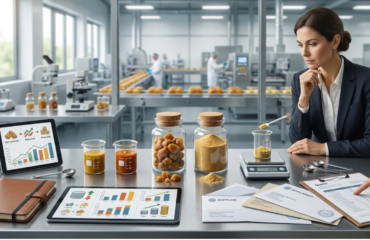
Developing a new food product involves much more than creating a successful recipe. R&D teams must identify suitable ingredients, test them in the formulation, evaluate consistency, calculate commercial costs and finally approve a supply source that can support production.
For products that use Asafoetida, commonly known as Hing, this process deserves particular attention because Hing can contribute noticeable aroma and flavour even when used in relatively small quantities.
Hing Procurement for New Food Product Development should therefore begin early in the product-development process rather than being treated as a final purchasing activity.
A structured process can help R&D, procurement, QA and production teams move from an initial Hing sample to an approved commercial ingredient with fewer surprises during scale-up.
Why Hing Procurement Matters During New Product Development
A Hing sample may perform well in a laboratory or kitchen trial, but that alone does not guarantee that it is suitable for commercial manufacturing.
The ingredient must also fit the formulation, processing method, dosage requirement, packaging system, quality expectations and commercial supply model.
This is why Hing Procurement for New Food Product Development should consider both technical performance and long-term supply requirements.
A product-development team may need to answer questions such as:
- Which Hing format is suitable?
- How strong should the aroma be?
- What dosage works in the formulation?
- Will the ingredient perform consistently?
- What specification should be approved?
- What will the ingredient cost at production scale?
- Can the supplier support the expected volume?
- Can the approved product be supplied repeatedly?
Start With the Product Application
The first step is to define how Hing will be used in the new product.
Hing requirements can differ significantly between a spice blend, snack seasoning, ready-to-eat food, frozen product, instant mix, pickle, curry base or other food application.
Before requesting samples, the R&D team should document the intended application.
This may include:
- Product category
- Expected batch size
- Target flavour profile
- Processing method
- Expected Hing dosage
- Ingredient format
- Packaging conditions
- Target production volume
Defining these requirements makes Hing Procurement for New Food Product Development more precise because the supplier can recommend a product that matches the actual application instead of supplying a generic sample.
Choose the Appropriate Hing Format
Hing is available in different commercial forms, and the correct format depends on the formulation and manufacturing process.
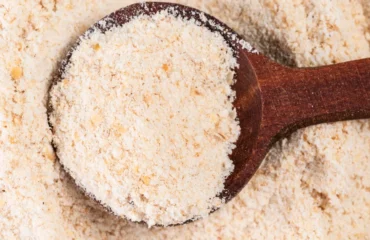
Hing Powder
Powder can be useful where the ingredient needs to distribute through a dry seasoning or blended formulation.
Hing Granules
Granules may be appropriate for applications where controlled particle characteristics or specific handling properties are required.
Compound Hing
Compound Hing can be suitable for commercial formulations where the manufacturer needs a standardized product designed for practical food applications.
The objective is not to select a format simply because it is commonly used. The format should be evaluated against the actual production process.
Request Samples Before Commercial Approval
Sample evaluation is one of the most important stages of Hing Procurement for New Food Product Development.
R&D teams should ideally test more than one suitable option when the application is commercially important.
A controlled sample comparison can examine:
- Aroma intensity
- Flavour contribution
- Dosage requirement
- Physical appearance
- Particle characteristics
- Ease of incorporation
- Performance during processing
- Final product sensory profile
The purpose is to identify the product that performs best within the formulation, not simply the sample that smells strongest when opened.
Test Hing in the Actual Formulation
Testing Hing by itself provides only limited information.
The ingredient should be evaluated in the actual food matrix because other ingredients, processing conditions and cooking temperatures can change the final sensory result.
For example, a Hing sample that appears highly aromatic in isolation may produce a balanced result when used at the required dosage in a spice blend or finished food.
Another sample may appear milder but perform better after processing.
Therefore, Hing Procurement for New Food Product Development should be connected directly with formulation trials.
Establish the Approved Dosage
Once a suitable sample has been identified, the R&D team should determine the working dosage range.
The objective is to identify the quantity that delivers the desired sensory result without overpowering the rest of the formulation.
Testing can include:
- Low dosage
- Target dosage
- Higher dosage
- Comparison against the existing reference, if available
The final approved dosage should be documented against the specific Hing product that was tested.
This is important because a future supplier or product change may not deliver identical performance at the same dosage.
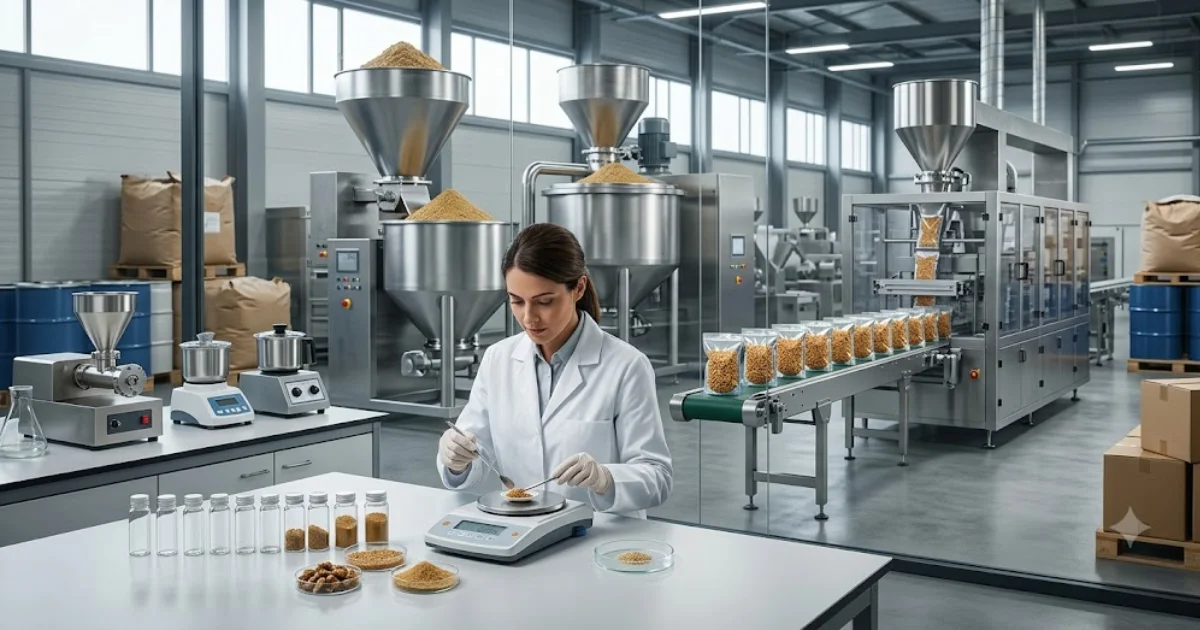
Evaluate Hing at Pilot Scale
A successful laboratory trial does not always guarantee identical performance during larger production.
Moving from a small formulation to a pilot or commercial batch can change mixing, heat exposure, ingredient distribution and processing time.
For this reason, the selected Hing should be tested at an appropriate pilot scale before final commercial approval.
During the pilot stage, the development team can confirm:
- Ingredient distribution
- Processing behaviour
- Aroma development
- Final flavour
- Batch consistency
- Ease of handling
This step can identify formulation issues before the product reaches full-scale production.
Build a Hing Specification for the New Product
After the R&D team identifies the preferred Hing, the requirements should be documented.
A commercial specification may include:
- Product name
- Hing format
- Application
- Relevant quality parameters
- Appearance requirements
- Aroma expectations
- Packaging requirements
- Storage requirements
- Documentation requirements
The specification should reflect the manufacturer’s actual quality system and product requirements.
Clear specifications help procurement purchase the same approved ingredient instead of relying on a product name alone.
Involve Procurement Before the Final Formula Is Locked
R&D teams often focus on technical performance while procurement teams focus on commercial feasibility. Both perspectives are necessary.
A Hing product may perform very well technically but become difficult to source at the required production volume.
Procurement should therefore review commercial factors before the formulation is fully locked.
Important considerations include:
- Expected monthly requirement
- Minimum order quantity
- Pack size
- Lead time
- Supply capacity
- Price at expected volume
- Packaging suitability
- Repeat-order availability
Early collaboration makes Hing Procurement for New Food Product Development more practical because the selected ingredient can be evaluated for both technical and commercial suitability.
Calculate Cost-in-Use, Not Just Price Per Kilogram
Ingredient price is important, but it should not be the only commercial measure.
Suppose one Hing product costs less per kilogram but requires a higher dosage to achieve the desired flavour. Another product may have a higher purchase price but perform at a lower dosage.
The development team should therefore consider the cost of Hing used per finished batch.
A simple approach is:
Hing cost per batch = Hing quantity used per batch × effective cost per unit
This gives procurement and R&D a more useful basis for comparing commercial options.
Evaluate the Supplier, Not Only the Sample
A good sample is only one part of supplier approval.
The supplier also needs to demonstrate that the approved product can be supported after the new product enters commercial production.
During Hing Procurement for New Food Product Development, buyers should evaluate:
- Production or supply capacity
- Repeat-order consistency
- Lead-time expectations
- Commercial packaging
- Quality documentation
- Communication
- Ability to support increasing volumes
- Response to quality or supply queries
This is particularly important for FMCG products that may scale rapidly after launch.
Compare Suppliers Using the Same Test Conditions
When multiple suppliers are being considered, the comparison should be controlled.
Using different dosage levels or different processing conditions for each sample can produce misleading conclusions.
A better approach is to create a simple comparison sheet.
| Evaluation Area | Supplier A | Supplier B | Supplier C |
|---|---|---|---|
| Aroma | Score | Score | Score |
| Flavour performance | Score | Score | Score |
| Dosage requirement | Record | Record | Record |
| Processing performance | Score | Score | Score |
| Commercial cost | Record | Record | Record |
| Supply capability | Score | Score | Score |
A structured comparison helps reduce subjective decision-making and creates a useful record for procurement and QA approval.
Plan the Transition From Sample to Production
The transition from development sample to commercial supply should be controlled.
Before the first production order, the manufacturer should confirm:
- Approved supplier
- Approved Hing product
- Approved specification
- Target dosage
- Required pack size
- Expected order quantity
- Delivery requirements
- Quality documentation
This ensures that the material ordered for production matches the material that was tested during development.
Conduct a First Commercial Production Check
The first full-scale production run provides another opportunity to verify the ingredient.
QA and production teams can compare the commercial batch against the approved development result.
Depending on the manufacturer’s internal procedures, checks may include:
- Incoming material inspection
- Batch identification
- Appearance
- Aroma
- Processing behaviour
- Finished-product sensory evaluation
If the result is satisfactory, the supplier and product can move into the normal repeat-order process.
What Happens If the Supplier Changes?
A supplier change should not automatically be treated as a simple purchasing substitution.
If the new Hing differs in strength, formulation, particle characteristics or flavour performance, the finished product may also change.
The manufacturer should therefore evaluate the proposed replacement against the approved product before introducing it into production.
This protects the consistency of the new product after launch.
Create a Repeat Procurement Process
Once the product has been launched, procurement should convert the development decision into a repeatable purchasing process.
The process can define:
- Approved supplier
- Approved product
- Specification
- Standard order quantity
- Expected lead time
- Reorder point
- Packaging requirements
- Quality checks
This makes the final stage of Hing Procurement for New Food Product Development more manageable when the product moves into regular manufacturing.
Common Hing Procurement Mistakes During New Product Development
Choosing the Cheapest Sample
The lowest price does not necessarily provide the best formulation performance or cost-in-use.
Testing Only Outside the Final Food Matrix
Hing should be evaluated in the actual application whenever practical.
Approving a Sample Without Checking Supply Capacity
A supplier may provide an excellent development sample but may not be suitable for the expected commercial volume.
Ignoring Dosage During Costing
Purchase price should be considered together with actual dosage and cost per batch.
Changing Suppliers Without Revalidation
A replacement ingredient should be evaluated before it becomes the new production standard.
Leaving Procurement Until the End
Procurement involvement should begin while the product is still being developed so commercial feasibility can be assessed early.
Hing Procurement Checklist for New Food Products
- Define the product application.
- Select the appropriate Hing format.
- Request suitable commercial samples.
- Test samples in the actual formulation.
- Determine the working dosage.
- Conduct pilot-scale testing.
- Document the approved specification.
- Calculate cost-in-use.
- Evaluate supplier capacity.
- Confirm MOQ and packaging.
- Confirm lead-time expectations.
- Complete QA and procurement approval.
- Conduct the first commercial production check.
- Establish repeat-order controls.
Why a Structured Procurement Process Helps New Food Products
New product development involves uncertainty. The formulation may change, production volumes may increase and commercial requirements may evolve after launch.
A structured Hing procurement process gives the development team a documented path from experimentation to production.
It also creates better communication between R&D, procurement, QA and manufacturing.
Instead of asking only whether a Hing sample tastes good, the business can ask a more useful question: can this ingredient perform consistently, meet the product requirements and be supplied reliably at commercial scale?
Conclusion
Hing Procurement for New Food Product Development should begin with the application and continue through sampling, formulation testing, pilot production, specification approval, commercial costing and supplier qualification.
The most important principle is to avoid treating procurement as the final step of product development. The ingredient selected during R&D must also be commercially practical for repeat manufacturing.
By involving procurement early, testing Hing in the actual formulation, documenting the approved product and validating the supplier before launch, food manufacturers can reduce unnecessary reformulation and supply problems later.
This approach creates a stronger connection between product innovation and reliable commercial production.
Frequently Asked Questions
What is Hing Procurement for New Food Product Development?
Hing Procurement for New Food Product Development is the process of sourcing, testing, evaluating and approving Hing for a new food formulation before moving the product into commercial production.
When should food manufacturers start sourcing Hing for a new product?
Hing sourcing should begin during the development stage so R&D can test suitable products and procurement can evaluate commercial availability before the formulation is finalized.
Should Hing samples be tested in the final formulation?
Yes. Testing Hing in the intended food matrix provides more useful information about aroma, flavour, dosage and processing performance than evaluating the ingredient alone.
What should R&D teams check when evaluating Hing?
R&D teams can evaluate aroma, flavour contribution, dosage, physical form, processing behaviour, final-product performance and consistency.
Why should procurement be involved before product launch?
Procurement can assess supplier capacity, MOQ, pricing, packaging, lead time and repeat-order capability before the product is committed to commercial production.
Should a new Hing supplier be re-tested after product approval?
Yes. A new supplier should be evaluated against the approved Hing product before being introduced into production because differences in product performance can affect the finished food.
Need Hing for New Product Development?
RB Industries supplies Asafoetida, Compound Hing, Hing Powder and Hing Granules for food manufacturers, FMCG brands, spice companies and commercial product-development teams.
If your R&D team is developing a new food product and needs Hing samples for formulation testing, share the application, expected dosage, product format and anticipated commercial volume.
Contact RB Industries for Hing samples, product specifications and commercial supply discussions.