

Sensory Testing Methods for Hing: R&D & Quality Guide
Saturday, 01 August 2026
Sensory Testing Methods for Hing help food manufacturers determine whether an Asafoetida or Compound Hing product delivers the required aroma, flavor, pungency, and cooking performance. For commercial food production, simply opening a packet and smelling the ingredient is not enough. A reliable evaluation requires consistent sample preparation, controlled testing conditions, defined sensory attributes, and documented
- Published in Hing Products

Sensory Properties of Hing: Aroma, Flavor & Pungency Guide
Monday, 27 July 2026
Sensory Properties of Hing explain why Asafoetida can have such a noticeable effect on food even when used in very small quantities. Its characteristic aroma, pungency, flavor contribution, cooked character, and overall sensory intensity make it different from many other culinary spices. Hing does not have one identical sensory profile in every situation. The way
- Published in Hing Products

Organoleptic Evaluation of Asafoetida: Sensory Quality Guide
Saturday, 25 July 2026
Organoleptic Evaluation of Asafoetida is the systematic assessment of Hing using human senses such as sight, smell, taste, and touch. Because Asafoetida is a highly aromatic ingredient used in very small quantities, sensory characteristics can provide valuable information about product identity, consistency, freshness, and application performance. However, organoleptic evaluation should not be confused with a
- Published in Hing Products
Aroma Stability in Compound Hing: Storage & Quality Guide
Friday, 24 July 2026
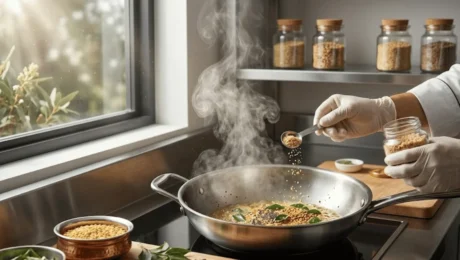
Aroma Stability in Compound Hing is an important consideration for food manufacturers, seasoning companies, restaurants, distributors, retailers, and exporters. Compound Hing is valued for its characteristic Asafoetida aroma, but maintaining that aroma consistently requires attention to formulation, packaging, storage, handling, processing, and batch quality. A Compound Hing product may have the right sensory profile when
- Published in Hing Products
Flavor Release Mechanism of Hing: How Asafoetida Works
Thursday, 23 July 2026
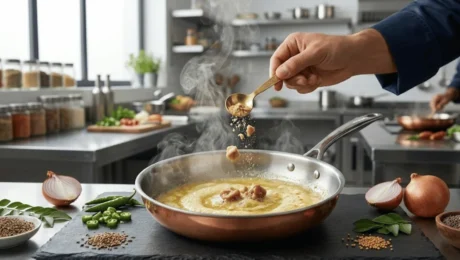
The Flavor Release Mechanism of Hing explains why a very small amount of Asafoetida can create a noticeable aroma and savory character in food. Hing behaves differently from many ordinary spices because its distinctive sensory impact depends heavily on volatile aromatic compounds and how they are released during cooking, mixing, and food processing. The same
- Published in Hing Products

Common Myths About Asafoetida: Hing Facts vs Myths
Wednesday, 22 July 2026
Common Myths About Asafoetida can make it difficult for consumers, retailers, restaurants, food manufacturers, and distributors to evaluate Hing correctly. Because Asafoetida has an unusually strong aroma and is available in several forms, people often rely on simple rules about colour, smell, price, purity, or appearance. Some of these rules may sound convincing but do
- Published in Hing Products

Volatile Oils in Hing: Composition, Aroma and Food Applications
Thursday, 09 July 2026
Volatile Oils in Hing are an important part of the chemistry that gives Asafoetida its distinctive aroma. Asafoetida is not a single chemical compound. It is a natural oleo-gum-resin containing different fractions, including resin, gum, and a volatile oil fraction. Scientific reviews commonly describe the volatile oil as a smaller but highly important fraction containing
- Published in Hing Products

Changing Hing Consumption Patterns: From Kitchens to Food Products
Monday, 22 June 2026
Changing Hing Consumption Patterns: From Traditional Kitchens to Modern Food Products Changing Hing Consumption Patterns are reshaping how Asafoetida is purchased, distributed, formulated, and consumed across the modern food industry. Hing has traditionally been associated with household cooking, particularly in Indian kitchens where it is used in dals, vegetables, curries, snacks, and regional recipes. However,
- Published in Hing Products

Regional Variations of Hing Usage Across Indian Cuisines
Saturday, 23 May 2026
Regional variations of Hing usage highlight the incredible diversity of Indian cuisine and demonstrate how a single ingredient can be adapted in countless ways. Asafoetida, commonly known as Hing, has been an important part of Indian cooking for centuries. Although used in small quantities, its influence on flavor, aroma, and traditional cooking methods is significant.
- Published in Hing Products

Why Hing Enhances Umami Taste: The Science Behind Its Flavor Power
Tuesday, 12 May 2026
Why Hing enhances umami taste is one of the most interesting questions in food science. While Asafoetida is widely known for its strong aroma and traditional culinary uses, many food experts and manufacturers value it for another reason: its ability to make foods taste richer, deeper, and more satisfying. Across households, restaurants, spice manufacturing facilities,
- Published in Hing Products