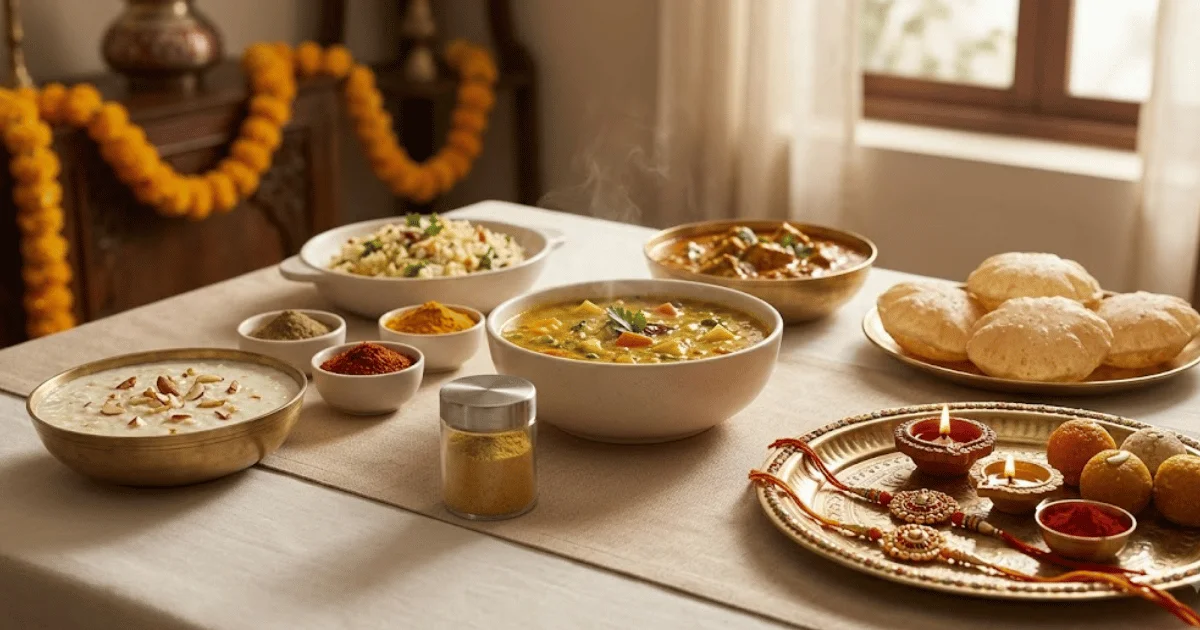
Hing for Raksha Bandhan can add a distinctive savory aroma to the family meals, dal preparations, vegetables, snacks, and other festive foods prepared during the celebration. Raksha Bandhan is traditionally associated with family gatherings, sweets, gifts, and shared meals, but savory dishes also play an important role when families come together.
Because Hing is highly aromatic, only a small quantity is usually required. The key is not to use more Hing simply because a meal is being prepared for a larger group. Instead, the quantity should be adjusted according to the recipe, number of servings, other spices, and the desired flavor profile.
For families preparing a large festive meal, restaurants handling Raksha Bandhan orders, or food businesses preparing seasonal products, understanding how Hing behaves during cooking can help create a more balanced and consistent result.
Why Use Hing for Raksha Bandhan Cooking?
Raksha Bandhan meals can include several savory dishes alongside traditional sweets and desserts. Dal, vegetables, curries, snacks, and fried preparations can all benefit from the characteristic aroma of Hing when it is used appropriately.
Hing can contribute a warm, savory character that works particularly well with many Indian spice combinations.
For festive cooking, the objective should be balance rather than maximum aroma intensity.
Hing Works Best in Savory Festive Dishes
Hing is generally associated with savory preparations rather than sweet dishes.
It can be particularly useful in recipes where spices are tempered in oil or ghee before being incorporated into the main preparation.
The final result depends on the type of Hing, quantity used, cooking temperature, and the other ingredients in the recipe.
Which Raksha Bandhan Foods Can Use Hing?
Depending on the family menu, Hing can be used in:
- Dal
- Legume preparations
- Vegetable curries
- Potato-based dishes
- Dry vegetable preparations
- Namkeen
- Savoury snacks
- Chutneys
- Pickles
- Seasoning blends
The quantity and method of addition should be adjusted according to each recipe.
Hing in Dal for Raksha Bandhan Meals
Dal is one of the simplest ways to use Hing during a family meal.
A small quantity can be added during tempering along with ingredients such as cumin and other spices.
The Hing should complement the dal rather than dominate its flavor.
Why Hing Works Well With Dal
Dal has a relatively mild base compared with many strongly spiced dishes.
This allows aromatic ingredients such as Hing to contribute a noticeable character without requiring a large quantity.
The result can be a more pronounced savory aroma when the tempering is prepared correctly.
Hing in Potato Dishes
Potato-based preparations are common in Indian home cooking and can be included in festive meals.
Hing can work well with potatoes when combined with cumin, coriander, chilli, turmeric, or other suitable spices.
A small quantity is generally enough because the aroma can become dominant if overused.
Hing in Dry Vegetable Preparations
Dry vegetables can also use Hing as part of the seasoning.
Because these preparations often have relatively low moisture, the timing of spice addition can influence the final aroma.
Hing can be introduced during the tempering or at another appropriate stage according to the recipe.
Hing in Festive Namkeen and Savoury Snacks
Raksha Bandhan gatherings often involve snacks served alongside tea and other refreshments.
Hing can be used in savoury snacks and seasoning blends to provide a recognizable aromatic note.
For commercial snack production, the formulation should be tested carefully because the correct dosage depends on the complete seasoning system.
Hing in Chutneys and Accompaniments
Some chutneys and savory accompaniments can also use Hing.
Here, the ingredient should be used carefully because chutneys often contain several strong flavors, including chilli, cumin, herbs, acidity, or other spices.
A small amount can provide an additional layer of aroma without overwhelming the preparation.
How Much Hing Should You Use for Raksha Bandhan Cooking?
There is no single quantity that works for every Raksha Bandhan recipe.
The appropriate amount depends on the dish, number of servings, type of Hing, concentration, cooking method, and desired sensory profile.
For household cooking, it is generally better to begin with a small quantity and adjust only when necessary.
Do Not Increase Hing in Direct Proportion to the Number of Guests
Preparing food for twenty people instead of four does not mean that every ingredient should be multiplied without considering the formulation.
For large-batch cooking, the recipe should be scaled systematically and then tested for flavor balance.
This becomes especially important with highly aromatic ingredients.
Hing for a Small Raksha Bandhan Family Meal
For a small family meal, a standard household recipe can usually be followed with the Hing quantity appropriate for that recipe.
The main objective is consistency.
If the family already has an approved recipe, keeping the Hing quantity consistent can help maintain the expected flavor.
Hing for a Large Family Gathering
Larger gatherings require more careful recipe scaling.
Instead of estimating Hing by eye, cooks can calculate the ingredient quantity from a tested base recipe and then adjust it after a controlled tasting.
This approach is more reliable than simply adding extra Hing because the batch is larger.
Why Too Much Hing Can Affect a Festive Dish
Hing has a strong aromatic character.
Excessive use can dominate the dish and reduce the balance between other spices.
The goal is to create an integrated flavor rather than make Hing the first and only aroma the diner notices.
When Should Hing Be Added?
The correct addition stage depends on the recipe and cooking method.
In many Indian preparations, Hing is introduced during tempering in heated oil or ghee.
It can then release its aroma before the remaining ingredients are added.
Why Tempering Changes Hing Aroma
Heating changes how aromatic compounds are released from Hing.
This is why raw Hing and cooked Hing can smell quite different.
A properly controlled tempering step can help develop a more integrated aroma in the finished dish.
Hing With Cumin for Festive Cooking
Cumin and Hing are frequently used together in Indian cooking.
The combination can create a recognizable savory tempering profile.
For a Raksha Bandhan meal, this pairing can work well in dal and selected vegetable preparations.
Hing With Ghee
Ghee is another common medium for tempering spices.
When Hing is introduced into heated ghee under controlled conditions, its aroma can become more noticeable.
The amount of ghee and the heating stage should remain consistent when preparing larger batches.
Hing With Oil
Hing can also be used with cooking oils during tempering.
The important consideration is temperature control.
Overheating aromatic spices can negatively affect the final sensory profile.
How to Get Better Hing Aroma During Festive Cooking
Better aroma does not necessarily require more Hing.
Instead, focus on:
- Using an appropriate product
- Maintaining a consistent dosage
- Controlling cooking temperature
- Adding Hing at the appropriate stage
- Using a suitable tempering medium
- Balancing Hing with other spices
- Testing the final dish before serving
These factors can have a greater impact than simply increasing the quantity.
Should You Use Hing Powder or Compound Hing?
The choice depends on the recipe and intended use.
Hing Powder and Compound Hing can have different compositions, aroma characteristics, physical properties, and dosing requirements.
For household cooking, the product already used successfully in a recipe may be the simplest choice.
For commercial food preparation, the product should be evaluated according to the formulation and production requirements.
Hing Powder for Festive Cooking
Hing Powder can be convenient for recipes where a fine ingredient needs to disperse through the preparation.
It can be used in dal, vegetable dishes, seasoning blends, and other applications depending on its specification.
Storage and moisture control are important for powdered ingredients.
Compound Hing for Festive Cooking
Compound Hing is widely used in commercial food applications because it provides a practical format for handling and dosing.
It can be evaluated in the intended recipe to determine the appropriate quantity and cooking method.
For large-batch production, consistency between batches is particularly important.
Hing for Homemade Raksha Bandhan Snacks
Families preparing snacks at home can use Hing in suitable savoury recipes.
Common examples can include spiced mixtures, savoury dough preparations, and other traditional snacks.
The exact quantity should follow the tested recipe rather than being increased simply because the food is being prepared for a celebration.
Hing for Commercial Raksha Bandhan Snack Production
Food businesses often experience higher demand around major festivals.
Snack manufacturers may therefore need to prepare larger quantities while maintaining the same sensory profile.
In this situation, Hing should be treated as a controlled formulation ingredient rather than an ingredient that is adjusted casually from batch to batch.
Why Batch Consistency Matters During Festivals
Festival demand can increase production volume significantly.
If the same product is manufactured repeatedly, customers expect each batch to taste familiar.
Consistent Hing dosage, ingredient quality, mixing, and processing can help maintain that expectation.
Hing for Caterers During Raksha Bandhan
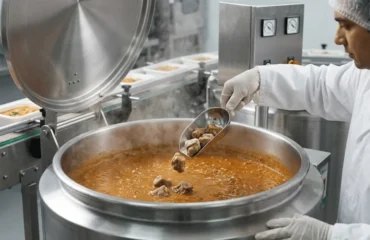
Caterers preparing meals for Raksha Bandhan gatherings may handle much larger quantities than a household kitchen.
For these operations, standardized recipes and measured ingredients become increasingly important.
A small difference in Hing dosage can become much more noticeable when multiplied across a large batch.
How Caterers Can Scale Hing Usage
Caterers should start with a tested recipe and establish the Hing quantity per standard batch.
They can then calculate the quantity required for the expected production volume and conduct a controlled tasting before final service.
This reduces the risk of an overly strong or weak aroma.
Hing for Restaurants During Raksha Bandhan
Restaurants may experience increased orders during family celebrations.
Maintaining the same recipe and seasoning ratios can help ensure consistency even when kitchen volume increases.
Pre-measured ingredients can also make high-volume preparation more predictable.
Buying Hing for a Large Festive Event
Businesses preparing large quantities should plan ingredient requirements before the festival rather than waiting until the last moment.
Procurement planning can help avoid emergency purchases and unexpected changes in ingredient specifications.
This is especially important when the ingredient contributes directly to the sensory identity of the finished food.
What Businesses Should Check Before Buying Bulk Hing
- Product specification
- Physical format
- Expected dosage
- Batch consistency
- Packaging
- Storage requirements
- Available quantity
- Lead time
- Quality documentation
These factors can help food businesses prepare more reliably for seasonal demand.
How to Store Hing Before Raksha Bandhan
Hing should be stored according to the supplier’s recommended conditions.
For powdered products, moisture control is particularly important.
The packaging should remain properly sealed when the ingredient is not being used.
Why Proper Storage Matters During Festival Preparation
Festival cooking can involve ingredients being opened and used repeatedly over several days.
Keeping Hing protected from unnecessary exposure can help maintain its intended aroma and physical condition.
Common Hing Mistakes During Festive Cooking
- Using too much Hing
- Adding Hing without measuring
- Overheating the tempering
- Changing the Hing product before a major event
- Ignoring storage conditions
- Scaling a recipe without testing
- Using different Hing products between batches
- Failing to taste a large batch before final service
How to Prepare Consistent Hing-Based Festive Food
- Choose the Hing product appropriate for the recipe.
- Use a tested base recipe.
- Measure the Hing quantity.
- Maintain the correct cooking temperature.
- Add Hing at the intended cooking stage.
- Mix consistently.
- Scale the recipe carefully for larger groups.
- Taste-test the finished batch.
- Record adjustments for future batches.
Hing for Raksha Bandhan Food Businesses
Raksha Bandhan is not only a household celebration. Restaurants, caterers, snack manufacturers, cloud kitchens, sweet shops, and food retailers may also experience increased seasonal demand.
These businesses need ingredients that can support larger production volumes without creating unnecessary variation.
For them, the selection of Hing should be based on application performance, supply reliability, packaging, and commercial requirements.
Why Seasonal Procurement Should Start Early
Waiting until festival demand peaks can create unnecessary procurement pressure.
Food businesses that know their expected production volume can estimate their ingredient requirements in advance.
This gives them more time to evaluate samples, confirm specifications, and arrange bulk supply.
Choosing Hing for Festive Food Production
The best Hing for a festive food business is not necessarily the product with the strongest raw aroma or lowest price.
The right choice should deliver the required sensory performance at a practical dosage while remaining consistent and commercially available.
When to Request a Hing Sample
Businesses planning a large festive production run should evaluate the product before committing to a major purchase.
A sample can be tested in the actual food application to determine aroma, flavor, dosage, and processing performance.
This is more reliable than selecting an ingredient based only on its appearance or raw aroma.
RB Industries for Festive Hing Supply
RB Industries manufactures and supplies Asafoetida, Compound Hing, Hing Powder, and Hing Granules for food manufacturers, restaurants, caterers, distributors, wholesalers, exporters, retailers, and FMCG brands.
Businesses preparing for seasonal demand can discuss their product application, estimated quantity, preferred format, packaging requirements, and supply schedule before placing a commercial order.
For larger requirements, buyers can evaluate samples and establish the appropriate product specification before moving to bulk supply.
Planning Hing Supply for Raksha Bandhan
For a household, Raksha Bandhan cooking may require only a small quantity of Hing. For restaurants, caterers, and food manufacturers, however, seasonal production can require significantly larger volumes.
The procurement approach should therefore match the scale of the operation.
Households can focus on freshness, storage, and recipe consistency, while commercial buyers should additionally consider specifications, batch consistency, packaging, lead time, and supplier capacity.
Conclusion
Hing for Raksha Bandhan can add a distinctive savory aroma to dal, vegetables, snacks, chutneys, and other festive preparations. The key is controlled use. Because Hing is highly aromatic, using more does not automatically create better food.
For home cooking, a tested recipe and consistent dosage are usually enough to achieve a balanced result. For larger family gatherings, caterers, restaurants, and food manufacturers, the process becomes more structured. Recipe scaling, measured dosing, temperature control, batch consistency, storage, and advance procurement become increasingly important.
Businesses preparing for Raksha Bandhan demand should evaluate their Hing requirements before production increases. Sampling the product in the intended application can help confirm the appropriate format, dosage, aroma profile, and commercial suitability.
RB Industries supplies Asafoetida, Compound Hing, Hing Powder, and Hing Granules for retail, wholesale, food manufacturing, restaurant, catering, distributor, private-label, and export requirements. Businesses planning seasonal or bulk Hing requirements can discuss their application and expected volume to identify a suitable supply option.
Frequently Asked Questions
Can Hing be used in Raksha Bandhan cooking?
Yes. Hing can be used in several savory preparations commonly served during family meals, including dal, vegetables, snacks, chutneys, and seasoning blends. The appropriate quantity depends on the recipe and product specification.
How much Hing should I use for Raksha Bandhan food?
There is no universal quantity because Hing strength and recipe composition vary. Start with the quantity established by the tested recipe and adjust only after evaluating the finished dish.
Can Hing be used when cooking food for a large Raksha Bandhan gathering?
Yes. For larger batches, the important factor is controlled scaling rather than simply adding more Hing. A tested recipe should be scaled systematically, with the final batch evaluated before serving.
Is Compound Hing suitable for festive food preparation?
Compound Hing can be suitable for festive food preparation when its specification and sensory profile match the intended recipe. Commercial users should test the product in their actual application before placing a large order.
How should Hing be stored before Raksha Bandhan?
Hing should be stored according to the supplier’s recommended conditions and kept properly sealed when not in use. Moisture protection is particularly important for powdered products.
Can restaurants and caterers buy Hing in bulk for Raksha Bandhan?
Yes. Restaurants, caterers, food manufacturers, and other commercial buyers can plan bulk Hing requirements based on expected production volumes. It is better to evaluate the product and confirm supply requirements before seasonal demand reaches its peak.