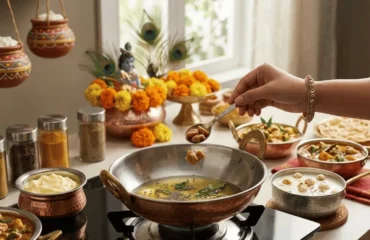
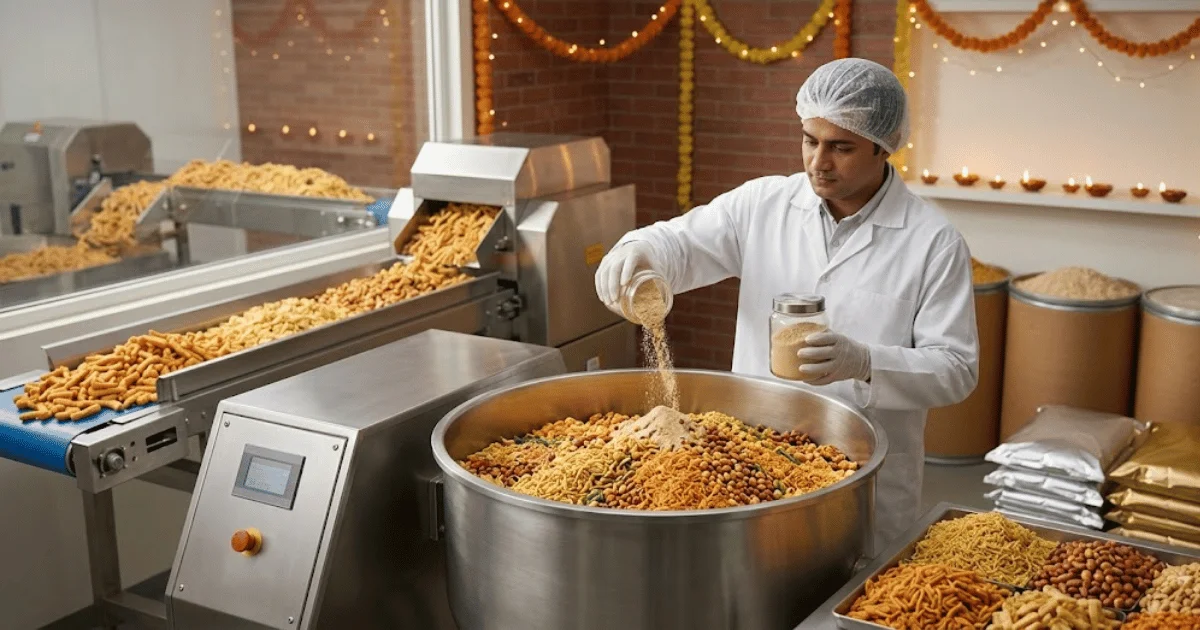
Hing in Diwali Snacks can add a distinctive savory aroma to namkeen, savory mixtures, fried snacks, seasoning blends, and other festive foods. During Diwali, demand for traditional and packaged snacks increases as families prepare food at home and businesses produce larger quantities for retail and gifting.
Hing is particularly useful in savory applications because a small quantity can contribute noticeable aroma. However, the right dosage, product format, mixing method, and formulation all influence the final result.
For home cooks, the main consideration is flavor balance. For namkeen manufacturers, FMCG brands, restaurants, caterers, wholesalers, and private-label businesses, consistency becomes equally important.
Why Hing Is Used in Diwali Snacks
Hing in Diwali Snacks can contribute a savory aromatic layer without requiring a large quantity.
Many popular Indian snacks contain ingredients such as gram flour, lentils, potatoes, peanuts, spices, herbs, and seasoning mixes. Hing can complement these ingredients when used appropriately.
The objective is not to create an overpowering Hing smell. Instead, the ingredient should support the complete seasoning profile.
Why Diwali Is Important for Snack Production
Diwali is one of the busiest periods for Indian snack and sweets businesses.
Retailers, namkeen shops, supermarkets, FMCG brands, restaurants, and local manufacturers may increase production to meet seasonal demand.
Higher production volumes create greater requirements for ingredient consistency.
A seasoning ingredient that performs well in a small batch must also perform consistently when production increases significantly.
How Hing Adds Flavor to Festive Snacks
Hing contributes a characteristic savory aroma to suitable foods.
When incorporated correctly, it can work alongside cumin, chilli, black pepper, coriander, ajwain, salt, and other seasoning ingredients.
The final flavor depends on the complete formulation rather than Hing alone.
This is why Hing in Diwali Snacks should be evaluated as part of the finished snack instead of being judged only by its raw aroma.
Which Diwali Snacks Can Use Hing?
Hing can be considered in a variety of savory snack applications.
- Namkeen mixtures
- Sev
- Bhujia
- Dal-based snacks
- Chana-based snacks
- Peanut mixtures
- Spiced nuts
- Mathri
- Savory fried snacks
- Seasoned snack mixes
The exact use depends on the recipe and product formulation.
Hing in Namkeen
Namkeen is one of the strongest commercial applications for Hing during the festive season.
Different namkeen products use different seasoning systems, so the required Hing dosage can vary significantly.
For commercial production, the manufacturer should establish a standardized formulation rather than adding Hing by visual estimation.
Hing in Sev
Sev can use aromatic seasoning as part of its overall flavor profile.
Where the formulation calls for Hing, it may be incorporated into the seasoning blend or used through another controlled process.
The important factor is uniform distribution.
If Hing is unevenly distributed, some portions of the finished product may have a stronger aroma than others.
Hing in Bhujia
Bhujia and similar savory mixtures often contain several spices.
Hing can complement the seasoning profile when used at the correct dosage.
Because the finished product is relatively dry, the mixing process becomes especially important for even seasoning.
Hing in Dal-Based Snacks
Dal-based snacks can provide another suitable application for Hing.
The savory character of lentils can work well with aromatic seasoning.
For manufacturers, the selected Hing should be tested during the actual production process to determine the correct quantity.
Hing in Peanut and Nut Mixtures
Spiced peanuts and other savory nut mixtures are common snack categories.
Hing can be used in suitable seasoning formulations where its aroma complements chilli, salt, cumin, and other spices.
Because nut-based snacks often rely on dry seasoning, uniform distribution should be considered during production.
Hing in Mathri and Savory Dough Products
Some savory dough-based snacks can incorporate Hing directly into the dough or through a seasoning system.
The best method depends on the recipe and manufacturing process.
Testing is important because the distribution of an aromatic ingredient can change depending on whether it is added to the dough, oil, or final seasoning.
Why Dosage Matters in Diwali Snacks
Hing is a concentrated aromatic ingredient.
Adding more does not necessarily produce better flavor.
Excessive Hing can overpower chilli, cumin, coriander, ajwain, salt, and other ingredients.
For Hing in Diwali Snacks, the ideal dosage should therefore be established through recipe testing.
How Much Hing Should Be Used?
There is no universal dosage for every snack.
The quantity depends on:
- Hing concentration
- Product format
- Snack formulation
- Batch size
- Other spices
- Processing method
- Desired aroma
A commercial manufacturer should determine the dosage using a controlled trial rather than relying on a generic measurement.
Why Raw Aroma Can Be Misleading
Hing can smell very strong before cooking or processing.
That does not mean the strongest-smelling product will necessarily produce the best finished snack.
What matters is how the ingredient performs after it becomes part of the complete formulation.
Manufacturers should therefore evaluate aroma and flavor after processing.
Hing in Dry Seasoning Blends
Many commercial snacks use dry seasoning blends.
In these applications, Hing can be combined with salt, chilli, spices, herbs, and other flavoring ingredients.
Uniform mixing is essential because a concentrated aromatic ingredient can create noticeable differences if it is not distributed properly.
How to Improve Seasoning Distribution
Manufacturers should maintain a consistent mixing procedure.
The Hing and other powdered ingredients should be measured accurately before being introduced into the seasoning system.
Mixing time, equipment, batch size, and ingredient sequence can all influence the final distribution.
Small-scale trials can help establish a repeatable process before production increases.
Hing for Homemade Diwali Snacks
Home cooks can also use Hing in suitable savory Diwali snacks.
The simplest approach is to follow a tested recipe and use a controlled quantity.
Because homemade batches are usually smaller, even a small dosage difference can become noticeable.
It is better to start conservatively and adjust the next batch if necessary.
Hing in Traditional Diwali Snack Preparation
Diwali snacks vary widely across India.
Different regions prepare their own combinations of namkeen, fried snacks, savory dough products, lentil-based foods, and spiced mixtures.
Hing can be relevant to some of these preparations, but it should always follow the recipe rather than being treated as a compulsory festive ingredient.
Hing and Regional Snack Flavors
Indian snack formulations often have strong regional identities.
A Gujarati snack may use a different seasoning profile from a North Indian namkeen or a South Indian savory snack.
Therefore, Hing in Diwali Snacks should be adjusted according to the intended regional flavor profile.
Hing With Cumin
Cumin and Hing are commonly paired in Indian savory cooking.
The combination can work well in selected snack formulations.
However, the final quantity should be established according to the complete seasoning blend.
Hing With Ajwain
Ajwain provides its own strong aromatic character.
When Hing and ajwain are used together, both quantities should be controlled.
Too much of either ingredient can make the finished snack excessively aromatic.
Hing With Chilli and Other Spices
Chilli, coriander, cumin, black pepper, and other spices can create a strong seasoning base.
Hing should complement these ingredients rather than compete with them.
Manufacturers should therefore evaluate the complete seasoning blend during product development.
Choosing Hing for Diwali Snack Manufacturing
Commercial buyers may consider several Hing formats depending on their manufacturing process.
- Hing Powder
- Compound Hing
- Hing Granules
- Application-specific formulations
The choice should depend on the snack, processing method, dosage, mixing system, packaging, and desired sensory result.
Hing Powder for Namkeen Manufacturing
Hing Powder can be useful for seasoning blends that require a fine ingredient.
Its particle size and formulation can influence distribution through the final seasoning.
Manufacturers should test the powder in their actual production system before approving it for large-scale use.
Compound Hing for Snack Manufacturers
Compound Hing can provide a practical ingredient format for commercial food applications.
Its suitability depends on the product specification and intended snack formulation.
Before placing a large seasonal order, manufacturers should conduct an application test using the actual recipe and processing conditions.
Hing Granules for Commercial Snack Production
Hing Granules have different physical characteristics compared with fine powder.
Depending on the manufacturing process, this can influence handling, dosing, and mixing.
The correct format should be selected based on production requirements rather than simply choosing the most convenient-looking product.
Testing Hing Before Diwali Production
Large snack manufacturers should ideally approve the Hing product before seasonal production begins.
A practical application test can evaluate:
- Raw aroma
- Cooked aroma
- Dosage
- Flavor contribution
- Mixing behavior
- Seasoning distribution
- Batch consistency
- Storage behavior
Testing in the actual snack provides a much stronger basis for purchasing decisions.
Why Batch Consistency Matters During Diwali
Diwali production can involve significantly higher volumes than normal operations.
A manufacturer may produce the same snack across multiple batches, shifts, or facilities.
If the Hing dosage or product changes, customers may notice differences in aroma and taste.
Standardized ingredients help reduce this variation.
Creating a Hing Reference Standard
Manufacturers can maintain an approved reference sample for the Hing used in a particular snack.
Incoming batches can then be evaluated against the established specification.
This can help quality and procurement teams identify unexpected changes before production begins.
Hing in Large-Scale Diwali Production
Large-scale production requires accurate ingredient measurement.
A small error in Hing dosage may not seem significant in a small batch, but the same error multiplied across several hundred kilograms can materially affect the final product.
For this reason, automated or standardized dosing can be valuable in commercial snack manufacturing.
Why Mixing Matters in Namkeen
Seasoning must reach the finished snack evenly.
If Hing is concentrated in one area of the seasoning blend, some packets may taste stronger than others.
Manufacturers should therefore validate their mixing process as part of product development.
Hing and Festive Snack Packaging
Packaging also matters for aromatic snack products.
The finished snack should remain protected from moisture and other environmental factors that can affect quality during storage.
Manufacturers should evaluate the complete packaging system rather than treating the seasoning ingredient separately.
Storage of Hing Before Diwali Production
Hing should be stored according to the supplier’s recommended conditions.
The container should remain properly sealed when the product is not being used.
For powdered Hing, minimizing unnecessary moisture exposure is particularly important.
Why Advance Hing Procurement Matters
Diwali can create a significant increase in snack production.
Waiting until production is already at its peak can create unnecessary pressure on procurement teams.
Manufacturers should estimate their Hing requirement in advance and allow enough time for sampling and product approval.
What Snack Manufacturers Should Ask a Hing Supplier
- What Hing formats are available?
- What is the product specification?
- Can samples be provided?
- What packaging options are available?
- What quantity can be supplied?
- What is the expected lead time?
- Can repeat batches maintain the same specification?
- What quality documentation is available?
These questions help manufacturers evaluate the supplier based on production requirements rather than price alone.
Hing for FMCG Snack Brands
FMCG brands need consistent flavor across large production volumes.
A seasoning ingredient can therefore have a direct impact on the consumer’s perception of the finished product.
Brands should approve the Hing specification as part of their overall product formulation and quality process.
Hing for Private-Label Snack Products
Private-label manufacturers may produce Diwali snack products for supermarkets, retailers, distributors, and regional brands.
These products can require repeatable formulations across multiple production runs.
Approving the Hing product before packaging and large-scale production can reduce the risk of formulation changes later.
Hing for Namkeen Distributors and Wholesalers
Distributors and wholesalers may not manufacture the snack themselves, but they can still influence seasonal procurement decisions.
Understanding the ingredient requirements of manufacturers and private-label customers can help distributors plan their inventory more effectively.
Commercial Hing Supply for Diwali Production
For businesses preparing large quantities of snacks, supplier reliability becomes part of production planning.
Businesses should consider product consistency, packaging, supply capacity, lead time, and application suitability before finalizing their seasonal procurement.
RB Industries for Commercial Hing Supply
RB Industries manufactures and supplies Asafoetida, Compound Hing, Hing Powder, and Hing Granules for food manufacturers, namkeen producers, restaurants, caterers, wholesalers, distributors, FMCG brands, private-label businesses, and exporters.
Businesses preparing Diwali snack production can discuss their application, required format, estimated quantity, packaging requirements, and supply schedule.
Commercial buyers can evaluate samples in their own snack formulations before moving to larger quantities where required.
How to Prepare for Diwali Hing Requirements
- Identify the snacks that require Hing.
- Calculate expected seasonal production.
- Determine the required Hing dosage.
- Select the appropriate product format.
- Test the product in the actual recipe.
- Approve the final formulation.
- Confirm commercial quantity.
- Arrange packaging and storage.
- Maintain the same approved product during production.
Common Mistakes When Using Hing in Diwali Snacks
- Choosing a product only by raw aroma
- Using excessive Hing
- Changing the product during production
- Failing to test the seasoning blend
- Using inconsistent measurements
- Ignoring seasoning distribution
- Ordering too late
- Ignoring moisture during storage
Conclusion
Hing in Diwali Snacks can contribute an important savory aromatic layer to namkeen, sev, bhujia, dal-based snacks, spiced nuts, savory mixtures, and other suitable festive foods. The ingredient works best when it supports the complete seasoning profile instead of overpowering it.
For home cooks, the key is controlled dosage and a tested recipe. For commercial snack manufacturers, the process requires much more: product evaluation, standardized dosing, uniform mixing, batch consistency, appropriate storage, and advance procurement.
Diwali production can increase quickly, so businesses should approve their Hing product before the main seasonal production period begins. Testing the ingredient in the actual snack is one of the most effective ways to confirm aroma, dosage, and processing performance.
RB Industries supplies Asafoetida, Compound Hing, Hing Powder, and Hing Granules for namkeen manufacturers, FMCG brands, private-label businesses, restaurants, caterers, wholesalers, distributors, and exporters. Businesses preparing for Diwali production can discuss their application, required quantity, packaging, and supply requirements to plan their Hing procurement in advance.
Frequently Asked Questions
Can Hing be used in Diwali snacks?
Yes. Hing can be used in suitable savory snacks such as namkeen, sev, bhujia, dal-based snacks, spiced nuts, and seasoning blends. The correct application depends on the recipe and desired flavor profile.
Why is Hing used in namkeen?
Hing provides a distinctive savory aroma that can complement spices used in namkeen. A controlled quantity can enhance the overall seasoning without overpowering the other ingredients.
How much Hing should be used in Diwali snacks?
There is no universal dosage because Hing concentration and snack formulations vary. Manufacturers should establish the quantity through application testing and maintain the approved dosage across production batches.
Which Hing is suitable for namkeen manufacturing?
Hing Powder, Compound Hing, and Hing Granules can serve different commercial applications. The correct format depends on the seasoning system, processing method, mixing requirements, and desired finished product.
Should snack manufacturers buy Hing before Diwali?
Yes. Seasonal production can increase significantly before Diwali. Early procurement gives manufacturers time to test samples, approve the product, confirm quantities, and plan storage.
Can RB Industries supply Hing in bulk for Diwali production?
RB Industries supplies Asafoetida, Compound Hing, Hing Powder, and Hing Granules for commercial food applications. Manufacturers can discuss their product requirements, quantities, packaging, and intended application for bulk supply planning.