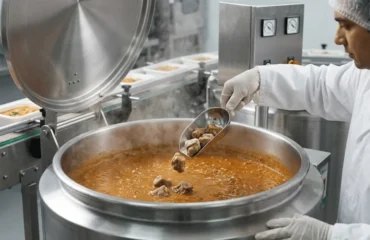
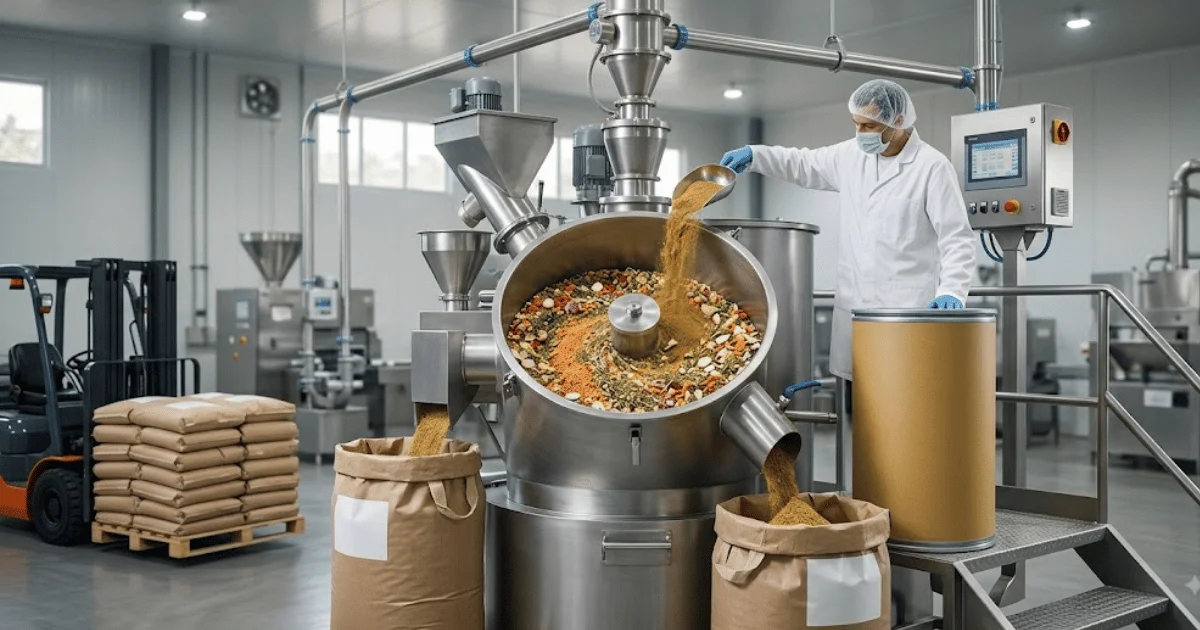
Hing in Soup Mix Manufacturing can contribute a distinctive savory aroma to suitable instant soup, dry soup, seasoning, and convenience-food formulations. Commercial soup mixes often combine vegetables, lentils, starches, herbs, spices, salt, dehydrated ingredients, and flavoring components. A controlled amount of Hing can complement these ingredients when it fits the intended product profile.
Soup mix manufacturing requires careful formulation because the finished product needs to provide consistent flavor after preparation by the consumer. Even small changes in a concentrated aromatic ingredient can influence the overall sensory experience.
For this reason, manufacturers need to evaluate Hing through actual product trials rather than selecting it only by raw aroma. Product format, dosage, particle characteristics, mixing, packaging, storage, and batch consistency can all affect the final result.
Why Is Hing Used in Soup Mix Manufacturing?
The main reason manufacturers consider Hing in Soup Mix Manufacturing is its strong savory aromatic contribution.
Soup mixes often contain multiple ingredients that need to work together after reconstitution. Hing can help add depth to selected formulations without becoming the dominant flavor.
Because Hing is highly aromatic, it can be used in relatively small quantities. However, the appropriate level depends on the formulation and the particular Hing product.
The objective should always be balanced flavor rather than maximum Hing intensity.
What Makes Soup Mix Formulation Different?
Soup mixes can be formulated in several ways.
Some products are based primarily on vegetables, while others focus on lentils, herbs, spices, noodles, grains, or regional flavor profiles.
Some mixes are designed for hot-water preparation, while others require longer cooking.
These differences influence how aromatic ingredients behave after preparation.
Therefore, Hing in Soup Mix Manufacturing should be evaluated according to the complete formulation and intended preparation method.
Which Soup Mixes Can Use Hing?
Depending on the recipe, Hing may be considered in:
- Vegetable soup mixes
- Lentil soup mixes
- Indian-style soup mixes
- Spiced soup powders
- Instant meal mixes
- Regional soup formulations
- Legume-based soup products
- Savory seasoning mixes
Not every soup requires Hing. The ingredient should be selected according to the target flavor profile.
Hing in Vegetable Soup Mixes
Vegetable soup formulations can contain dehydrated vegetables, herbs, spices, salt, starches, and other seasoning ingredients.
A small quantity of Hing can complement suitable savory formulations.
However, manufacturers should ensure that the Hing does not overpower delicate vegetable notes.
The final product should be evaluated after reconstitution because the aroma may change once the dry mix is combined with hot water.
Hing in Lentil Soup Mixes
Lentil-based soups can provide a suitable application for Hing.
Lentils have a naturally savory and earthy character that can work well with aromatic seasoning systems.
When using Hing in Soup Mix Manufacturing, manufacturers should test the ingredient alongside cumin, coriander, chilli, turmeric, pepper, and other spices used in the formulation.
Hing in Indian-Style Soup Mixes
Indian-inspired soup mixes may use traditional seasoning combinations to create familiar regional flavors.
Hing can be included when it supports the intended profile.
The formulation should be designed so that Hing complements the other spices rather than becoming the primary aroma.
Hing in Spiced Soup Powders
Dry soup powders depend heavily on accurate ingredient distribution.
Hing is particularly important to measure carefully because its aroma is concentrated.
If it is not distributed evenly through the powder blend, different portions of the finished product may produce different sensory results.
How Much Hing Should Be Used in Soup Mix Manufacturing?
There is no universal dosage for every soup mix.
The appropriate quantity depends on:
- Hing concentration
- Product format
- Soup formulation
- Batch size
- Other spices
- Preparation method
- Desired aroma intensity
- Target consumer profile
Manufacturers should establish the dosage through controlled formulation trials.
Once approved, the dosage should become part of the documented product specification.
Why Excessive Hing Can Affect Soup Flavor
Hing has a powerful aroma, and excessive use can dominate a soup formulation.
This can interfere with vegetables, herbs, lentils, pepper, cumin, coriander, garlic, or other ingredients.
The goal of Hing in Soup Mix Manufacturing should therefore be to support flavor complexity rather than create an overpowering aroma.
How to Test Hing in Soup Mix Manufacturing
A manufacturer can prepare several small trial batches using the same base formulation.
Each trial can contain a controlled level of Hing.
The samples should then be evaluated after preparation according to the consumer’s intended cooking method.
Evaluation can include:
- Dry mix aroma
- Prepared soup aroma
- Flavor intensity
- Aftertaste
- Seasoning balance
- Overall sensory profile
- Storage performance
Why Testing After Reconstitution Matters
A soup mix is not normally consumed in its dry form.
The final consumer adds water and may heat or cook the product before consumption.
This means the actual sensory performance can differ significantly from the aroma of the dry powder.
Manufacturers should therefore evaluate Hing in Soup Mix Manufacturing after the product has been prepared according to its intended instructions.
Hing Powder for Soup Mix Production
Hing Powder can be useful when a fine ingredient needs to be incorporated into a dry seasoning system.
The powder’s particle characteristics can affect mixing and distribution.
Manufacturers should test the selected product using their actual blending equipment and production conditions.
Compound Hing for Soup Mix Manufacturers
Compound Hing can provide a practical format for commercial food manufacturers.
Its formulation and handling characteristics can make it suitable for certain dry seasoning applications.
Before large-scale purchasing, manufacturers should test the Compound Hing in the actual soup formulation and confirm the required dosage.
Hing Granules for Soup Mix Applications
Hing Granules have different physical properties from fine powder.
Depending on the manufacturing system, this can influence dosing, handling, and mixing.
The appropriate format should be selected according to the production process and finished-product requirements.
Hing in Dry Seasoning Systems
Many soup mixes rely on dry seasoning systems that contain multiple powdered ingredients.
Hing becomes one component within that larger blend.
Its quantity should therefore be evaluated in relation to salt, pepper, herbs, spices, dehydrated vegetables, and other flavor components.
A change in one ingredient can alter the overall balance.
Why Mixing Consistency Matters
Uniform distribution is essential in dry soup mix manufacturing.
If Hing becomes concentrated in one section of a batch, different packets can have noticeably different aroma profiles.
Manufacturers should establish a repeatable mixing procedure and validate it before commercial production.
How to Improve Hing Distribution in Soup Mixes
Manufacturers should accurately measure the Hing before adding it to the blend.
The ingredient sequence, mixing time, equipment, batch size, and particle characteristics can all influence distribution.
Small pilot batches can help identify the best process before production volumes increase.
Hing and Instant Soup Preparation
Instant soup products are generally designed for quick preparation.
The seasoning must therefore release its flavor effectively when the consumer adds hot water or follows the recommended preparation process.
This makes the finished-product application test especially important.
Hing and Hot-Water Reconstitution
When a consumer adds hot water to a soup mix, the dry ingredients become hydrated and the flavor profile changes.
The aromatic contribution of Hing should remain balanced after this transformation.
Manufacturers should therefore test the product using the actual water temperature and preparation time specified on the package.
Hing in Ready-to-Cook Soup Mixes
Ready-to-cook products may require boiling or simmering rather than simple hot-water preparation.
In these products, cooking time and temperature can influence the final aroma.
The Hing dosage should be approved based on the actual preparation method.
Hing and Shelf-Life Testing
Dry soup mixes are generally designed for storage before consumption.
During this period, the aroma and physical characteristics of the seasoning system need to remain acceptable.
Manufacturers should therefore evaluate the complete product during shelf-life testing.
Why Aroma Stability Matters
Aroma is an important part of consumer perception.
If the intended Hing contribution changes significantly during storage, the finished soup may no longer match the approved reference product.
Packaging, moisture control, storage conditions, and ingredient consistency can all influence this result.
Hing and Moisture in Soup Mixes
Dry soup mixes require appropriate moisture protection.
Moisture can affect powdered ingredients, cause clumping, and change the handling characteristics of the blend.
Hing should therefore be stored and packaged according to appropriate food-industry practices and the supplier’s recommendations.
Choosing the Right Hing for Soup Mix Manufacturing
Commercial manufacturers should evaluate the ingredient according to the actual application.
Important considerations include:
- Aroma profile
- Product format
- Dosage performance
- Mixing behavior
- Batch consistency
- Packaging
- Storage requirements
- Supply capacity
The strongest raw aroma is not necessarily the best commercial choice.
Why Raw Aroma Is Not Enough
A strong-smelling Hing sample may appear attractive during initial evaluation.
However, manufacturers need to know how that product performs after blending, packaging, storage, and consumer preparation.
Application testing provides much more useful information than raw aroma evaluation alone.
Creating a Reference Soup Mix
Manufacturers can maintain an approved reference batch of the finished soup mix.
New production batches can then be compared against the reference for aroma, flavor, appearance, and overall performance.
This approach can help identify unexpected changes in ingredient quality or processing.
Why Batch Consistency Matters
Consumers expect branded soup mixes to taste the same every time they purchase them.
If the Hing level changes between production batches, the overall flavor profile can change.
Maintaining an approved Hing specification can therefore support product consistency.
Hing for Private-Label Soup Brands
Private-label companies may outsource soup mix manufacturing while controlling their product specifications and packaging.
For these brands, consistent ingredient sourcing is important because the same product may be manufactured repeatedly.
The approved Hing specification should form part of the product documentation.
Hing for FMCG Soup Manufacturers
FMCG manufacturers may operate several soup varieties with different flavor profiles.
A vegetable soup may require a different Hing level from a lentil soup or regional Indian soup.
Each formulation should therefore be evaluated independently.
Hing for Seasoning Manufacturers
Companies producing seasoning systems for soup brands may also use Hing as one component of their blends.
In such cases, consistency becomes especially important because the seasoning may be supplied to several finished-food manufacturers.
The supplier should be able to maintain the approved specification across repeat orders.
Hing for Export Soup Products
Indian-inspired soup products are also relevant to international food markets.
Manufacturers exporting soup mixes need to consider destination-market requirements for ingredients, labeling, packaging, documentation, and product compliance.
The intended export market should be communicated during ingredient sourcing and product development.
Bulk Hing Procurement for Soup Manufacturers
Commercial soup manufacturers should estimate their expected Hing consumption before production begins.
Procurement planning should consider production volume, seasonal demand, product range, packaging requirements, and lead time.
Advance planning also gives manufacturers time to test incoming batches before they enter production.
Why Sample Approval Should Come First
Before placing a large commercial order, manufacturers should test a Hing sample in the actual soup formulation.
This allows the product-development team to evaluate aroma, dosage, mixing behavior, reconstitution, and finished-product performance.
Once the product is approved, the same specification can be used for repeat procurement.
What Soup Manufacturers Should Ask a Hing Supplier
- What Hing formats are available?
- What is the product specification?
- Can application samples be provided?
- What packaging options are available?
- What quantities can be supplied?
- What is the expected lead time?
- Can repeat batches maintain the same specification?
- What quality documentation is available?
These questions help manufacturers evaluate suppliers based on production requirements rather than price alone.
Common Mistakes When Using Hing in Soup Mix Manufacturing
- Choosing Hing only by raw aroma
- Using excessive dosage
- Applying the same dosage to every soup
- Ignoring mixing consistency
- Skipping reconstitution testing
- Changing the Hing product between batches
- Ignoring moisture protection
- Ordering without confirming supply capacity
How to Improve Soup Mix Formulation Consistency
- Define the target flavor profile.
- Select the appropriate Hing format.
- Conduct controlled dosage trials.
- Test the complete dry blend.
- Reconstitute the soup using the intended preparation method.
- Evaluate aroma and flavor.
- Approve the final formulation.
- Document the Hing specification.
- Standardize the mixing process.
- Monitor incoming ingredient batches.
Why Commercial Buyers Should Look Beyond Price
The cheapest Hing is not necessarily the most economical option for a manufacturer.
Inconsistent aroma can lead to formulation adjustments, production variation, customer complaints, and additional quality-control work.
Commercial buyers should therefore evaluate product consistency, application performance, packaging, supply reliability, and repeat-order capability.
RB Industries for Soup Mix Manufacturing
RB Industries manufactures and supplies Asafoetida, Compound Hing, Hing Powder, and Hing Granules for food manufacturers, seasoning companies, FMCG brands, restaurants, wholesalers, distributors, private-label businesses, and exporters.
Soup mix manufacturers can discuss their intended application, preferred Hing format, expected quantity, packaging requirements, and production schedule.
Commercial buyers can evaluate samples in their own soup formulations before moving to larger quantities.
Planning Hing Supply for Soup Production
Growing soup brands should estimate their Hing requirements before production volumes increase.
Forecasting consumption helps procurement teams plan repeat orders and reduces the risk of last-minute sourcing.
It also provides enough time to evaluate incoming batches before they enter commercial production.
Conclusion
Hing in Soup Mix Manufacturing can contribute a distinctive savory aroma to suitable vegetable, lentil, Indian-style, spiced, and convenience soup formulations. Because soup mixes contain multiple ingredients, the key is to integrate Hing into the complete seasoning system rather than using it simply to create a stronger aroma.
Manufacturers should establish the appropriate dosage through controlled trials and evaluate the finished soup after its intended preparation method. Mixing, particle characteristics, reconstitution, storage, packaging, and batch consistency can all influence the final consumer experience.
For FMCG brands, private-label companies, seasoning manufacturers, and growing soup businesses, advance procurement and supplier evaluation can reduce production uncertainty. Maintaining an approved Hing specification can also help preserve a consistent flavor profile across repeat manufacturing batches.
RB Industries supplies Asafoetida, Compound Hing, Hing Powder, and Hing Granules for commercial food applications. Soup manufacturers can discuss their formulation, expected quantity, preferred product format, packaging, and supply requirements to develop a suitable Hing sourcing plan.
Frequently Asked Questions
Why is Hing used in soup mix manufacturing?
Hing can provide a distinctive savory aroma and add depth to suitable soup formulations. The ingredient should be used in a controlled quantity that complements the other spices and ingredients.
Which soup mixes can use Hing?
Depending on the formulation, Hing can be considered for vegetable, lentil, Indian-style, spiced, and other savory soup mixes. Not every soup formulation requires Hing.
How much Hing should soup manufacturers use?
There is no universal dosage because Hing products and soup formulations differ. Manufacturers should establish the appropriate level through controlled application testing.
Which Hing format is suitable for soup mix manufacturing?
Hing Powder, Compound Hing, and Hing Granules can serve different commercial applications. The appropriate format depends on the formulation, mixing equipment, dosage requirements, and production process.
Should soup manufacturers test Hing before bulk purchasing?
Yes. Application testing allows manufacturers to evaluate aroma, dosage, mixing, reconstitution, and finished-product performance before committing to larger quantities.
Can RB Industries supply Hing for commercial soup production?
Yes. RB Industries supplies Asafoetida, Compound Hing, Hing Powder, and Hing Granules for commercial food applications. Soup manufacturers can discuss their application and bulk requirements for suitable supply planning.