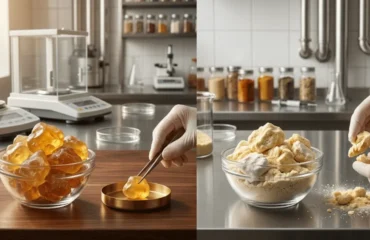

Hing asafoetida sample evaluation is the step that decides whether your first bulk order becomes a long-term supply success—or a costly dispute. Many importers approve a sample quickly, then face problems when the bulk shipment arrives: different aroma strength, clumping, packaging smell leaks, or documentation mismatches. These issues are avoidable if you evaluate samples with a repeatable checklist and approve the “golden sample” correctly.
This guide is for:
- Importers in USA, Canada, and Australia (distributors, retailers, private label owners)
- Indian buyers doing bulk procurement for brands or food manufacturing
- E-commerce sellers who need fewer returns and stronger customer reviews
Why Hing Asafoetida Sample Evaluation Matters More Than Price
Hing (asafoetida) is a tiny-dose spice. Small differences in aroma strength or freshness can change how customers feel about the product. Overseas buyers in USA/Canada/Australia also have a different sensitivity to smell leakage in cartons and homes. If you only compare suppliers by price, you risk:
- Sample vs bulk mismatch (the most common buyer complaint)
- Returns due to odor leakage (especially e-commerce and 3PL)
- Quality disputes when COA lot codes don’t match cartons
- Customer complaints such as “too strong,” “bitter,” “weak aroma,” or “clumps quickly”
A proper hing asafoetida sample evaluation helps you approve the right supplier, lock your specification, and protect repeat orders.
Step 1: Collect Samples the Right Way (So You Don’t Test the Wrong Thing)
Before you score aroma and quality, make sure you are comparing apples to apples. Ask each supplier to provide:
- Same product form (powder/resin/granules as applicable)
- Same pack size and packaging type (pouch/jar/tin)
- Same intended market (India vs export packing for USA/Canada/Australia)
- A lot/batch code on sample pack (even for samples)
Pro tip: If you are planning export, request samples packed in the same odor-control method you will use for bulk. Your sample should represent your real shipment experience.
Step 2: Define Your “Golden Sample” Rule (Most Buyers Skip This)
The golden sample is the single approved reference that every future batch must match. Without this, suppliers can claim that “hing varies naturally” and you have no fixed benchmark.
Golden sample best practice
- Approve one sample as the reference
- Record its lot code and supplier details
- Store it airtight in a cool, dry place
- Use it for comparison on every new shipment
When you implement this, your hing asafoetida sample evaluation becomes a system, not a one-time decision.
Step 3: Sensory Evaluation (Aroma, Taste, Bloom) With a Simple Scoring Sheet
Sensory evaluation is the fastest way to compare samples. You don’t need a lab for this, but you do need consistency in how you test.
How to test aroma (basic method)
- Open sample for the same time (example: 10 seconds)
- Smell at the same distance
- Close immediately and note “odor spread” in the room
How to test “bloom” in cooking (quick kitchen method)
- Heat 1 tsp oil, add a pinch (same quantity for each sample)
- Wait 5–10 seconds, then add to a neutral base (dal/beans/vegetable)
- Compare aroma, aftertaste, and strength
Sample Scoring Sheet (Copy-Paste for Your Procurement File)
| Parameter | Score (1–10) | What “Good” Looks Like | Notes |
|---|---|---|---|
| Initial aroma strength | Strong but clean, not harsh | ||
| Aroma after opening (odor spread) | Contained; doesn’t spread excessively | ||
| Cooking bloom in oil (5–10 sec) | Fast bloom; pleasant onion-garlic depth | ||
| Aftertaste | No bitterness; smooth finish | ||
| Color & uniformity | Uniform shade; no visible foreign matter | ||
| Clumping tendency | Minimal clumping; breaks easily | ||
| Packaging odor control | Airtight, no leakage into outer box |
Decision rule tip: Don’t pick the “strongest smell” automatically. For USA/Canada/Australia retail, customers often prefer a strong but controlled product with better packaging and clear usage guidance.
Step 4: Packaging Evaluation (The Overseas Differentiator)
Overseas buyers complain about smell leakage far more than Indian buyers. Your hing asafoetida sample evaluation must include packaging tests.
Simple packaging stress test (24 hours)
- Keep the sample pack inside a closed carton or cupboard for 24 hours
- Open the carton and smell the outer area
- If the outer carton smells strongly, your packaging barrier is weak
What to ask your supplier about export packing
- What is the primary seal type? (heat seal, liner, cap + inner seal)
- Is there secondary containment for export/e-commerce?
- How do they prevent punctures during palletizing?
- Can they share packing photos for your order before dispatch?
If you want fewer returns and higher reviews, treat packaging as a “quality parameter.”
Step 5: Documentation Check (COA + Lot Code Matching)
Even when taste is good, documentation errors can delay imports and create disputes. For export shipments, ask for a sample documentation set before you place your first PO.
Minimum documentation pack to request
- COA format that includes lot/batch code
- Ingredient declaration (especially for compounded hing/asafoetida)
- Spec sheet (basic parameters and storage)
- Packaging specification (what barrier method is used)
Non-negotiable: The lot/batch code on the COA must match the lot/batch code printed on the cartons (and ideally on inner packs). This one step prevents many disputes.
Step 6: Lab Testing Strategy for Importers (Micro + Heavy Metals)
Many buyers—especially in USA/Canada/Australia—want tests for microbial safety and heavy metals. The exact test list depends on your buyer policy and product format, but here is a practical approach for importers:
Commonly requested tests
- Microbiological tests (TPC, yeast/mold, and pathogens as required)
- Heavy metals (lead, arsenic, cadmium, mercury)
- Moisture (helps manage clumping and shelf stability)
Importer note: Your compliance obligations differ by country. Use official resources to guide your importer file:
- USA FDA importing food guidance
- Canada CFIA food safety for industry
- Australia/New Zealand Food Standards (FSANZ)
Including at least one official outbound link is also helpful for RankMath checks.
Step 7: Approval Workflow (The Best Way to Avoid Sample vs Bulk Mismatch)
Here is a simple, repeatable workflow that professional buyers use. It improves consistency and reduces costly surprises.
Recommended approval steps
- Shortlist 2–3 suppliers and request export-style samples
- Complete sensory scoring using the same method for each sample
- Test packaging odor control (24-hour carton/cupboard test)
- Review documentation (COA format, ingredient declaration, spec sheet)
- Approve a golden sample and record lot code + supplier details
- Place a trial order (smallest practical MOQ for your market)
- Match bulk delivery against golden sample before scaling volume
This workflow makes your hing asafoetida sample evaluation reliable and repeatable across months and years.
Common Mistakes Buyers Make (And How to Avoid Them)
- Approving samples packed differently than bulk:</strong always test export-style packing.
- No golden sample:</strong without it, you cannot prove mismatch later.
- Ignoring odor leakage:</strong overseas returns are expensive; packaging is quality.
- Skipping document checks:</strong COA/lot mismatches create disputes and delays.
- Choosing only by aroma strength:</strong strongest is not always best for retail abroad.
Why RB Industries for Hing/Asafoetida Sample and Bulk Supply
RB Industries supports buyers in India and overseas markets with consistent supply planning, export-ready documentation formats, and packaging options designed for international shipping. For importers and private label owners, RB Industries can help structure the hing asafoetida sample evaluation process with the right sample options, packaging recommendations, and lot-based documentation approach.
RB Industries is also associated with popular market brands (for example, Bankey Bihari and Vidhya Premium Agmark Hing, among others). Buyers can choose suitable formats depending on their channel (retail, bulk, distribution, or private label requirements).
FAQ | RB Industries
What is hing asafoetida sample evaluation?
hing asafoetida sample evaluation is the process of comparing supplier samples using sensory checks (aroma, bloom, aftertaste), packaging odor-control tests, and documentation review before placing a bulk order.
How do I avoid sample vs bulk mismatch?
Approve a golden sample, document its lot code, request lot-matched COA formats, and compare the first bulk shipment against the golden sample before scaling orders.
What is the most important packaging test for overseas buyers?
The 24-hour carton/cupboard odor test is simple and effective. If odor spreads into the outer carton quickly, packaging barriers are weak for export/e-commerce.
Do I need lab tests during sample evaluation?
Many importers request microbial and heavy metals tests based on buyer policy and destination market needs. Your broker or compliance team can confirm the exact list for USA/Canada/Australia.
Can RB Industries support sample evaluation and export supply?
Yes. RB Industries can support buyers with export-style samples, packaging options, and documentation formats that help reduce disputes and improve repeat-order consistency.
Request Samples + Scoring Sheet Pack + Export Quote
Want to run a professional hing asafoetida sample evaluation before your next bulk order? Request:
- ✅ Export-style sample options (based on your aroma preference and channel)
- ✅ Packaging options for USA/Canada/Australia (odor-control focus)
- ✅ COA format with lot/batch matching
- ✅ Trial order quote (FOB/CIF) and lead time plan