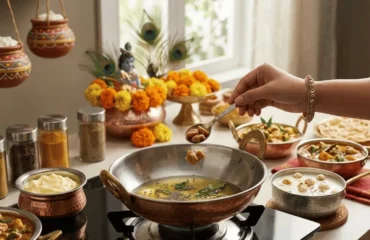

What you’ll learn in five minutes that will make all nine days calmer and tastier
You’ll learn how hing for vrat fills the onion-garlic gap without heaviness, how to bloom it so it never turns bitter, real-world doses for home and bhog counters, and nine reliable recipes. You will also learn storage, purity, and quick fixes that save any dish when time is short.
Why “hing for vrat” is the quiet secret that makes fasting food feel complete—without onion & garlic
Aroma that fills the gap, not the plate
When onion and garlic are out, food can taste flat. A properly bloomed pinch of hing for vrat releases warm, savoury notes that make simple dishes feel finished yet light.
Comfort across nine days
Navratri menus repeat staples. Hing for vrat rounds sourness in kadhi, brightens mild vegetables, and helps fried snacks feel easier on the stomach.
Exactly how to bloom “hing for vrat” so it lifts the dish and never turns bitter
The no-fail tempering sequence used in professional kitchens
Heat ghee or a ghee-oil mix on medium. Slide the pan off the flame, add a measured pinch of hing for vrat, immediately add cumin or mustard, return to low heat, then add your main ingredient. This off-flame bloom prevents scorching and locks aroma into the food.
Portioning that respects the spice and protects your palate
A little goes a long way. For family dishes, start with ⅛–¼ teaspoon. For catering pans, scale gently and taste. If the finish feels sharp, shorten the bloom and reduce the pinch next round.
How much “hing for vrat” should you use? Real-world doses for home kitchens and bhog counters
Home kitchens that want flavour without heaviness
Keep it tiny—especially in curd-based dishes. A micro-pinch rebloomed in a spoon of ghee at the end can rescue a flat dish without harshness.
HoReCa & temple service that need consistency
Do not multiply blindly. Steam, pot size, and holding time change aroma. Build a mini test batch first, note the dose, then scale.
1) Sabudana khichdi that stays light and non-sticky
Bloom hing for vrat in ghee, add cumin and green chilli, toss soaked pearls with sendha namak and lemon. Perfumed, quick, and calm on the stomach.
2) Vrat aloo jeera that tastes full without onion or garlic
Start a tadka, add hing for vrat, then cumin, then boiled potatoes. Season gently; finish with lemon and coriander.
3) Kuttu cheela with quiet depth and crisp edges
Whisk a thin batter. Bloom hing for vrat in a little ghee, stir into the batter, griddle thin, serve with curd.
4) Samak upma that feels gentle and balanced
Make a hing tadka with cumin and ginger. Add rinsed barnyard millet and water. Simmer soft, finish with lemon.
5) Vrat kadhi that doesn’t taste flat or overly sour
Blend curd with singhada or kuttu flour. Bloom hing for vrat with cumin and crushed ginger, pour in the mix, and simmer low till silky.
6) Warm peanut chaat for quick protein
Boil peanuts. Bloom hing for vrat, toss in green chilli, add peanuts, lemon, and coriander. Fast and satisfying.
7) Lauki sabzi with body, not heaviness
Begin with a hing tadka, add diced lauki, cook covered; a spoon of curd at the end adds gentle body.
8) Dahi aloo that comforts and soothes
Bloom hing for vrat, coat boiled potatoes, fold in whisked curd on low heat. Calm and dependable.
9) Optional samak kheer when your tradition allows
Simmer samak in milk. If permitted, a micro pinch of hing for vrat cuts heaviness; otherwise skip it for sweets.
Purity, labels, and storage: small habits that keep “hing for vrat” fragrant all nine days
Buy what you can finish and read labels like a pro
Fresh aroma signals quality. Pure is intense at tiny doses; clean compounded offers consistency. Both work for hing for vrat when fresh.
Store like a professional kitchen even at home
Keep a small working jar and a sealed backup away from heat and light. Measure first, close fast. Air, light, and heat flatten aroma.
Common mistakes with “hing for vrat”—and the quick fix you’ll use next time
Bitter edge that ruins the plate
You overheated the spice. Bloom off the flame, reduce the pinch, and add the main ingredient sooner.
Raw smell that lingers
Under-tempered. Rebloom a micro-pinch in hot ghee and fold into the hot dish right before serving.
Flat taste that refuses to lift
Tadka went in too early and boiled away. Finish with a tiny fresh temper; balance with lemon for sparkle.
A simple, repeatable pattern for real homes and real service
Alternate potatoes, millets, peanuts, and curd dishes. Log the exact dose of hing for vrat your family prefers. Repeat hits on busy days; tweak bloom time rather than adding more spice.
Key takeaways you can act on tonight
— Bloom off the flame; add cumin or mustard instantly.
— Keep doses tiny; finish with a micro-bloom if needed.
— Buy fresh, store cool, and close the lid fast.
— Let lemon or curd round off any sharp edge.
FAQs | Hing for Vrat
Is hing allowed in every vrat, or do rules change by family?
Rules do vary. Many homes permit hing for vrat because it is a plant-based spice used in tiny amounts for aroma. Check your family tradition first. If the answer is “no,” keep the recipes and skip the spice—use lemon, roasted cumin, and slow cooking to create roundness. If the answer is “yes,” stick to small doses and a clean bloom so the dish smells warm, not strong.
Can hing truly replace onion and garlic, or will dishes still feel empty?
It replaces the aromatic effect—that first savoury lift you get from onion-garlic—but not their bulk. In practice, hing for vrat makes dals, potatoes, and millets taste complete. Use curd, slow-cooked tomatoes (if allowed), or soft vegetables for body. If a dish still feels thin, a final micro-bloom in hot ghee right before serving adds top-notes without heaviness.
What’s better for fasting—pure hing or compounded hing?
Both are valid. Pure is very concentrated and works at tiny doses—great when you want maximum aroma with the smallest pinch. Clean compounded spreads flavour evenly and is forgiving for new cooks. For hing for vrat, pick a trusted brand, check the batch date, and store well. Freshness and bloom technique matter more than the label.
How do I stop hing from turning bitter, especially when I’m cooking fast?
Bitterness is a heat-and-time problem. Heat fat, pull the pan off the flame, add your pinch of hing for vrat, immediately add cumin or mustard, return to low heat, then add the main ingredient. If you smell harshness, discard and try again on lower heat. Keep the pinch smaller than you think; you can always add a micro-bloom at the end.
My family finds the smell strong. Can I still use it during Navratri without complaints?
Yes—go smaller and bloom better. Strong smell usually means over-dosing or under-tempering. Use a literal pinch, bloom off the flame, and let the dish simmer a minute so the edge softens. For sensitive eaters, reserve a portion without the spice and finish the rest with a micro-bloom. Everyone eats happy.