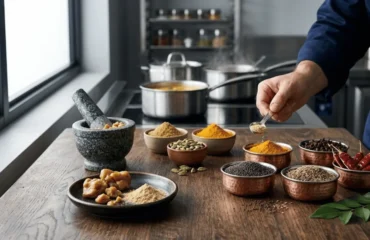

Many Indian dishes start with onion and garlic because they create a deep “base flavour.” But in Jain cooking, satvik meals, fasting days, or simply personal preference, people avoid onion and garlic and still want food to taste satisfying. That’s where hing comes in. If you’ve ever searched for a hing substitute for onion and garlic, you’re basically asking: how do I build that savoury depth without using the usual ingredients?
Hing (asafoetida) doesn’t taste like onion or garlic exactly. But when used correctly in tadka, it creates a similar “rounded” aroma that makes dal, sabzi, kadhi, and many gravies feel complete. The secret is not using more hing. The secret is using tiny quantity + correct tempering timing + the right supporting spices.
This guide explains how a hing substitute for onion and garlic works, which dishes benefit most, the best combinations to build flavour, and common mistakes that make food smell sharp.
Why onion and garlic create “base flavour” (and what you must replace)
Onion and garlic do three jobs in cooking:
-
they add aroma and sweetness when sautéed
-
they add savoury depth to gravies
-
they help carry spices and make the dish feel “full”
When you remove them, dishes can feel flat. So when using a hing substitute for onion and garlic, your aim is to rebuild aroma and depth using:
-
hing (for savoury aroma)
-
cumin/mustard (for tempering base)
-
ginger (for warmth)
-
curry leaves (for fragrance)
-
tomatoes (for body, depending on recipe)
If you combine these correctly, you can get amazing results without onion and garlic.
How hing works as a substitute (the real reason it helps)
Hing is extremely aromatic and blooms quickly in hot fat. That blooming effect gives a “restaurant-style tadka” feeling even in simple food. This is why many cooks use hing as a hing substitute for onion and garlic in dal tadka, kadhi, and vegetable dishes.
But hing must be subtle. If it dominates, it can smell harsh. The goal is background depth.
Best method: how to use hing substitute for onion and garlic (tadka rule)
Hing should be added in oil/ghee on low flame—never sprinkled directly into watery gravy.
Basic method:
-
Heat ghee/oil.
-
Add cumin or mustard seeds.
-
Add ginger or curry leaves (optional).
-
Lower the flame.
-
Add a tiny pinch of hing.
-
Immediately add the dish base (dal/sabzi) or pour tadka over it.
This is the most reliable method for using a hing substitute for onion and garlic without bitterness.
How much hing to use (pinch-level only)
Because onion and garlic are used in spoonful quantity, many people mistakenly think hing should be increased to “replace” them. That is a common error.
Important: For a full dish, a small pinch is usually enough.
Important: For 1–2 servings, less than a pinch is enough.
Important: If the smell is sharp, reduce the quantity next time.
A hing substitute for onion and garlic works best when the dish smells balanced, not intense.
Best spice pairings when you don’t use onion/garlic
If you want your food to taste complete, pair hing with the right supporting flavours.
Cumin + Hing (most common)
Works in dal, khichdi, sabzi, kadhi. Very reliable.
Mustard + Curry Leaves + Hing (South-style depth)
Great for sambar-style gravies, rasam, vegetable dishes, and coconut-based cooking.
Ginger + Hing (winter-friendly)
Works in dal and light gravies. Adds warmth and aroma without heaviness.
Tomato + Hing (for gravy body)
When you avoid onion, tomato gives body and sweetness in many gravies. Hing supports aroma in the background.
Using these combos makes a hing substitute for onion and garlic taste more natural and less “forced.”
Dishes where hing substitute for onion and garlic works best
Dal and lentil dishes
Dal is the easiest place to use hing as a substitute. A clean cumin-hing tadka can make dal feel complete even without onion/garlic.
Khichdi and one-pot meals
Khichdi becomes much more aromatic with a mild tadka. This is one of the simplest ways to practice a hing substitute for onion and garlic technique.
Kadhi
Many kadhi recipes are already onion-light or onion-free. Hing tempering is classic here.
Dry sabzi
Potato, cauliflower, lauki, spinach, bhindi—most sabzis become more flavourful with hing-based tempering.
Upma, poha, and breakfast items
In some styles, a mustard-curry leaf-hing tempering gives a very satisfying aroma without garlic.
Common mistakes (and how to avoid them)
Important: Burning hing in very hot oil
Always lower the flame before adding hing.
Important: Using too much hing
More does not equal better. It becomes sharp and unpleasant.
Important: Adding hing directly into water-based gravy
It can distribute unevenly and smell raw.
Important: Trying to replace onion/garlic with only hing
You also need cumin/mustard, ginger, curry leaves, tomatoes, or other balance elements.
When you avoid these, hing substitute for onion and garlic becomes a clean, repeatable method.
How to make food taste “full” without onion and garlic
A quick practical approach:
-
add a little extra ghee/oil in tadka (not too much)
-
use cumin + hing for depth
-
add ginger for warmth
-
add tomatoes where gravy needs body
-
simmer longer for flavour development
These steps build complexity naturally, and your hing substitute for onion and garlic will feel like a real cooking style, not a compromise.
RB Industries | Top Manufacturing Asafoetida Exportes
Conclusion
Using a hing substitute for onion and garlic is one of the easiest ways to cook Jain or satvik-style meals without losing flavour. The winning formula is always the same: tiny hing + correct tadka timing + supporting spices like cumin/mustard, curry leaves, ginger, and tomatoes. When you use this method, dal, sabzi, kadhi, and one-pot meals taste complete and satisfying—without onion or garlic.
If you need consistent, food-grade hing for home use, retail, or bulk supply, RB Industries | Top Manufacturing Asafoetida Exportes can support your requirements with reliable manufacturing and export-ready solutions. Explore our manufacturing and export services to source hing that matches your market and packaging needs. Contact RB Industries
FAQs
Can hing fully replace onion and garlic in taste?
Hing doesn’t taste exactly like onion or garlic, but it can recreate similar savoury depth when used correctly in tadka. That’s why it works as a hing substitute for onion and garlic in many Indian dishes.
How much hing should I use as a substitute for onion and garlic?
Use only a tiny pinch. Too much hing becomes sharp. The best hing substitute for onion and garlic results come from subtle use with correct tempering.
Which dishes are best for hing substitute for onion and garlic?
Dal, khichdi, kadhi, and dry sabzi are the easiest. These dishes naturally accept hing tempering and feel complete without onion/garlic.
What spices pair best with hing in Jain cooking?
Cumin, mustard, curry leaves, and ginger pair very well. Tomatoes also help in gravies to add body and sweetness without onions.
Why does my dish taste bitter after adding hing?
Hing likely burned in hot oil or was used in excess. Lower the flame, add hing quickly, and mix immediately for clean aroma.