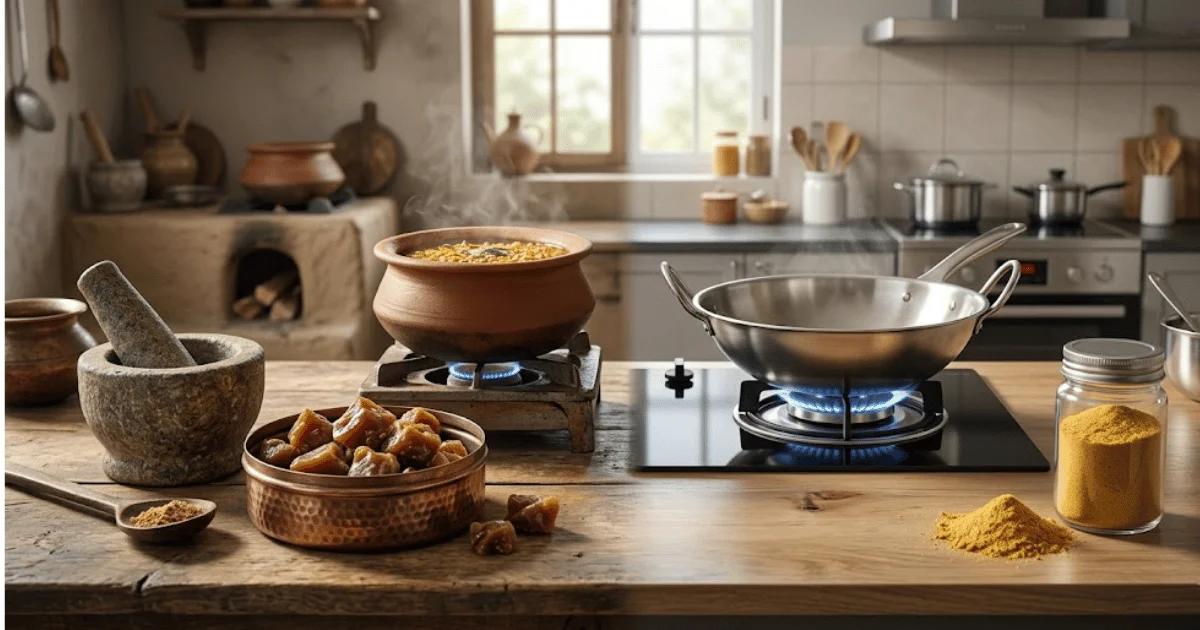
The history of Hing in Indian kitchens spans centuries and reflects the deep connection between Indian culinary traditions and aromatic spices. Known as Asafoetida in English and Hing in India, this powerful ingredient has been an essential part of countless recipes for generations. Although used in very small quantities, Hing has played a major role in shaping the flavors of Indian cuisine.
Today, Hing is found in homes, restaurants, food manufacturing facilities, spice blends, and packaged food products. However, its journey into Indian kitchens began long before modern food processing and commercial spice manufacturing existed.
Understanding the history of Hing in Indian kitchens helps us appreciate why this remarkable ingredient continues to hold an important place in Indian cooking traditions.
Origins of Hing and Its Journey to India
Hing is derived from the resin of plants belonging to the Ferula family. These plants primarily grow in regions such as Iran, Afghanistan, and parts of Central Asia.
Historical trade routes connected these regions with the Indian subcontinent, allowing merchants to transport valuable spices, herbs, and food ingredients across vast distances.
Over time, Hing became widely accepted in Indian cooking because of its unique aroma and ability to enhance the flavor of numerous dishes.
Early Trade Connections
Ancient trade networks played a significant role in introducing Hing to Indian markets. Traders traveling through Central Asia and Persia brought the ingredient into India, where it quickly gained popularity among cooks and traditional food communities.
History of Hing in Indian Kitchens During Ancient Times
The history of Hing in Indian kitchens can be traced back to ancient culinary practices where spices were highly valued for their flavor and versatility.
Indian cooks discovered that a small amount of Hing could transform simple dishes into flavorful meals. It became particularly popular in recipes involving lentils, vegetables, and spice-based preparations.
Its strong aroma and distinctive taste helped establish Hing as an essential ingredient in traditional cooking.
Growing Popularity Across Regions
As Indian cuisine evolved, different regions adopted Hing according to local food preferences. This regional adaptation helped the ingredient become deeply integrated into India’s culinary culture.
Why Hing Became Popular in Indian Kitchens
Several factors contributed to the widespread acceptance of Hing across India.
- Distinctive aroma and flavor
- Compatibility with lentils and vegetables
- Versatility across regional cuisines
- Ability to enhance spice blends
- Use in traditional cooking methods
- Suitability for vegetarian recipes
These characteristics helped Hing establish a permanent place in Indian culinary traditions.
History of Hing in Indian Kitchens Across Different Regions
One of the most fascinating aspects of the history of Hing in Indian kitchens is how different regions adopted and adapted its use.
North India
In North Indian cuisine, Hing became a common ingredient in dals, curries, stuffed breads, and spice tempering.
Gujarat and Rajasthan
Gujarati and Rajasthani cooking traditions embraced Hing extensively. It became an important component of many vegetarian dishes and farsan preparations.
South India
South Indian households incorporated Hing into sambar, rasam, chutneys, and lentil-based recipes.
Eastern India
Several Eastern Indian recipes also adopted Hing as part of traditional seasoning and cooking practices.
These regional variations demonstrate the widespread influence of Hing throughout India.
Role of Hing in Traditional Indian Cooking Techniques
Traditional Indian cooking relies heavily on tempering, commonly known as tadka. This technique involves briefly heating spices in oil or ghee to release their flavors.
Hing became an important part of this process because its aroma develops rapidly when exposed to heat.
The resulting flavor foundation enhances numerous dishes and contributes to the distinctive character of Indian cuisine.
Importance in Tadka Preparation
Many traditional recipes begin with cumin seeds, mustard seeds, and Hing being added to hot oil. This combination remains popular across Indian households today.
History of Hing in Indian Kitchens and Vegetarian Cuisine
India has one of the world’s largest vegetarian populations, and Hing became particularly important in vegetarian cooking traditions.
It helped create deeper flavor profiles in dishes where meat-based ingredients were not used. This ability made Hing a valuable ingredient in countless vegetarian recipes.
Its continued use reflects its importance in traditional Indian food culture.
Evolution of Hing Usage in Modern Times
While traditional uses remain popular, the role of Hing has expanded significantly in modern food production.
Today, food manufacturers use Hing in spice blends, ready-to-eat foods, snack seasonings, instant products, and processed foods.
The ingredient has successfully transitioned from traditional kitchens to large-scale food manufacturing while retaining its cultural significance.
Modern Applications
- Spice blends
- Ready-to-eat foods
- Instant noodles
- Snack seasonings
- Frozen foods
- Commercial food production
This evolution demonstrates the adaptability and enduring relevance of Hing.
Why the History of Hing in Indian Kitchens Still Matters Today
Understanding the history of Hing in Indian kitchens provides valuable insight into the development of Indian cuisine and food culture.
Many ingredients come and go, but Hing has maintained its relevance for centuries because of its unique flavor profile and versatility.
Its continued popularity highlights the importance of preserving culinary traditions while embracing modern innovation.
Frequently Asked Questions About the History of Hing in Indian Kitchens
Where did Hing originally come from?
Hing is derived from Ferula plants that primarily grow in regions such as Iran, Afghanistan, and parts of Central Asia.
How did Hing become popular in India?
Ancient trade routes introduced Hing to India, where its distinctive aroma and flavor made it popular among cooks and food communities.
Why is Hing still used today?
Hing remains popular because it enhances flavor, complements traditional recipes, and works effectively in both household and commercial food applications.
Conclusion
The history of Hing in Indian kitchens reflects centuries of culinary evolution, cultural exchange, and food innovation. From its origins in Central Asia to its widespread adoption across Indian households, Hing has become one of the most recognizable ingredients in Indian cuisine.
Its ability to enhance flavor, support traditional cooking methods, and adapt to modern food manufacturing ensures that Hing will continue to play an important role in Indian kitchens for generations to come.
About RB Industries
RB Industries is a trusted manufacturer and supplier of premium Asafoetida products, serving food manufacturers, spice brands, wholesalers, distributors, exporters, and commercial buyers with reliable quality and consistent supply solutions.
Our Hing Brands
Explore our trusted brands including TOTA Gold, Bankey Bihari, Shri Krishna, and Tastekar. Each brand is crafted to deliver superior aroma, authentic flavor, and dependable quality for both retail and commercial markets.
Custom Hing Solutions
RB Industries offers customized Hing solutions including Hing Powder, Hing Granules, Compound Hing, private labeling, bulk packaging, export-grade products, and industry-specific formulations designed to meet unique customer requirements.