
Hing is used in tiny pinches, so many people don’t think much about quality until something goes wrong—dish smells harsh, the aroma feels weak, or the powder clumps quickly and spreads smell everywhere. That’s when the search starts: how to check pure hing. Buyers want to know what good hing should look and smell like, how to avoid low-grade or adulterated products, and what quick checks they can do at home before trusting a pack.
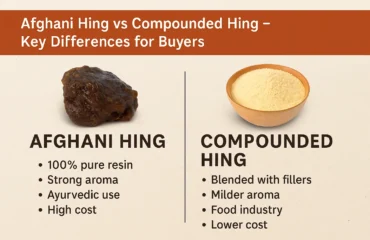
One important point: in the market, most hing powders are compounded (blended with carriers) for easier use. “Pure” can mean different things depending on whether you’re talking about raw resin or a compounded powder. So when you ask how to check pure hing, you’re really checking two things:
-
is the product clean, consistent, and correctly labeled?
-
does it perform well in cooking with a small pinch?
This guide gives you a practical quality checklist—label checks, aroma signs, packaging checks, simple home tests, and red flags to avoid.
Understand the forms first: resin vs powder
Contents
- 1 Understand the forms first: resin vs powder
- 2 Label checks (the fastest way to identify quality)
- 3 Aroma test: what “good hing” should smell like
- 4 Texture test: what to look for in powder
- 5 Packaging test: why container quality matters
- 6 Simple home tests (safe, practical, and non-technical)
- 7 Common red flags (possible adulteration or low grade)
- 8 How to buy better hing (so you don’t worry later)
- 9 RB Industries | Top Manufacturing Asafoetida Exportes
- 10 Conclusion
- 11 FAQs
Before checking purity, know what you bought.
Important: Resin/lumps
Closer to the original material. Fewer added ingredients.
Important: Powder
Often compounded with carriers to make it free-flowing and easy to dose.
So, how to check pure hing depends on form. With resin, you mainly check aroma, texture, and cleanliness. With powder, you also check labeling, ingredients, and consistency.
Label checks (the fastest way to identify quality)
If you want to know how to check pure hing in a practical way, start with the label.
Important: Clear ingredient list
Avoid products that hide ingredients or use vague terms.
Important: Manufacturing date and best-before
Freshness matters for aroma. Old stock loses strength and can smell stale.
Important: Brand transparency
Trust increases when a brand shares clear packaging details and consistent information.
Important: Storage instructions
Good brands tell you to store airtight and away from moisture.
If a label is unclear, that’s a red flag. Even if the product smells strong, unclear labeling can mean inconsistent quality.
Aroma test: what “good hing” should smell like
Hing naturally smells strong, but quality hing usually has a clean pungent aroma.
When learning how to check pure hing, use these aroma cues:
Important: Strong but clean
It should feel pungent and aromatic, not like harsh synthetic chemicals.
Important: No damp or moldy smell
If it smells wet, sour, or musty, moisture damage is likely.
Important: No stale “flat” smell
Very old hing can smell weak and dull. People then use too much, making dishes harsh.
Aroma alone does not prove purity, but it is a good early signal.
Texture test: what to look for in powder
Powder quality can be evaluated by texture.
Important: Free-flowing and uniform
If it’s heavily clumped, moisture exposure is likely.
Important: No hard lumps with strong smell pockets
That usually means poor storage or repeated steam exposure.
Important: No unusual stickiness
Some stickiness can happen in humidity, but extreme stickiness is not ideal.
Texture is one of the easiest answers to how to check pure hing because poor texture often indicates storage and quality issues.
Packaging test: why container quality matters
Hing aroma spreads easily. If packaging is weak, your whole kitchen will smell like hing.
To check packaging quality:
Important: Lid should seal tightly
Important: Jar rim should be clean (no powder stuck in threads)
Important: Pack should be moisture-resistant
Important: No loose caps or broken seals
Bad packaging often leads to moisture entry, clumping, and aroma loss. This makes people doubt the product and search how to check pure hing.
Simple home tests (safe, practical, and non-technical)
Here are simple, low-risk tests you can do.
Test 1: Tadka bloom test
This is the most useful cooking test.
-
Heat a teaspoon of ghee/oil
-
Lower the flame
-
Add a tiny pinch of hing
-
Smell the aroma after 5–10 seconds
Good hing should bloom quickly and smell savoury, not burnt or chemical-like. If it smells bitter or harsh immediately, the product may be poor quality or you used too much. This is a strong indicator in how to check pure hing because cooking performance matters more than raw smell.
Test 2: Airtight storage smell test
Place the hing container in a closed cabinet for a day. If your cabinet smells strongly, the packaging seal is poor. This test checks packaging more than purity, but it still helps you judge product handling quality.
Test 3: Water pinch check (optional)
Mix a tiny pinch in warm water and smell it. If it feels extremely harsh or causes throat irritation, the quantity may be too high or the product may be strong/harsh. Use this only as a mild check, not as a routine.
The tadka bloom test remains the best practical answer for how to check pure hing.
Common red flags (possible adulteration or low grade)
Important: Very weak aroma even in tadka
Old stock or low-grade formulation.
Important: Unclear ingredient list
High risk of inconsistent formulation.
Important: Heavy clumping and damp smell
Moisture damage and poor packaging.
Important: Strong “chemical-like” smell
Not a guaranteed sign, but it is a warning sign to avoid.
Important: Extreme bitterness when used correctly
If it tastes bitter even when you add it at low flame in tiny amount, quality may be poor.
These red flags help you decide how to check pure hing without lab testing.
How to buy better hing (so you don’t worry later)
If you want fewer issues:
-
choose brands with clear labeling
-
choose airtight packaging
-
buy the right quantity for your usage
-
store it in an airtight glass jar and double-seal
-
always use a dry spoon and avoid steam exposure
Good storage protects quality. Many “purity doubts” are actually storage problems.
RB Industries | Top Manufacturing Asafoetida Exportes
Conclusion
Learning how to check pure hing is about practical signals: clear labeling, clean strong aroma, free-flowing texture, good packaging seal, and smooth performance in tadka using a tiny pinch. The best home test is the tadka bloom test—good hing should release a warm, savoury aroma quickly without harsh bitterness. Avoid products with unclear labels, damp smell, heavy clumping, or weak cooking performance.
If you want consistent hing quality for home use, retail, bulk buying, or export supply, RB Industries | Top Manufacturing Asafoetida Exportes can support your sourcing requirements with reliable product formats and packaging options. Explore Our Products and Offerings, and reach out via Contact Us for requirements and queries.
FAQs
How to check pure hing at home quickly?
Do the tadka bloom test: heat ghee/oil, lower flame, add a tiny pinch of hing, and check the aroma after a few seconds. Good hing blooms cleanly and quickly.
Does strong smell mean hing is pure?
Not always. Hing naturally smells strong. Purity and quality depend on labeling transparency, storage, and how it performs in cooking.
Why does my hing clump and smell bad?
Moisture exposure and poor packaging cause clumping and stale smell. Store airtight, use a dry spoon, and avoid steam exposure.
What are the biggest red flags for low-quality hing?
Unclear ingredient labels, damp or moldy smell, heavy clumping, weak aroma in tadka, and bitter taste even when used correctly.
What is the best way to store hing after buying?
Store in an airtight glass jar, double-seal the pack, keep it away from heat and steam, and clean the lid rim for a tight seal.