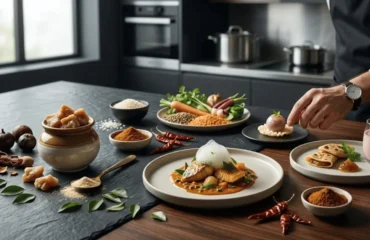
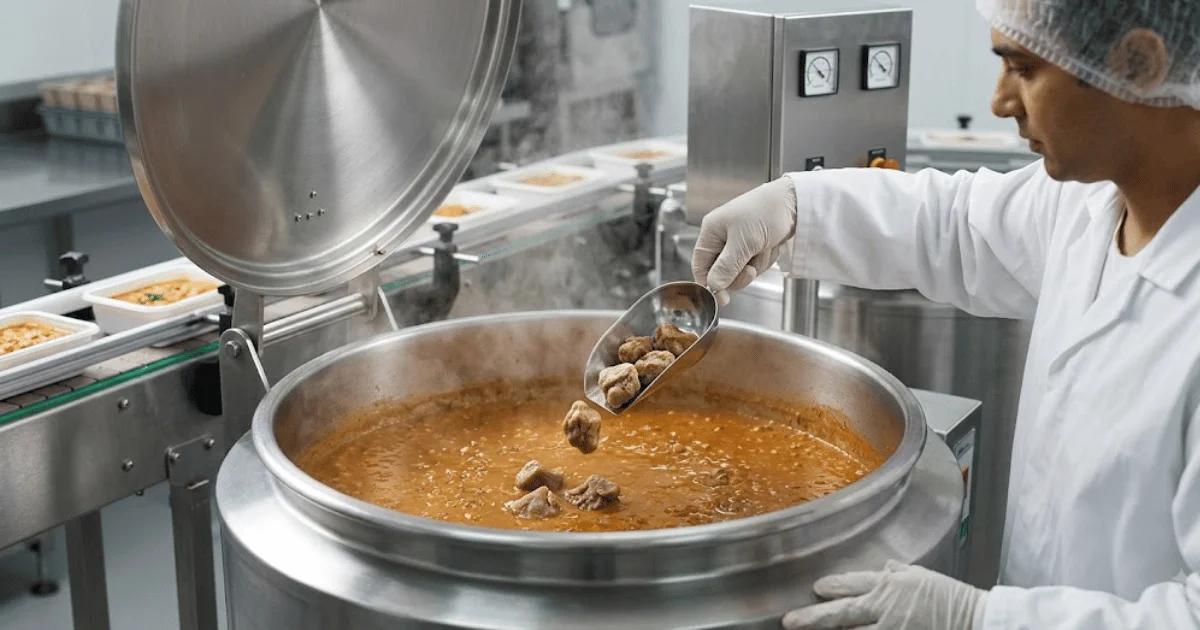
Heat Stability of Asafoetida is an important consideration when Hing is used in cooked foods, seasoning systems, snacks, ready-to-eat products, and commercial food formulations. Asafoetida is valued largely for its distinctive aromatic contribution, but heat can influence how those aroma characteristics are released, transformed, or retained during processing.
This does not mean that Hing cannot be used in heated foods. In fact, traditional cooking commonly exposes Hing to heat during tempering and other preparation methods. The important factor is understanding the relationship between temperature, exposure time, food matrix, processing method, and the specific Hing product being used.
For food manufacturers, Heat Stability of Asafoetida should therefore be evaluated as part of the complete product-development process rather than judged only from the raw ingredient.
What Is Heat Stability in Food Ingredients?
Heat stability describes how well an ingredient maintains its intended characteristics when exposed to elevated temperatures during processing or preparation.
Depending on the ingredient, those characteristics may include:
- Aroma
- Flavor
- Colour
- Texture
- Functional performance
- Composition
For Hing, aroma and flavor performance are particularly important because its characteristic sensory contribution is a major reason for using the ingredient.
Is Asafoetida Heat Stable?
The answer depends on how the term “heat stable” is being used.
Hing can be successfully used in heated food applications, but its sensory profile can change depending on the intensity and duration of heat exposure.
Short, controlled heating can help transform the sharp raw aroma into a more rounded cooked character. Excessive or prolonged heating can produce a different sensory result.
Therefore, the practical question for manufacturers is not simply whether Hing is heat stable. It is whether the selected Hing product provides the desired performance under the specific processing conditions of the application.
Why Heat Matters for Hing
Hing contains volatile compounds that contribute significantly to its characteristic aroma.
Volatile compounds can be released during heating, which is one reason Hing can become highly noticeable when added to hot oil or a heated food system.
The way those compounds are released and perceived can change with temperature and processing time.
This makes thermal conditions an important part of Hing formulation.
Heat Can Transform Raw Hing Aroma
Raw Hing can have an extremely sharp and pungent aroma.
When used appropriately during cooking, heating can transform that initial character into a warmer and more integrated aroma.
This transformation is one reason Hing has traditionally been used during tempering.
The objective is not simply to heat the ingredient. It is to expose it to the right conditions for the intended culinary result.
Why Excessive Heat Can Be a Problem
Hing is highly aromatic and can respond quickly to heat.
If it is exposed to excessive heat for too long, the sensory profile may become harsh, bitter, or less balanced.
This is particularly noticeable during direct tempering, where a small quantity of Hing is placed into hot fat.
The existing RB Industries guidance also emphasizes adding Hing at lower heat and near the end of tempering to reduce the risk of burning. :contentReference[oaicite:1]{index=1}
Temperature and Exposure Time Work Together
Temperature should not be considered in isolation.
Exposure time also matters.
A brief exposure to a relatively high temperature may produce a different result from prolonged exposure to moderate heat.
For food manufacturers, this means that thermal processing should be evaluated as a complete time-temperature condition.
Heat Stability of Asafoetida Depends on the Application
Different food products expose Hing to very different conditions.
For example:
- Tempering involves short exposure in hot fat.
- Boiling can involve longer exposure in a water-based system.
- Baking can involve extended heating inside a food matrix.
- Frying can expose seasoning components to intense heat.
- Extrusion can combine heat, pressure, moisture, and mechanical energy.
These applications should not be treated as identical.
Hing in Tempering
Tempering is one of the best examples of controlled heat exposure.
Oil or ghee is heated, other tempering ingredients are often added, the heat is reduced, and Hing is introduced in a small quantity.
The Hing is then quickly incorporated into the dish.
This allows the aroma to develop without keeping the ingredient under intense heat for an unnecessarily long period.
Why Hing Is Added Near the End of Tadka
Hing can burn quickly when exposed to excessive heat.
Adding it after the primary tempering spices have spluttered and lowering the flame can help control the exposure.
This approach is particularly useful for household cooking and restaurant kitchens.
For industrial applications, the same principle translates into controlled process conditions rather than simply following a household recipe.
Heat Stability of Asafoetida in Commercial Cooking
Commercial kitchens often prepare much larger quantities than household kitchens.
This creates additional variables.
The amount of oil, pan size, heating system, mixing speed, and batch volume can all influence how Hing behaves.
Commercial operators should therefore standardize the process rather than assuming that a household technique can be multiplied directly.
Hing in Ready-to-Eat Foods
Ready-to-eat foods can involve several stages of thermal processing.
The ingredient may be mixed into the formulation before cooking, processed with the food, and then stored for an extended period.
This makes the final sensory result dependent on both heat exposure and subsequent storage.
R&D teams should evaluate the complete process rather than testing Hing only before cooking.
Hing in Ready-to-Cook Foods
Ready-to-cook products create a different situation.
The manufacturer may incorporate Hing into a dry seasoning or concentrated base, while the consumer applies the final cooking heat later.
The ingredient therefore needs to perform through both manufacturing and consumer preparation.
Hing in Instant Foods
Instant food products often contain dry seasoning systems that are exposed to heat and hydration during preparation.
Hing selection should consider how the aroma develops after rehydration and heating.
The ideal result is a balanced aroma that integrates with the rest of the seasoning rather than becoming excessively sharp.
Hing in Snack Manufacturing
Snack manufacturing can involve frying, baking, extrusion, or other thermal processes.
Depending on the product, Hing may be incorporated before processing or applied later as part of a seasoning system.
These two approaches can produce very different sensory outcomes.
Why Post-Process Seasoning Can Behave Differently
If Hing is added after the main thermal process, the ingredient may experience less direct heat exposure.
This can help preserve certain aromatic characteristics depending on the application.
However, the final seasoning must still withstand mixing, packaging, storage, and consumer preparation.
The best approach depends on the target product.
Hing in Baking Applications
Baking exposes ingredients to sustained heat over a longer period than many tempering applications.
If Hing is included in a baked product, the R&D team should evaluate how much of its desired aroma remains after baking and storage.
The inclusion level and formulation may need adjustment according to the desired final sensory profile.
Hing in Frying Applications
Frying involves relatively intense thermal conditions.
If Hing is incorporated directly into a frying process, its aroma characteristics may change significantly compared with a post-frying seasoning application.
Manufacturers should therefore compare both approaches when developing fried products.
Hing in Extruded Foods
Extrusion can combine temperature, pressure, moisture, and mechanical shear.
This makes it a particularly important application for ingredient testing.
A seasoning ingredient that performs well in a simple dry blend may not behave identically during extrusion.
Application-specific trials are therefore essential.
Heat Stability and Food Matrix
Hing does not exist in isolation once it is added to a food product.
The food matrix can influence how its aroma behaves during processing.
Important factors can include:
- Fat content
- Moisture
- Salt
- Acidity
- Protein
- Starch
- Other spices
These components can influence aroma release and sensory perception.
Role of Fat in Hing Applications
Traditional tempering demonstrates the importance of fat as a carrier for aromatic ingredients.
Oil or ghee can help distribute Hing throughout the food and transform its raw aroma.
Commercial formulations may use different fat systems, so manufacturers should evaluate Hing within the actual recipe.
Heat and Aroma Loss
Because Hing contains volatile aroma compounds, excessive thermal exposure can influence aroma retention.
The extent of any change depends on the ingredient, formulation, processing conditions, and subsequent storage.
Therefore, manufacturers should avoid assuming that all Hing products will respond identically to heat.
Does Heat Destroy Hing Completely?
No.
That would be an oversimplification.
Hing is routinely used in cooked foods and can contribute desirable aroma after heating.
The important distinction is between appropriate processing and excessive thermal exposure.
Heat Stability Is Not the Same as Heat Resistance
An ingredient does not need to remain completely unchanged during heating to be useful.
Food processing often intentionally changes ingredients.
For Hing, the desired outcome may actually involve transforming the raw aromatic character into a more integrated cooked profile.
Therefore, food manufacturers should define the desired final sensory result rather than expecting the raw ingredient to remain identical after processing.
Why Sensory Testing Is Essential
Laboratory measurements can provide valuable information, but the final question is how the product tastes and smells after processing.
R&D teams should therefore evaluate:
- Raw aroma
- Processed aroma
- Flavor intensity
- Aftertaste
- Overall balance
- Comparison with the target product
This gives a more practical assessment of thermal performance.
How to Test Heat Stability of Asafoetida
A basic application trial can compare the same Hing product under different controlled processing conditions.
For example, an R&D team can prepare samples with:
- Lower heat exposure
- Moderate heat exposure
- Higher heat exposure
- Different exposure durations
The samples can then be compared after processing.
This does not create a universal heat-stability rating, but it helps determine how the ingredient behaves in the intended application.
Why a Control Sample Matters
A control sample gives the R&D team a reference point.
One batch can be prepared without Hing while another uses the selected Hing product.
The team can then compare aroma and flavor before and after processing.
This helps separate the contribution of Hing from other changes in the formulation.
Compare Different Hing Products
Manufacturers should not assume that every Hing product will behave identically.
Different formulations can have different concentrations, carriers, particle characteristics, and sensory profiles.
Therefore, when selecting a supplier, commercial samples should be tested under the intended processing conditions.
Heat Stability of Asafoetida and Product Concentration
The composition and concentration of a Hing product can influence its performance.
A concentrated Asafoetida product may require a much smaller inclusion level than a compounded product.
This changes how much material is exposed to the processing environment.
Dosage should therefore always be considered alongside thermal processing.
Why Dosage Matters During Heating
Using more Hing does not necessarily compensate for aroma loss during processing.
Excessive dosage can create an overpowering raw or cooked aroma even if some volatile components are lost.
The correct strategy is to optimize dosage through controlled application trials.
Hing and Thermal Processing Time
Processing time can have a significant effect on sensory performance.
A short heating step may release aroma without excessive degradation.
Longer exposure can produce a different profile.
Manufacturers should therefore document both temperature and time during application testing.
Why Factory Conditions Matter
Laboratory heating equipment may not reproduce the exact conditions found on a commercial production line.
Differences in:
- Equipment geometry
- Batch size
- Heating rate
- Mixing
- Moisture distribution
- Residence time
can affect the final product.
This is why pilot-scale testing is important before commercial approval.
Heat Stability During Scale-Up
A formulation that works in a small laboratory batch may behave differently when production is scaled.
A larger batch can heat differently and may have different mixing and residence-time characteristics.
The Heat Stability of Asafoetida should therefore be confirmed at an appropriate production scale.
Hing and Moisture During Heating
Heat and moisture often interact during food processing.
A dry seasoning may experience different conditions from a high-moisture curry base.
The presence of water can influence how aromatic components are released and perceived.
Manufacturers should therefore evaluate Hing in the actual food matrix.
Hing in Dry Seasoning Systems
Dry seasoning blends may experience limited moisture during production but can later encounter humidity during storage or consumer preparation.
Hing selection should therefore consider both thermal exposure and storage stability.
Particle size, packaging, and moisture control can all contribute to consistent performance.
Hing in Wet Food Systems
Wet products such as sauces, gravies, and prepared meals provide a different environment.
Hing may be added during cooking or incorporated into a seasoning base before thermal processing.
The manufacturer should evaluate how long the ingredient remains exposed to heat and how the final aroma changes after processing.
Heat Stability and Aroma Timing
When Hing aroma is released can be as important as how much aroma is present.
A product may require an immediate aroma impact when opened or consumed.
Another product may require the aroma to develop during cooking.
These different objectives can require different formulation and processing strategies.
Hing and Post-Processing Aroma
For some products, preserving aroma until the consumer opens or prepares the product is important.
Packaging and storage then become part of the thermal-performance discussion.
An ingredient may perform well during manufacturing but lose desirable aroma during extended storage if packaging is inadequate.
Heat Stability and Packaging
Packaging does not change the ingredient’s heat response during processing, but it can influence what happens afterward.
Exposure to air, moisture, and environmental temperature can affect aroma retention.
RB Industries’ own manufacturing information highlights controlled humidity and temperature during storage as part of freshness management. :contentReference[oaicite:2]{index=2}
Why Storage Temperature Matters
Food products can spend significant periods in warehouses, distribution centers, retail locations, and consumer kitchens.
High storage temperatures can influence ingredient and product stability over time.
Manufacturers should therefore consider both processing temperature and storage temperature when evaluating the complete product lifecycle.
Heat Stability in Commercial Hing Procurement
Procurement teams should not evaluate Hing only on price or raw aroma.
For applications involving significant thermal processing, buyers should ask how the selected product performs in the intended formulation.
Relevant information can include:
- Product composition
- Physical format
- Recommended application
- Storage conditions
- Packaging
- Batch consistency
- Application samples
Questions Food Manufacturers Should Ask Suppliers
Before approving Hing for a heat-intensive application, buyers can ask:
- Which Hing format is recommended for our application?
- What dosage range should we evaluate?
- Can you provide commercial samples?
- What is the product specification?
- How consistent is the aroma between batches?
- What packaging is recommended?
- How should the product be stored?
- Can you support recurring commercial volumes?
These questions connect ingredient selection with actual manufacturing requirements.
Common Mistakes When Using Hing With Heat
Several mistakes can produce poor results.
- Adding too much Hing to compensate for processing losses
- Exposing Hing to unnecessarily high temperatures
- Ignoring processing time
- Testing only the raw ingredient
- Skipping pilot production
- Ignoring the food matrix
- Using the same dosage for every Hing format
- Failing to evaluate post-processing aroma
Most of these problems can be reduced through controlled application testing.
Why “More Heat” Is Not a Better Strategy
Some food developers may assume that stronger heating will release more aroma.
That approach can be counterproductive.
The objective is controlled aroma development, not maximum heat exposure.
For Hing, controlled processing is generally more useful than simply increasing temperature.
Why “More Hing” Is Not a Better Strategy
Increasing dosage can make a product smell stronger, but it can also make the flavor harsh or unbalanced.
The correct approach is to identify the optimum dosage for the desired final sensory profile.
This is especially important for products with delicate flavor systems.
Heat Stability and Flavor Balance
Hing rarely works alone in a finished food.
It interacts with other spices, fats, acids, salt, herbs, proteins, starches, and flavoring ingredients.
Thermal processing can change several of these components simultaneously.
Therefore, the final balance should always be evaluated after processing.
Why R&D Teams Should Test the Finished Product
The consumer does not experience the raw Hing powder.
The consumer experiences the finished food.
Therefore, the most meaningful test is whether the finished product delivers the intended sensory experience after manufacturing and preparation.
Heat Stability and Sensory Evaluation
A useful sensory evaluation can record:
- Initial aroma
- Cooked aroma
- Flavor intensity
- Sharpness
- Bitterness
- Aftertaste
- Overall balance
Using a consistent scoring method can make comparisons between Hing samples more useful.
Golden Sample Comparison
For commercial buyers, an approved “golden sample” can provide a useful reference.
New Hing batches can be tested using the same formulation and processing conditions.
The new batch can then be compared with the approved reference.
This approach is more reliable than relying on memory.
Heat Stability and Batch Consistency
Two Hing products may both perform well under heat but produce different sensory profiles.
Commercial manufacturers therefore need consistency not only in raw aroma but also in finished-product performance.
This is why supplier qualification should include repeated lot testing where appropriate.
Can Compound Hing Be Used in Heated Foods?
Yes, Compound Hing can be used in many heated food applications.
The important question is whether the specific formulation performs correctly under the intended processing conditions.
Different Compound Hing products can have different compositions, so manufacturers should test the actual product rather than making assumptions based only on the category name.
Can Hing Powder Be Used in High-Heat Applications?
Hing Powder can be used in heated food applications, but its performance depends on dosage, processing method, food matrix, and exposure time.
Manufacturers should evaluate whether the powder is added before, during, or after the main thermal process.
Can Hing Granules Be Used During Processing?
Hing Granules can also be evaluated for commercial food applications.
Their physical form can affect mixing and dosing, while the thermal response still depends on the formulation and processing conditions.
Application testing should determine whether the format fits the production system.
Heat Stability and Food Product Development
Heat stability should be considered early in product development rather than after the recipe has already been finalized.
This allows R&D teams to compare different Hing products and processing strategies before the product moves into commercial production.
How to Build a Heat-Testing Protocol
A simple internal protocol can include:
- Select two or more suitable Hing samples.
- Define the target dosage range.
- Prepare the same base formulation.
- Apply controlled temperature conditions.
- Record exposure time.
- Evaluate aroma immediately after processing.
- Evaluate the product after cooling.
- Evaluate after storage.
- Compare results with the target profile.
- Select the most suitable ingredient and process.
This creates a repeatable method for evaluating thermal performance.
Why Storage Testing Should Follow Heat Testing
A product may perform well immediately after processing but change during storage.
Therefore, heat testing should ideally be followed by shelf-life evaluation.
This gives manufacturers a clearer picture of how the ingredient performs throughout the product lifecycle.
Heat Stability and Product Shelf Life
Thermal processing is only one part of product stability.
After manufacturing, the product may spend weeks or months in storage.
Aroma retention during this period can be just as important as initial processing performance.
Manufacturers should therefore evaluate both conditions.
Future Importance of Heat Stability
As food manufacturers develop more processed, convenient, and ready-to-use products, ingredients increasingly need to perform within complex manufacturing systems.
This creates greater demand for application-specific ingredient evaluation.
Hing suppliers that understand how their products behave under different processing conditions can provide greater value to food R&D teams.
Why Application Support Matters
Ingredient procurement is becoming more technical.
Food companies increasingly need suppliers that can provide samples, specifications, packaging options, and useful application information.
This is particularly relevant when the ingredient has a strong sensory impact and is being used in a complex thermal process.
RB Industries and Commercial Hing Applications
RB Industries manufactures and supplies Asafoetida, Compound Hing, Hing Powder, and Hing Granules for food manufacturers, seasoning companies, restaurants, wholesalers, distributors, exporters, retailers, and FMCG brands.
For commercial applications involving cooking or thermal processing, the right Hing product should be selected according to the formulation, dosage, food matrix, processing conditions, physical format, packaging, storage requirements, and expected production volume.
Application trials can help food manufacturers determine how a particular Hing product performs before moving into regular commercial production.
Conclusion
The Heat Stability of Asafoetida should be understood as an application-specific performance question rather than a simple yes-or-no characteristic. Hing can work effectively in heated foods, and controlled heating can transform its sharp raw aroma into a more integrated savory character. However, excessive temperature or prolonged exposure can alter the desired sensory profile.
For food manufacturers, the right approach is to evaluate temperature, exposure time, food matrix, dosage, physical format, processing method, and storage together. A Hing product that performs well in one application may require different handling in another.
R&D teams should therefore test Hing in the actual food formulation and, where appropriate, compare multiple samples under realistic pilot-scale conditions. This helps identify the right product and processing method before commercial launch.
RB Industries supplies Asafoetida, Compound Hing, Hing Powder, and Hing Granules for commercial food applications. Food manufacturers, seasoning companies, distributors, exporters, restaurants, and FMCG brands can discuss their application, formulation, packaging, and bulk supply requirements to identify a suitable Hing product.
Frequently Asked Questions
What is the Heat Stability of Asafoetida?
Heat Stability of Asafoetida refers to how the ingredient’s aroma and flavor characteristics respond to thermal exposure. Hing can be successfully used in heated foods, but its sensory profile can change depending on temperature, exposure time, formulation, and processing conditions.
Does heat destroy Asafoetida?
Not simply. Hing is routinely used in cooked foods, and controlled heating can transform its sharp raw aroma into a more rounded cooked character. Excessive or prolonged heating, however, can negatively affect the desired sensory profile.
Why can Hing become bitter when heated?
Hing can become harsh or bitter when exposed to excessive heat or kept in hot fat for too long. Controlled temperature, short exposure, and appropriate timing help reduce the risk of burning, particularly during tempering.
Is Compound Hing suitable for heated food products?
Compound Hing can be used in many heated food applications. However, the performance depends on the specific formulation, dosage, processing conditions, and product specification, so manufacturers should test the actual product in their intended application.
How can food manufacturers test Hing heat stability?
Manufacturers can compare Hing samples at controlled dosage levels and processing temperatures, record exposure time, and evaluate aroma and flavor immediately after processing and during storage. Pilot-scale testing can then confirm whether the selected product performs consistently under commercial conditions.