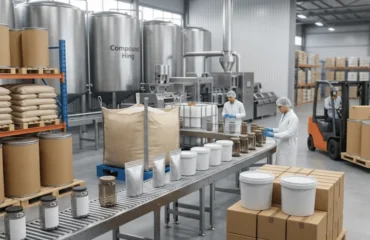

The Future of Food Ingredient Procurement is moving beyond simply finding a supplier with the lowest quotation. Food manufacturers increasingly need predictable quality, reliable supply, transparent specifications, traceability, risk management, technical documentation, and suppliers that can support long-term production requirements.
For ingredients such as Asafoetida, Compound Hing, spice blends, and other flavoring materials, procurement decisions can directly affect product consistency and manufacturing continuity. A low-cost ingredient is not useful if inconsistent batches force reformulation, create production problems, or lead to customer complaints.
Modern procurement is therefore becoming more strategic. Procurement, R&D, quality, production, finance, and supply-chain teams increasingly need to work together when selecting and managing ingredient suppliers.
What Is the Future of Food Ingredient Procurement?
Future of Food Ingredient Procurement refers to the changing methods food manufacturers use to source, evaluate, approve, monitor, and manage ingredients for commercial production.
The future model is likely to focus more heavily on:
- Supplier reliability
- Ingredient consistency
- Traceability
- Quality documentation
- Supply-chain visibility
- Risk management
- Demand forecasting
- Digital procurement
- Cost-in-use
- Long-term supplier relationships
These changes are particularly important as food supply chains become more complex.
Why Food Ingredient Procurement Is Changing
Food manufacturers face increasing pressure to maintain quality while controlling costs and responding quickly to market changes.
Ingredient sourcing can no longer be treated as an isolated purchasing activity.
A supplier decision can influence production schedules, product formulation, inventory, quality assurance, customer satisfaction, and ultimately profitability.
Procurement Is Becoming More Strategic
Traditional procurement often focused on price, quantity, and delivery.
Modern procurement considers the total business impact of an ingredient and its supplier.
This means procurement teams increasingly ask whether a supplier can support quality, continuity, scalability, documentation, and future growth.
Price Alone Is Losing Importance
Price will always matter, but the cheapest ingredient is not automatically the most economical choice.
A lower-priced ingredient can create hidden costs through higher dosage requirements, inconsistent quality, production delays, rejected batches, or additional quality testing.
Modern procurement therefore needs to evaluate total cost rather than purchase price alone.
Cost-in-Use Will Become More Important
Cost-in-use measures what an ingredient actually costs within the finished product.
For aromatic ingredients such as Hing, dosage can vary depending on concentration and application performance.
A product with a higher price per kilogram may still have a lower cost contribution if less material is required to achieve the desired sensory result.
Supplier Quality Data Will Become More Valuable
Procurement teams increasingly need reliable supplier data before approving an ingredient.
Relevant information can include:
- Product specifications
- Batch information
- Certificates of Analysis
- Ingredient composition
- Packaging specifications
- Storage requirements
- Quality records
- Traceability information
Better data enables better supplier comparisons.
Digital Procurement Will Continue Growing
Digital tools can make procurement faster and more organized.
Instead of managing supplier information through disconnected emails and spreadsheets, companies can increasingly use centralized systems for quotations, specifications, purchase orders, supplier records, approvals, and performance tracking.
This can reduce administrative work and improve visibility.
Supplier Information Will Become More Centralized
A modern procurement system can maintain a central record for each approved ingredient supplier.
The record may contain:
- Supplier details
- Approved products
- Pricing history
- Specifications
- Quality documents
- Performance history
- Delivery records
- Communication history
This makes supplier management more systematic.
Data-Driven Supplier Selection
Procurement teams can increasingly use historical data to compare suppliers.
Instead of asking only which supplier offers the lowest price, businesses can evaluate quality performance, delivery reliability, complaint rates, lead times, and commercial responsiveness.
This creates a more complete supplier score.
Supplier Scorecards Will Become More Common
A supplier scorecard can evaluate multiple performance areas.
For example:
- Product quality
- Batch consistency
- On-time delivery
- Documentation accuracy
- Communication
- Pricing stability
- Complaint resolution
- Supply capacity
Scorecards can help procurement teams identify strong long-term partners.
Traceability Will Become a Procurement Priority
Food manufacturers need to understand where ingredients come from and how they move through the supply chain.
Traceability can help businesses investigate quality issues, manage recalls, verify batches, and maintain better control over incoming materials.
For food ingredients, batch-level identification can therefore become increasingly important.
Batch Traceability for Hing
For Asafoetida and Compound Hing, buyers can maintain records linking an incoming ingredient batch to the finished products in which it was used.
This can simplify investigation if a sensory or quality issue occurs later.
Digital Certificates and Documentation
Procurement systems can increasingly store quality documents digitally.
Instead of searching through email attachments for old certificates, quality teams can access relevant documentation from a centralized supplier record.
This can make supplier audits and batch approval more efficient.
Demand Forecasting Will Influence Ingredient Buying
Procurement decisions are closely connected to expected production volumes.
Better demand forecasting can help food manufacturers plan ingredient purchases before stock becomes critical.
This reduces emergency buying and gives suppliers more time to prepare recurring orders.
Why Forecasting Matters for Hing Buyers
Food manufacturers using Hing regularly can estimate future consumption based on production schedules, historical demand, seasonal patterns, and planned product launches.
Sharing realistic forecasts with suppliers can improve supply planning.
Procurement Will Become More Collaborative
Future procurement teams are likely to work more closely with suppliers instead of treating every purchase as an isolated transaction.
Long-term collaboration can help both sides understand expected volumes, quality requirements, packaging needs, and future product-development plans.
Long-Term Supplier Relationships
A reliable supplier can become a strategic part of the manufacturing supply chain.
For recurring Hing purchases, long-term relationships can support better communication, consistent specifications, predictable supply, and faster problem resolution.
However, long-term relationships should still be supported by objective quality monitoring.
Risk Management Will Become More Important
Food manufacturers cannot assume that every supplier will always be able to deliver without disruption.
Supply interruptions can result from raw-material shortages, transportation problems, geopolitical events, weather conditions, manufacturing disruptions, or unexpected demand increases.
Procurement teams therefore need contingency plans.
Dual Sourcing and Supply Risk
For critical ingredients, some manufacturers may consider qualifying more than one supplier.
This can reduce dependence on a single source.
However, adding a second supplier does not mean immediately switching between products. Each supplier should be technically evaluated and approved before commercial use.
Supplier Diversification Requires Technical Control
Two suppliers may provide products with the same general ingredient name but different sensory or technical characteristics.
Changing suppliers without validation can therefore create formulation differences.
Supplier diversification should be combined with approved specifications and reference samples.
Quality Consistency Will Remain Critical
Food manufacturers need ingredients that perform consistently across production batches.
For flavoring ingredients, small differences can affect the sensory profile of the finished product.
Future procurement systems will therefore place greater emphasis on supplier quality history.
Procurement and R&D Will Work More Closely
Procurement teams know the commercial side of sourcing.
R&D teams understand how ingredients perform in formulations.
Separating these functions completely can lead to poor supplier decisions.
The future model requires closer collaboration between both teams.
Why R&D Approval Should Come Before Commercial Sourcing
An ingredient can appear commercially attractive but fail during application testing.
R&D should therefore evaluate sensory performance, dosage, processing behavior, and food-matrix compatibility before procurement finalizes recurring supply.
Quality and Procurement Will Become More Connected
Quality teams increasingly influence supplier decisions because incoming ingredient quality affects finished-product performance.
Procurement should therefore consider quality requirements before negotiating final commercial terms.
Ingredient Specifications Will Become More Detailed
A simple product name is not enough to guarantee consistent supply.
Modern procurement increasingly relies on detailed specifications that define the expected product characteristics.
For Hing, this can include physical form, composition, sensory characteristics, packaging, storage, and relevant quality requirements.
Why Specification Sheets Matter
A clear specification gives both buyer and supplier the same reference point.
It can reduce disagreements about what was ordered and what was delivered.
Specification sheets can also simplify supplier comparisons.
Private Label Procurement Will Grow
Private-label food brands are creating new demand for flexible ingredient and manufacturing partnerships.
These brands need suppliers that can support product specifications, custom packaging, recurring production, and scalable supply.
For Hing manufacturers, this creates an opportunity to work directly with emerging food brands and retailers.
Contract Manufacturing and Ingredient Procurement
More food businesses may choose contract manufacturing rather than investing in their own production facilities.
This changes procurement because the manufacturer may manage ingredient sourcing while the brand focuses on product development, packaging, distribution, and marketing.
Supplier coordination becomes even more important in this model.
Procurement Will Support Faster Product Development
Food companies increasingly need to launch products quickly.
Procurement can support R&D by maintaining qualified supplier networks and approved ingredient specifications.
This reduces the time required to identify and validate ingredients for new products.
Sample-to-Commercial Validation Will Matter More
A supplier sample is only the beginning of the procurement process.
Food manufacturers need confidence that the approved sample represents the material they will receive in commercial quantities.
Sample-to-bulk validation can therefore become a standard part of supplier approval.
Reference Samples Will Remain Useful
A retained reference sample gives procurement and quality teams a physical benchmark.
Incoming batches can be compared against the approved standard to identify significant sensory or physical differences.
This is particularly useful for strongly aromatic ingredients such as Hing.
Packaging Will Become Part of Procurement Strategy
Ingredient procurement is not only about the material inside the package.
Packaging affects storage, transportation, shelf life, handling, and operational efficiency.
Buyers should therefore evaluate packaging as part of the supplier solution.
Bulk Packaging Requirements Will Evolve
Different businesses need different pack sizes.
A food manufacturer may require large industrial packaging, while a distributor may need smaller bulk packs for repacking.
Private-label brands may require retail-ready packaging.
Procurement teams should align packaging with the intended supply chain.
Export Procurement Will Require More Documentation
International food ingredient procurement can involve additional documentation and destination-market requirements.
Export buyers may need clear product specifications, batch records, certificates, packaging information, and other documents depending on the market and application.
Suppliers that can provide organized documentation can make international procurement easier.
Global Sourcing Requires Better Communication
International buyers and Indian suppliers may operate across different time zones, business practices, logistics systems, and regulatory environments.
Clear communication becomes an important part of supplier performance.
Sustainability Will Influence Procurement Decisions
Sustainability is becoming increasingly relevant across food supply chains.
Procurement teams may increasingly examine packaging, transportation efficiency, responsible sourcing, waste reduction, and supplier practices alongside traditional quality and cost metrics.
The exact requirements will vary between companies and markets.
Responsible Sourcing Will Gain Importance
Buyers may increasingly want greater visibility into the origin and handling of raw materials.
For agricultural and natural ingredients, responsible sourcing can become part of supplier evaluation.
This can strengthen supply-chain transparency and brand credibility.
Artificial Intelligence and Procurement
AI can potentially help procurement teams analyze large amounts of supplier and purchasing data.
Possible applications include:
- Demand forecasting
- Price analysis
- Supplier comparison
- Risk identification
- Inventory planning
- Purchase recommendations
However, AI should support procurement decisions rather than replace technical and commercial judgment.
Predictive Supply Risk
As procurement systems become more data-driven, businesses may use historical information to identify potential supply risks earlier.
For example, repeated delivery delays or quality deviations could indicate a supplier-performance issue before it becomes a major production problem.
Procurement Dashboards Will Become More Useful
Procurement dashboards can provide visibility into:
- Open purchase orders
- Supplier performance
- Inventory levels
- Price trends
- Delivery performance
- Quality incidents
- Upcoming requirements
This allows management to make faster decisions.
Inventory Optimization
Holding too much inventory ties up capital.
Holding too little can create production interruptions.
Future procurement systems will increasingly aim to find the right balance between availability, working capital, lead time, and demand uncertainty.
Why Emergency Procurement Is Expensive
When businesses run out of a critical ingredient, they may accept higher prices or less suitable alternatives simply to keep production running.
Better forecasting and reorder planning can reduce this pressure.
Procurement Will Focus More on Total Supply Continuity
A supplier’s value is not limited to the price of an individual shipment.
Reliable delivery, consistent quality, documentation, communication, and problem-solving ability all contribute to supply continuity.
This is why long-term supplier evaluation is becoming increasingly important.
How Hing Procurement Fits Into the Future
Hing is a useful example of why food ingredient procurement is becoming more sophisticated.
It is highly aromatic, often used in small quantities, and available in multiple formats and formulations.
Manufacturers therefore need to evaluate more than price when selecting a Hing supplier.
Future Procurement of Compound Hing
Compound Hing procurement can increasingly focus on defined specifications, application performance, batch consistency, packaging, documentation, and recurring supply.
Food manufacturers can use sensory testing and application trials to establish the correct product before commercial approval.
Future Procurement of Hing Powder
Hing Powder buyers may place greater emphasis on particle characteristics, aroma, moisture protection, packaging, storage, and consistent batch performance.
These factors can affect both manufacturing efficiency and finished-product quality.
Future Procurement of Hing Granules
Hing Granules can be evaluated for flow, handling, mixing, dosing, packaging, and application suitability.
The right format depends on how the ingredient will be used and how the manufacturing process is designed.
What Future Food Ingredient Buyers Will Expect From Suppliers
Modern buyers are likely to expect suppliers to provide more than a product and invoice.
They may increasingly expect:
- Clear specifications
- Reliable batch quality
- Technical documentation
- Traceability
- Consistent packaging
- Sample support
- Application information
- Reliable communication
- Scalable supply
What Suppliers Will Need to Improve
Ingredient suppliers that want to remain competitive will need to improve both manufacturing and commercial processes.
Quality systems, documentation, digital communication, inventory planning, packaging, customer support, and supply reliability can all become competitive advantages.
What Food Manufacturers Should Do Now
Food manufacturers do not need to wait for the future to improve procurement.
They can start by:
- Creating approved ingredient specifications.
- Building qualified supplier lists.
- Maintaining reference samples.
- Tracking supplier performance.
- Recording batch information.
- Improving demand forecasts.
- Calculating cost-in-use.
- Creating backup sourcing plans.
- Centralizing supplier documentation.
- Connecting procurement with R&D and quality.
How to Build a Future-Ready Ingredient Procurement System
A future-ready system does not need to be complicated.
The basic structure should connect five areas:
- Requirement planning
- Supplier qualification
- Ingredient approval
- Order and inventory management
- Supplier performance monitoring
Digital tools can then improve visibility across these stages.
Future Procurement Will Reward Reliable Suppliers
As food manufacturers become more systematic about supplier evaluation, reliable suppliers should have a stronger competitive advantage.
Companies that consistently deliver according to approved specifications can become preferred suppliers rather than interchangeable vendors.
Why Long-Term Partnerships Will Matter
Food manufacturers increasingly need supply partners that can grow with them.
A supplier that can support larger volumes, new product formats, private-label programs, export requirements, and changing packaging needs can provide more value than a supplier focused only on individual transactions.
Procurement and Business Growth
Ingredient procurement directly affects a food company’s ability to scale.
If the supply chain cannot support increasing production, marketing growth can create operational problems.
Procurement should therefore be part of growth planning rather than an administrative function that reacts after demand increases.
Why Ingredient Procurement Can Become a Competitive Advantage
Two food manufacturers can sell similar products but have very different procurement systems.
The company with better supplier qualification, demand planning, quality control, and supply continuity can potentially operate with fewer disruptions.
This can become a meaningful competitive advantage.
RB Industries and the Future of Hing Procurement
RB Industries manufactures and supplies Asafoetida, Compound Hing, Hing Powder, and Hing Granules for food manufacturers, spice companies, FMCG brands, restaurants, wholesalers, distributors, private-label businesses, and exporters.
The company supports bulk supply, private-label packaging, custom product requirements, and export-oriented sourcing. Its current B2B offering is designed around customized supply for wholesalers, distributors, retailers, food manufacturers, and exporters. :contentReference[oaicite:1]{index=1}
For commercial buyers, the procurement process can begin with defining the required product, quantity, packaging, application, and target market. Buyers can then evaluate samples, specifications, quality documentation, and commercial terms before moving to recurring supply.
How Businesses Can Prepare for Better Hing Procurement
Businesses purchasing Hing regularly should avoid treating every order as a completely new transaction.
Instead, they can establish an approved product specification, reference sample, preferred packaging, expected order frequency, and supplier performance criteria.
This makes future purchasing faster and more predictable.
Conclusion
The Future of Food Ingredient Procurement will be defined by better information, stronger supplier relationships, greater traceability, smarter forecasting, and more disciplined quality management. Procurement teams will increasingly evaluate suppliers based on total value rather than price alone.
For food manufacturers, this means connecting procurement with R&D, quality, production, finance, and supply-chain planning. A supplier should not simply be capable of delivering an ingredient once. The real question is whether that supplier can consistently support the business as production volumes, product lines, and market requirements grow.
Hing provides a clear example. Whether a business purchases Asafoetida, Compound Hing, Hing Powder, or Hing Granules, long-term success depends on consistent specifications, reliable supply, suitable packaging, proper storage, technical documentation, and predictable commercial performance.
RB Industries supports food manufacturers, FMCG brands, distributors, wholesalers, restaurants, private-label companies, and exporters with commercial Hing supply and customized sourcing solutions. Businesses planning regular or bulk Hing procurement can discuss their product requirements, expected quantities, packaging preferences, and application needs before selecting a supply program.
Frequently Asked Questions
What is the Future of Food Ingredient Procurement?
The Future of Food Ingredient Procurement is moving toward data-driven supplier selection, better traceability, stronger quality control, demand forecasting, digital procurement, risk management, and long-term supplier relationships. Price will remain important, but total supply value will become increasingly significant.
Why is food ingredient procurement becoming more strategic?
Ingredients directly affect product quality, manufacturing continuity, cost, and customer satisfaction. A supplier problem can therefore create production and commercial consequences beyond the purchasing department.
How can food manufacturers improve ingredient procurement?
Manufacturers can establish clear specifications, qualify suppliers, maintain reference samples, track supplier performance, forecast demand, centralize documentation, and involve R&D and quality teams in supplier approval.
Will technology change food ingredient procurement?
Yes. Digital procurement systems, supplier dashboards, forecasting tools, and AI-assisted analysis can help businesses manage supplier information, purchasing data, inventory, and supply risks more efficiently. Human technical and commercial judgment will still be required.
Why is supplier consistency important for Hing?
Hing is highly aromatic and can significantly influence the sensory profile of a finished food product. Differences in ingredient concentration, formulation, or batch quality can therefore affect the final product, making consistent supplier performance important.
What should businesses look for in a long-term Hing supplier?
Businesses should evaluate product consistency, specifications, quality documentation, supply capacity, packaging, communication, delivery reliability, sampling support, and commercial flexibility. A supplier should be able to support the company’s expected requirements as volumes grow.