
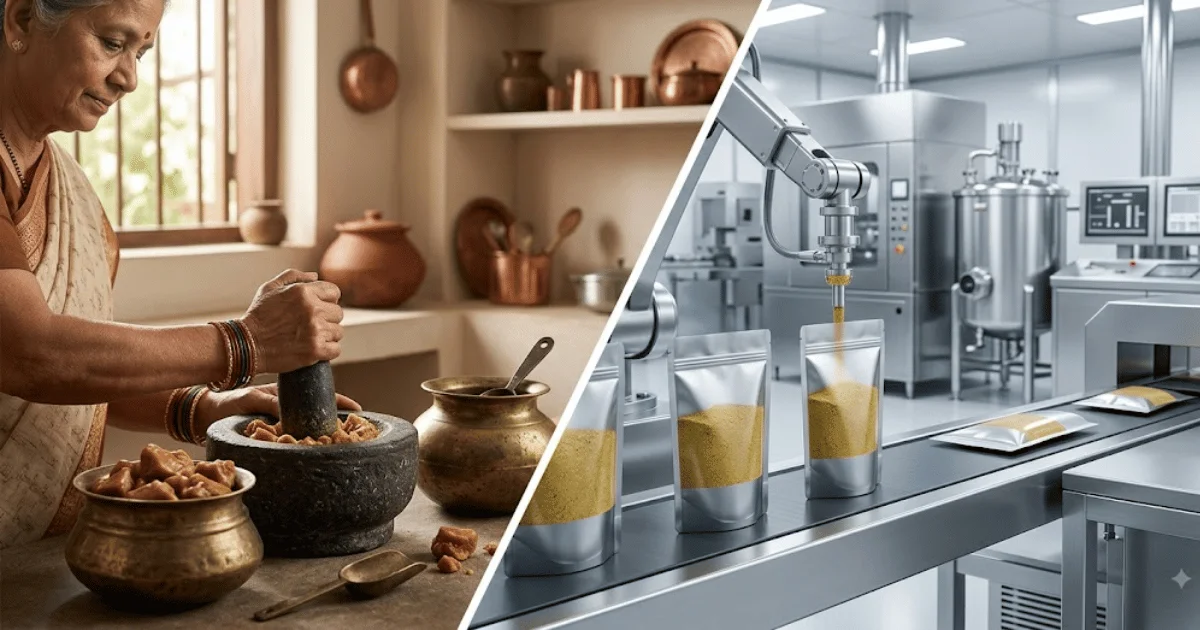
Changing Hing Consumption Patterns: From Traditional Kitchens to Modern Food Products
Changing Hing Consumption Patterns are reshaping how Asafoetida is purchased, distributed, formulated, and consumed across the modern food industry. Hing has traditionally been associated with household cooking, particularly in Indian kitchens where it is used in dals, vegetables, curries, snacks, and regional recipes. However, its role has expanded significantly as food consumption habits and manufacturing practices continue to evolve.
Today, Hing is no longer limited to traditional household kitchens. It is increasingly used in packaged spice products, seasoning systems, snacks, convenience foods, ready-to-cook meals, restaurants, foodservice operations, and commercial food manufacturing. This expansion reflects changing consumer lifestyles and the growing demand for convenient food products that still deliver familiar flavors.
For Hing manufacturers and suppliers, understanding these changing consumption patterns is important because future demand will increasingly come from both traditional consumers and modern food businesses.
What Are Changing Hing Consumption Patterns?
Changing Hing consumption patterns describe how the use of Asafoetida is expanding across different consumer groups, food businesses, product categories, and purchasing channels.
Traditional consumption was primarily centered around household cooking. Consumers purchased Hing in relatively small quantities and used it directly during meal preparation.
Modern consumption is much broader. Consumers may now encounter Hing through packaged foods, restaurant meals, ready-to-cook products, snack seasonings, instant foods, and commercially manufactured products without purchasing Hing separately.
This does not mean traditional consumption is disappearing. Instead, Hing is reaching consumers through a growing number of food applications.
From Traditional Kitchens to Modern Food Markets
Traditional Indian kitchens remain an important part of Hing demand. Many households continue to use Asafoetida as a flavor-enhancing ingredient in everyday cooking.
However, the modern food market has introduced additional ways for consumers to experience Hing. A person may consume Hing through a packaged snack, seasoning blend, instant meal, restaurant dish, or ready-to-cook product without adding the ingredient themselves.
This represents an important change in consumption behavior. Hing is increasingly becoming part of finished food products rather than remaining only a pantry ingredient.
Household Consumption Remains Important
Household cooking continues to support demand for Hing. Consumers use it in small quantities because of its distinctive aroma and flavor characteristics.
Common household applications include:
- Dal and lentil preparations
- Vegetable dishes
- Curries
- Khichdi
- Traditional snacks
- Regional recipes
- Spice blends
- Tempering and tadka
However, household consumption represents only one part of the wider Hing market. The expansion of packaged and processed food categories is creating additional demand from commercial buyers.
Growth of Packaged Hing Products
One of the clearest changes in Hing consumption is the increasing importance of packaged products. Consumers increasingly look for convenient, hygienic, easy-to-store ingredients with consistent quality.
Packaged Hing can be supplied in several forms, including powder, compound Hing, granules, and other application-specific formats.
Packaging helps protect the product during storage and transportation while also providing manufacturers with opportunities to communicate quality, product specifications, and brand identity.
For retailers and consumers, convenient packaging also makes Hing easier to store, measure, and use.
Changing Hing Consumption Patterns in Restaurants
Restaurants are another important channel influencing Hing demand. Professional kitchens often purchase ingredients in larger quantities and require predictable flavor performance.
Hing is used across numerous restaurant applications, particularly in vegetarian dishes, lentil preparations, regional cuisines, traditional recipes, and seasoning blends.
As restaurants, catering businesses, cloud kitchens, and foodservice operations expand, their demand for standardized ingredients can also increase.
This creates an important B2B opportunity for Hing suppliers capable of delivering consistent products in suitable commercial quantities.
Hing Consumption in Foodservice Operations
Foodservice businesses have different ingredient requirements from household consumers. They need reliable supply, consistent quality, convenient packaging, and predictable performance across repeated production cycles.
A restaurant or commercial kitchen may use Hing every day as part of standardized recipes. This makes batch consistency particularly important.
When a food business prepares the same dish repeatedly, changes in ingredient intensity can affect the final taste. Reliable Hing supply can therefore support consistency across foodservice operations.
Rise of Hing in Convenience Foods
Convenience foods are an important contributor to changing Hing consumption patterns. Modern consumers increasingly want products that reduce preparation time while still delivering familiar and satisfying flavors.
Hing can be incorporated into:
- Ready-to-cook meals
- Instant food mixes
- Soup mixes
- Packaged curries
- Instant lentil products
- Rice-based products
- Frozen food formulations
- Meal seasoning systems
In these applications, consumers may not consciously purchase Hing as a separate ingredient. Instead, they consume it as part of the finished product.
This shift from direct consumption to ingredient-based consumption creates new opportunities for food manufacturers and ingredient suppliers.
Changing Hing Consumption Patterns in Snack Products
The snack industry is another area where Hing has gained commercial relevance. Manufacturers use seasoning systems to create distinctive flavors for savory snacks, namkeen, chips, roasted products, and other categories.
Hing can contribute aromatic and savory characteristics within these formulations.
As snack brands compete for consumer attention, traditional ingredients can help create distinctive flavor concepts inspired by regional Indian cuisine.
This creates demand for Hing beyond conventional household applications.
Shift Toward Commercial Seasoning Systems
Modern seasoning systems have changed how many food manufacturers use individual ingredients. Instead of adding spices separately during every production cycle, companies can create standardized blends designed to deliver consistent flavor.
Hing can become one component within these commercial seasoning systems.
Manufacturers therefore look for ingredients that are:
- Consistent from batch to batch
- Suitable for large-scale production
- Easy to handle
- Compatible with other spices
- Available in suitable formats
- Supported by appropriate documentation
This represents a transition from selling Hing primarily as a consumer spice to supplying it as a commercial food ingredient.
Impact of Changing Consumer Lifestyles
Consumer lifestyles are one of the major forces behind changing Hing consumption patterns. Urbanization, busy schedules, smaller cooking windows, and increasing demand for convenience are influencing how people prepare and consume food.
Consumers may still prefer traditional flavors, but they increasingly want those flavors in products that require less preparation.
This creates an important opportunity for Hing. Manufacturers can use traditional ingredients to preserve familiar flavor characteristics within modern food formats.
In this way, convenience does not necessarily replace tradition. Instead, traditional ingredients can become part of new food experiences.
Growing Demand for Regional Flavors
Interest in regional and authentic flavors is another factor influencing Hing consumption. Food brands are increasingly developing products inspired by different Indian cuisines and culinary traditions.
Hing is relevant to this trend because it is associated with numerous traditional preparations across different regions.
Manufacturers can incorporate Asafoetida into regional seasoning systems to develop products with distinctive culinary identities.
This can introduce Hing to consumers who may not traditionally purchase it as a standalone ingredient.
Changing Hing Consumption Patterns and Food Manufacturing
Large-scale food manufacturing is one of the most important developments in modern Hing consumption.
Food manufacturers can purchase Hing in commercial quantities and incorporate it into multiple product lines. This creates demand for industrial formats, consistent specifications, reliable documentation, and dependable supply.
Manufacturers may evaluate Hing based on aroma, flavor intensity, batch consistency, composition, packaging, and application performance.
As processed food production expands, ingredient suppliers that can meet these requirements can serve a much broader B2B market.
Importance of Different Hing Product Formats
Changing consumption patterns are also influencing the formats in which Hing is supplied.
Different customer segments have different requirements. A household consumer may prefer a convenient retail pack, while a restaurant may require a larger commercial pack. A food manufacturer may require bulk quantities or a specific format suited to its production process.
Common commercial formats include:
- Hing powder
- Compound Hing
- Hing granules
- Hing paste
- Bulk industrial packs
- Customized formulations
Multiple formats allow suppliers to serve different sections of the expanding Hing market.
Role of Quality and Consistency
As Hing moves into more commercial applications, quality consistency becomes increasingly important.
A household consumer can adjust the amount of Hing according to personal preference. A food manufacturer, however, may have a fixed formulation that must be reproduced across thousands of production batches.
Commercial Hing demand therefore places greater emphasis on:
- Batch uniformity
- Consistent aroma
- Predictable flavor intensity
- Reliable raw materials
- Quality control
- Traceability
- Stable supply
This difference between household and industrial consumption is important for modern Hing suppliers.
Growth of Private Label and Food Brands
The growth of private-label food brands and specialized spice companies is also influencing Hing demand. Emerging brands can now develop packaged food products for specific consumer groups and regional markets.
These businesses often require suppliers that can provide consistent ingredients, suitable packaging, flexible quantities, and reliable delivery.
This creates opportunities for established Hing manufacturers to serve both large food companies and growing specialty brands.
Global Expansion of Hing Consumption
Hing consumption is no longer restricted to Indian households and traditional domestic markets. International interest in Indian cuisine and regional flavors has created opportunities for Asafoetida in overseas markets.
Restaurants serving Indian cuisine, international food manufacturers, spice brands, specialty retailers, and exporters can all contribute to global demand.
As Indian-inspired food products become more widely available internationally, consumers who previously had little exposure to Hing may encounter it through finished products.
This represents another important shift from direct ingredient consumption toward broader food-industry usage.
What These Changes Mean for Hing Manufacturers
Changing consumption patterns are creating new requirements for Hing manufacturers. Supplying a basic ingredient may no longer be enough for every customer segment.
Commercial buyers increasingly look for consistency, documentation, packaging flexibility, reliable delivery, and product formats suited to their applications.
Manufacturers that understand these changing requirements can develop stronger relationships with food brands, distributors, restaurants, and industrial buyers.
The opportunity is therefore not simply to sell more Hing. It is to become a reliable ingredient partner across multiple food applications.
Future Outlook for Hing Consumption
The future of Hing consumption is likely to become increasingly diverse. Traditional household usage will remain important, but additional demand can come from packaged foods, foodservice, snack manufacturing, convenience products, seasoning systems, and international markets.
Consumers will continue to value familiar flavors while looking for easier ways to access them.
This creates a strong position for traditional ingredients that can successfully transition into modern food formats.
For Hing manufacturers, future growth will depend increasingly on serving both consumer and industrial demand with consistent, application-focused products.
Conclusion
Changing Hing Consumption Patterns show how a traditional ingredient can adapt to the evolving food industry without losing its culinary identity. Hing continues to be used in household kitchens, but its role now extends into restaurants, foodservice, packaged spices, snack products, convenience foods, seasoning systems, and large-scale food manufacturing.
This transition creates significant opportunities for ingredient manufacturers and suppliers. Businesses that focus on consistent quality, reliable supply, suitable product formats, and commercial application requirements can serve a much broader market.
For food manufacturers, distributors, wholesalers, exporters, and brands looking for dependable Asafoetida solutions, RB Industries provides Hing products designed for diverse food applications and commercial requirements.
Frequently Asked Questions
How are Hing consumption patterns changing?
Hing is expanding beyond traditional household cooking into restaurants, foodservice, packaged foods, snacks, convenience products, seasoning systems, and industrial food manufacturing. Consumers are increasingly experiencing Hing as part of finished food products rather than only using it directly in home cooking.
Why is Hing increasingly used in processed foods?
Food manufacturers use Hing to create distinctive flavor profiles and support authentic regional food concepts. It can be incorporated into seasoning systems, ready-to-cook products, snacks, soups, packaged meals, and other convenience food formulations.
Are changing Hing consumption patterns creating B2B opportunities?
Yes. Growing use in commercial food production creates opportunities for manufacturers, distributors, wholesalers, exporters, restaurants, and food brands that require consistent Hing supply in suitable commercial formats.
What Hing formats are used in modern food manufacturing?
Modern applications can use Hing powder, compound Hing, granules, paste, bulk industrial formats, and customized formulations depending on the product and manufacturing process.
Will traditional household Hing consumption decline?
Traditional household usage is likely to remain important because Hing continues to be part of many Indian culinary traditions. The more significant change is that consumption is expanding into additional channels such as packaged foods, restaurants, convenience products, and industrial food manufacturing.
