
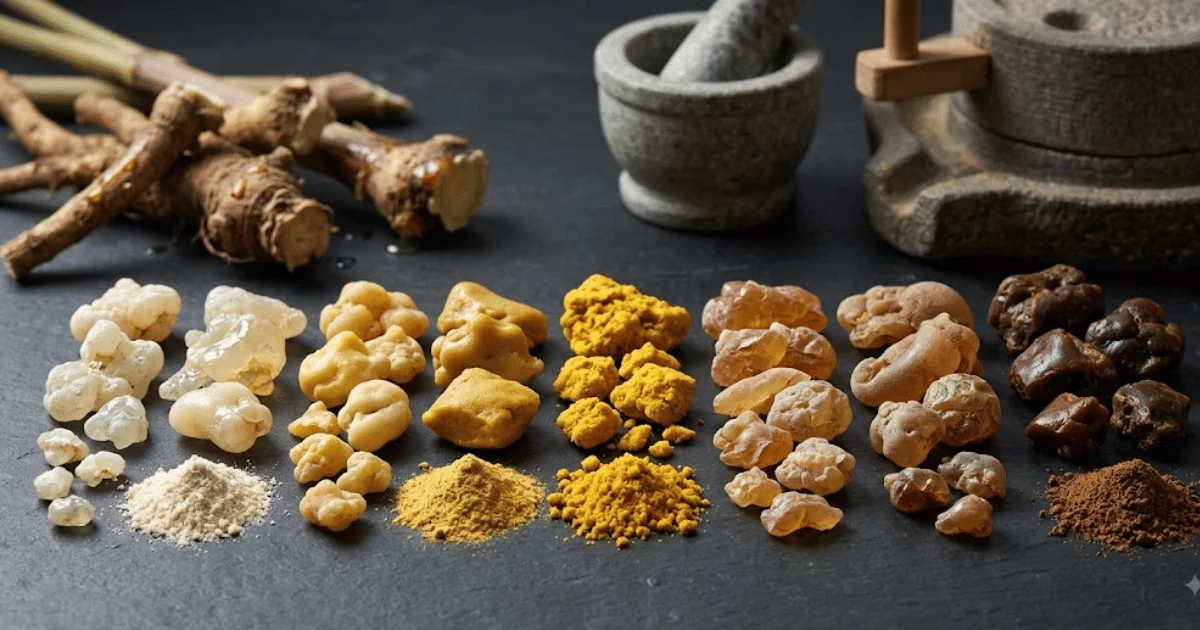
Color Variations in Hing are common across different Asafoetida products, but colour alone does not tell you whether a product is good, pure, strong, fresh, or suitable for a particular application. Hing can appear white, cream, yellow, light brown, brown, or darker depending on the raw material, product formulation, processing, carriers, physical form, and manufacturing specifications.
This can create confusion for buyers. One Hing powder may look pale while another appears yellow or brown. A natural Asafoetida resin may also look very different from a commercial Compound Hing product.
Understanding Color Variations in Hing is therefore useful for consumers, retailers, distributors, food manufacturers, procurement teams, and importers. The important point is to understand what colour may indicate—and what it cannot prove.
Why Does Hing Have Different Colours?
Hing is not necessarily one visually identical product.
Its appearance can vary because of several factors, including:
- Raw Asafoetida characteristics
- Product formulation
- Carrier ingredients
- Processing conditions
- Physical form
- Heat exposure
- Storage
- Manufacturing specifications
Therefore, seeing two Hing products with different colours does not automatically mean that one is genuine and the other is fake.
Does Hing Naturally Have One Fixed Colour?
No.
Asafoetida obtained from its natural resin form can have a different appearance from processed commercial Hing.
Commercial products can also vary because they may contain different formulations or be manufactured to different specifications.
This is why buyers should avoid using colour as the only quality criterion.
Common Color Variations in Hing
Depending on the product, Hing can appear in shades such as:
- White
- Cream
- Pale yellow
- Yellow
- Light brown
- Brown
- Dark brown
The exact appearance depends on the specific product and its manufacturing process.
White Hing: What Does It Mean?
White or very pale Hing is often associated with certain compounded formulations.
The appearance can be influenced by the carrier or other ingredients used in the formulation.
Therefore, white colour does not automatically prove that a Hing product is either superior or inferior.
Buyers should evaluate the complete ingredient declaration and product specification.
Yellow Hing: What Does It Mean?
Yellow Hing can result from the formulation, raw-material characteristics, processing, or other components of the finished product.
A yellow appearance by itself is not enough to determine quality.
If a manufacturer has defined a particular colour specification for the product, consistency with that approved specification is more useful than comparing the product against an unrelated Hing brand.
Light Brown Hing
Light-brown Hing can occur in different commercial forms.
The shade may reflect the natural material, formulation, processing conditions, or the combination of ingredients used in a compounded product.
Again, the correct question is not simply whether the Hing is light brown.
The better question is whether its appearance is consistent with the agreed product specification.
Dark Brown Hing
Darker Hing can also occur naturally or as a result of processing and formulation.
A darker shade should not automatically be interpreted as stronger, purer, older, or better.
The sensory and technical characteristics of the actual product need to be evaluated separately.
Does Darker Hing Mean Stronger Hing?
Not necessarily.
Colour and aroma intensity are different characteristics.
A darker product may not have a stronger aroma than a lighter product, and a pale product can still have a strong sensory impact.
Therefore, Color Variations in Hing should not be confused with variations in potency or aroma strength.
Does Lighter Hing Mean Better Quality?
No.
There is no universal rule that lighter Hing is better than darker Hing.
The colour of a finished product can be influenced by its formulation and processing.
Quality should instead be assessed using relevant product specifications, ingredient information, sensory characteristics, physical condition, and applicable quality testing.
Does Darker Hing Mean It Is Pure?
No.
Dark colour alone cannot establish purity.
A product’s composition, source, manufacturing controls, and relevant testing provide much stronger evidence of quality than appearance alone.
Raw Asafoetida Resin Can Look Different
Natural Asafoetida resin is visually different from many powdered commercial Hing products.
It can have a resinous, firm appearance with shades ranging from pale or yellowish tones to darker brown or amber-like shades depending on the material.
Its concentrated nature also means that it has very strong aroma characteristics.
Why Raw Resin and Compound Hing Look Different
Compound Hing is not simply raw resin that has been ground into a powder.
It is a formulated product in which Asafoetida resin can be combined with permitted carriers or other ingredients according to the product specification.
Those components can significantly influence the appearance of the finished product.
This is one of the most important reasons for Color Variations in Hing.
How Carriers Can Affect Hing Colour
Compounded Hing may contain carriers that add volume and improve handling.
Depending on the formulation, these materials can influence the final appearance.
For example, a formulation based on a pale carrier may look different from one using a naturally darker or differently processed material.
Therefore, colour should always be interpreted in the context of the complete formulation.
Why Compound Hing Can Look Different From Brand to Brand
Two manufacturers can produce Compound Hing with different formulations and specifications.
As a result, their products may not look exactly the same.
This does not automatically mean that one manufacturer is using an inferior product.
The correct comparison should consider composition, aroma, physical characteristics, performance, documentation, and agreed specifications.
Colour and Processing
Processing conditions can influence the appearance of food ingredients.
Temperature exposure, blending, grinding, formulation, and other manufacturing steps can affect the visual characteristics of a finished product.
For this reason, colour should be considered alongside the actual manufacturing process.
Can Heat Change Hing Colour?
Heating during cooking can change the appearance and sensory characteristics of many ingredients.
Hing is normally added in very small quantities, so visual changes during cooking are not usually the main way quality is evaluated.
More important is how the ingredient releases its characteristic aroma and integrates into the food.
Colour Versus Aroma in Hing Evaluation
For Hing, aroma is often a more meaningful sensory characteristic than colour.
The ingredient is valued primarily for its distinctive aromatic contribution.
A buyer evaluating Hing should therefore consider whether the product provides the expected clean aroma and performance in the intended application.
Why Aroma Should Not Be Judged Alone
A very strong smell does not automatically mean better quality.
A product can have an intense aroma but still be unsuitable for a particular formulation if it is too harsh or difficult to dose.
The ideal product depends on the intended application and target sensory profile.
Colour and Hing Freshness
Colour can sometimes provide useful visual information, but it is not a reliable standalone freshness test.
Hing can change during storage because exposure to air, moisture, heat, or poor packaging can affect its physical and sensory properties.
Freshness should therefore be evaluated through multiple indicators rather than colour alone.
What Happens When Hing Is Stored Poorly?
Poor storage can contribute to:
- Clumping
- Moisture absorption
- Loss of aroma
- Changes in texture
- Off-notes
- Packaging problems
These changes may be more meaningful than a simple difference in shade.
Does Colour Change Mean Hing Has Expired?
Not automatically.
A change in colour by itself does not establish that a product has expired.
Manufacturers and consumers should follow the product’s stated shelf-life and storage requirements and evaluate the product against its relevant specifications.
Loss of expected aroma, moisture-related problems, damaged packaging, or other quality changes can be more useful warning signs.
Colour Variation Between Hing Batches
Some variation can occur between natural raw materials and production batches.
However, commercial manufacturers generally aim to control appearance within an agreed range.
For B2B buyers, the key question is whether the batch remains within the approved specification.
Why Batch Consistency Matters
Food manufacturers often use Hing as part of a standardized formulation.
If the ingredient changes significantly between batches, the final food product may also change.
Consistency therefore matters more than achieving an arbitrary colour.
Colour as a Procurement Specification
Commercial buyers can include appearance or colour requirements in their ingredient specifications.
For example, a buyer may define an acceptable colour range or require the product to match an approved reference sample.
This provides a practical way to manage appearance consistency.
Why “As Approved Sample” Can Be Useful
Colour can be difficult to describe precisely using words such as “yellow” or “brown.”
For commercial purchasing, an approved physical reference sample can provide a more practical benchmark.
The supplier and buyer can compare future batches against the agreed reference.
Colour in Hing Specification Sheets
A professional Hing specification sheet can include appearance requirements.
Other relevant fields may include:
- Product identity
- Composition
- Resin content where applicable
- Physical form
- Particle size
- Colour
- Aroma profile
- Moisture-related parameters
- Microbiological requirements
- Packaging
The exact requirements depend on the product and intended use.
Why Colour Is Important for Retail Buyers
Retail consumers often judge products visually before opening the package.
A consistent appearance can support brand recognition.
However, retailers should avoid making unsupported claims that a particular colour proves purity or superior quality.
Product quality should be supported by the actual specification and manufacturing controls.
Why Colour Is Important for Food Manufacturers
For food manufacturers, colour may be less important than functional performance.
A manufacturer may prioritize:
- Aroma intensity
- Flavor contribution
- Dosage
- Mixing behavior
- Particle size
- Flow
- Consistency
Appearance still matters, but it is one part of a much larger evaluation.
Colour in Hing Powder
Hing Powder can show different shades depending on its formulation and manufacturing specification.
Because it is a finely processed product, the colour may appear more visually uniform than raw resin.
However, the exact shade should be assessed against the manufacturer’s specification.
Colour in Hing Granules
Hing Granules may display slightly different visual characteristics because of their physical structure.
The granulation process and formulation can influence the appearance of the finished product.
Again, colour should be evaluated together with granule size, flow, aroma, and application performance.
Colour in Compound Hing
Compound Hing can show significant colour variation across different formulations.
This is because the finished product can contain a combination of Asafoetida resin and other ingredients used to create the desired physical and commercial characteristics.
Therefore, comparing Compound Hing only by colour can produce misleading conclusions.
Can Colour Indicate the Amount of Asafoetida Resin?
Not reliably.
A darker colour does not automatically mean a higher resin percentage.
Similarly, a lighter colour does not automatically indicate a lower resin percentage.
If resin content is commercially important, buyers should rely on the declared specification and appropriate documentation rather than visual assumptions.
Colour Does Not Equal Potency
Potency and appearance are separate characteristics.
The strength of the aroma and flavor contribution depends on the actual product composition and characteristics.
A food manufacturer should therefore conduct application testing when selecting Hing for a specific formulation.
Colour Does Not Equal Purity
Purity cannot be established simply by looking at the colour of Hing.
Visual inspection can identify obvious issues such as foreign material, unusual physical changes, or severe inconsistency, but it cannot replace appropriate quality controls.
This distinction is especially important for commercial buyers.
Colour Does Not Equal Authenticity
A product’s authenticity depends on its actual composition, source, manufacturing process, and relevant documentation.
Two authentic products can have different appearances because their formulations or processing specifications differ.
Therefore, buyers should avoid simplistic colour-based authenticity tests.
How Consumers Should Evaluate Hing
Consumers can use a broader checklist when purchasing Hing.
Consider:
- Ingredient information
- Product type
- Aroma
- Texture
- Packaging
- Storage instructions
- Brand transparency
- Batch information
Colour can be observed, but it should not be the only deciding factor.
How B2B Buyers Should Evaluate Hing
Commercial buyers should use a more structured approach.
They can evaluate:
- Approved sample
- Product specification
- Composition
- Resin content where applicable
- Colour range
- Aroma profile
- Particle characteristics
- Batch consistency
- Certificate of Analysis where applicable
- Packaging
This approach provides stronger evidence than visual comparison alone.
Colour and Sensory Evaluation
Sensory evaluation should consider more than appearance.
A practical Hing evaluation can include:
- Visual inspection
- Aroma assessment
- Texture assessment
- Cooking or application trial
- Flavor evaluation
- Comparison with an approved reference
This gives buyers a more complete understanding of product performance.
Why Application Testing Is More Useful Than Colour Testing
A food manufacturer ultimately cares about how Hing performs in the finished product.
If two Hing samples look different but produce the same required sensory result and meet the agreed specification, colour alone may not be commercially significant.
Conversely, two samples that look almost identical may perform differently in the final formulation.
This is why application testing matters.
Colour and the Hing Supply Chain
Natural raw-material variation can move through the supply chain.
Raw-material sourcing, processing, blending, packaging, and storage can all influence the finished product.
Strong manufacturing controls help manage this variation and maintain an agreed product profile.
Why Suppliers Should Define Appearance Clearly
Vague terms such as “premium colour” are not useful technical specifications.
A professional supplier should define appearance in a way that allows the buyer to understand what is expected.
This may involve a colour description, acceptable range, or approved reference sample.
Why Buyers Should Avoid Colour-Based Price Comparisons
A cheaper Hing product may look similar to a more expensive product but perform differently.
Conversely, a higher-priced product is not automatically better simply because it has a particular colour.
Commercial comparisons should consider cost-in-use, formulation, performance, consistency, packaging, and supply reliability.
Colour and Cost-in-Use
The actual value of Hing depends on how effectively it performs in the intended application.
If a product delivers the desired aroma at a lower inclusion level, its cost-in-use may be competitive even if the price per kilogram is higher.
Colour has little to do with this calculation.
Common Myths About Hing Colour
Myth 1: Dark Hing Is Always Stronger
This is not a reliable rule. Colour and aroma strength are separate characteristics.
Myth 2: White Hing Is Always Fake
This is also incorrect. Commercial compounded formulations can have pale appearances depending on their composition.
Myth 3: Yellow Hing Is Always Pure
Colour cannot establish purity. Product composition and appropriate quality controls provide stronger evidence.
Myth 4: Brown Hing Is Always Old
Brown can be a normal appearance for some Hing products. Age should be evaluated using shelf-life, storage history, aroma, physical condition, and relevant specifications.
Myth 5: Colour Determines Quality
Colour is only one visual characteristic. Quality involves composition, sensory performance, physical characteristics, safety, consistency, packaging, and other specifications.
How Manufacturers Can Control Hing Appearance
Commercial manufacturers can establish appearance controls through:
- Raw-material specifications
- Controlled formulations
- Standardized processing
- Batch comparison
- Reference samples
- Finished-product inspection
- Documented quality procedures
These controls help reduce unnecessary variation.
Why Approved Samples Matter
An approved sample provides a physical reference for future production.
Instead of debating whether a batch is “yellow enough” or “too brown,” the buyer and supplier can compare the batch with an agreed reference.
This is particularly useful for long-term B2B supply contracts.
Colour Requirements for Export Buyers
International buyers may specify appearance as part of their procurement requirements.
Export shipments should therefore follow the agreed product specification and reference sample.
This helps avoid disputes caused by subjective visual expectations.
Colour and International Hing Packaging
Packaging can protect the product from environmental exposure during transportation and storage.
For aromatic ingredients such as Hing, appropriate packaging also helps manage aroma retention and odor control.
Packaging should therefore be evaluated alongside appearance and sensory performance.
What Should Matter Most When Buying Hing?
A practical priority order is:
- Correct product identity
- Suitable composition
- Consistent sensory performance
- Appropriate physical characteristics
- Quality and safety documentation
- Reliable packaging
- Batch consistency
- Commercial supply capability
Colour remains useful, but it should sit within this broader evaluation.
Why Colour Variation Can Actually Be Useful Information
Although colour should not be overinterpreted, unexpected changes can still be worth investigating.
If a normally consistent product suddenly shows a significant visual difference, the manufacturer or buyer may want to check whether there has been a change in raw material, formulation, processing, or storage.
In this sense, colour can function as an early observation point rather than a final quality verdict.
Colour as Part of Quality Control
Quality teams can record appearance during incoming inspection.
If the product falls outside the agreed appearance specification, additional evaluation can determine whether the difference has any effect on composition or performance.
This approach is more reliable than rejecting or accepting a product based solely on colour.
Hing Colour and Product Development
R&D teams may also consider colour when developing food products.
In some applications, the visual appearance of the seasoning can influence the final product.
However, the importance of colour depends on the formulation.
For many Hing applications, aroma and flavor contribution remain more important than the colour of the ingredient itself.
Hing Colour in Seasoning Blends
When Hing is mixed with other spices, its individual colour may become less visually obvious.
The final appearance of the seasoning depends on all the components in the blend.
This is another reason why Hing should be evaluated according to its functional role rather than colour alone.
Hing Colour in Food Manufacturing
Food manufacturers generally need repeatable performance across large production batches.
If Hing is being used at a low inclusion level, the final food may show little visible colour contribution from the ingredient.
In these cases, aroma, flavor, dosing, and consistency are usually more relevant than the original colour of the Hing.
How RB Industries Approaches Hing Quality
RB Industries manufactures and supplies Asafoetida, Compound Hing, Hing Powder, and Hing Granules for retail, wholesale, food manufacturing, restaurants, distributors, exporters, and FMCG applications.
For commercial buyers, Hing should be evaluated according to the specific product specification rather than a generic expectation about colour. Appearance, aroma, physical characteristics, formulation, packaging, consistency, and application performance all contribute to the overall evaluation.
Businesses purchasing Hing in bulk can define their required product format, specifications, packaging, order quantity, and approved reference sample to create clearer expectations for ongoing supply.
Conclusion
Color Variations in Hing are normal across different Asafoetida products and can result from raw-material characteristics, formulation, carriers, processing, physical form, and manufacturing specifications. White, yellow, light-brown, and dark-brown Hing should not automatically be classified as better or worse based only on appearance.
Colour can provide useful information during visual inspection, especially when a batch differs unexpectedly from an approved reference. However, it cannot establish purity, potency, authenticity, or overall quality by itself.
For consumers, aroma, ingredient information, texture, packaging, freshness, and trustworthy sourcing provide a more complete evaluation. For food manufacturers and bulk buyers, the strongest approach is to use a defined specification, approved reference sample, sensory testing, appropriate quality documentation, and application trials.
RB Industries supplies Asafoetida, Compound Hing, Hing Powder, and Hing Granules for commercial food applications. Buyers can discuss their required product format, specifications, packaging, and bulk supply needs to identify a Hing product suitable for their application.
Frequently Asked Questions
Why are there different Color Variations in Hing?
Color Variations in Hing can result from natural raw-material characteristics, formulation, carriers, processing conditions, physical form, and manufacturing specifications. Different Hing products do not necessarily have to look identical.
Which colour of Hing is best?
There is no universal colour that is automatically the best. White, yellow, light-brown, and dark-brown Hing can all occur depending on the product, so quality should be evaluated using composition, aroma, physical characteristics, specifications, and application performance.
Does dark Hing mean it is stronger?
No. Colour and aroma strength are separate characteristics. A darker Hing product is not automatically more concentrated or stronger than a lighter product.
Does white Hing mean it is fake?
No. Some Compound Hing formulations can have a pale or white appearance because of their composition and carrier ingredients. Colour alone cannot establish authenticity or purity.
Can Hing colour change during storage?
Storage conditions can affect the physical and sensory characteristics of Hing, particularly when the product is exposed to moisture, air, heat, or unsuitable packaging. An unexpected colour change should be considered together with aroma, texture, packaging condition, shelf life, and the product specification.