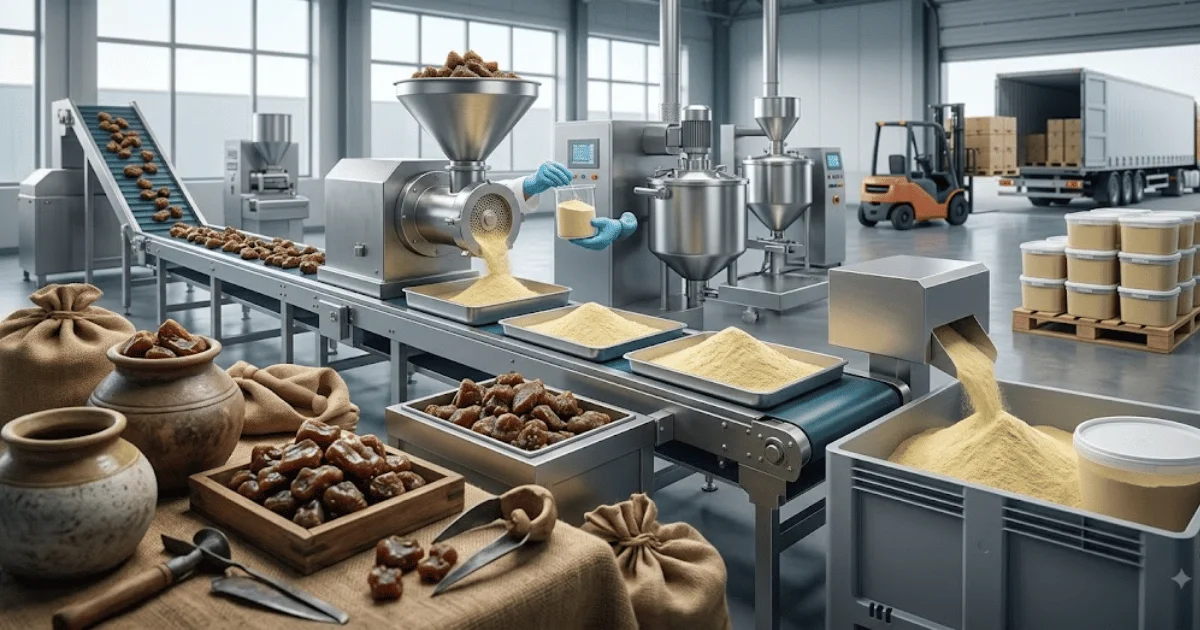
Indian Hing Supply Chain plays an important role in making Asafoetida available to food manufacturers, restaurants, spice companies, distributors, retailers, wholesalers, and exporters around the world. Although Hing is commonly viewed as a simple kitchen spice, the commercial journey behind a finished Hing product can involve several stages, from raw resin sourcing and processing to compounding, quality control, packaging, warehousing, and distribution.
India has developed significant expertise in processing and manufacturing commercial Asafoetida products. Raw Hing resin is sourced from producing regions and then transformed into practical formats such as Compound Hing, Hing Powder, and Hing Granules for different customer requirements.
Understanding the Indian Hing Supply Chain helps buyers see why supplier selection involves more than comparing prices. Raw material quality, processing capability, batch consistency, documentation, packaging, and supply reliability can all influence the final product.
What Is the Indian Hing Supply Chain?
The Indian Hing Supply Chain refers to the network of activities and businesses involved in moving Asafoetida from raw material sourcing to finished products supplied to domestic and international customers.
A simplified commercial supply chain can include:
- Raw Asafoetida resin sourcing
- Raw material transportation
- Incoming quality inspection
- Processing and preparation
- Compounding or formulation
- Grinding or granulation
- Quality testing
- Packaging
- Warehousing
- Domestic distribution
- Export distribution
Each stage can affect the quality, consistency, cost, and availability of the final Hing product.
Where Does the Raw Material Come From?
Asafoetida resin comes from certain Ferula species that grow primarily in regions of Central and South Asia. India is a major processing and consumption hub, while significant raw resin supplies originate from countries such as Afghanistan and Iran.
India’s role in the commercial Hing industry is therefore strongly connected to its ability to process, formulate, package, and distribute Asafoetida products.
For manufacturers, the origin of raw resin is only one part of the sourcing decision. The quality of the incoming material and the controls used during processing are equally important.
Raw Resin Sourcing in the Indian Hing Supply Chain
Raw material sourcing is one of the most important stages in the Indian Hing Supply Chain.
Manufacturers need to work with reliable sourcing channels and evaluate incoming resin according to established specifications.
Raw material evaluation may consider:
- Appearance
- Aroma
- Physical condition
- Purity
- Moisture-related characteristics
- Resin characteristics
- Foreign material
- Batch identity
Consistent raw material quality provides a stronger foundation for downstream processing.
Why Raw Material Quality Matters
Natural raw materials can vary because of geographic origin, harvesting conditions, storage, transportation, and other factors.
For Hing manufacturers, uncontrolled variation in raw resin can make it harder to maintain consistent finished products.
This is why raw material inspection forms an important part of commercial Hing manufacturing.
A supplier may offer an attractive price, but if the incoming resin varies significantly between lots, the manufacturer may face additional processing and quality challenges.
Processing Raw Asafoetida in India
After sourcing, raw Asafoetida undergoes processing to prepare it for commercial applications.
The exact process depends on the product specification and manufacturing requirements, but commercial processing can involve cleaning, preparation, grinding, formulation, blending, and other controlled operations.
The objective is to convert the raw material into a stable and practical ingredient that can be used by households, restaurants, seasoning companies, and food manufacturers.
Role of Compounding in the Indian Hing Supply Chain
Compounding is an important part of the commercial Hing industry because concentrated resin is not always convenient for routine food production.
Compound Hing is formulated to provide a more manageable product that can be measured, blended, packaged, transported, and used more efficiently.
Depending on the product specification, appropriate food-grade ingredients may be incorporated to create the desired physical and application characteristics.
This makes compounding particularly important for manufacturers supplying retail and industrial markets.
Production of Hing Powder
Hing Powder is one of the most widely used commercial formats because it can be incorporated into recipes, seasoning systems, spice blends, and food formulations.
The powdering process must be controlled carefully to achieve appropriate particle characteristics and uniformity.
For industrial customers, consistent powder characteristics can help improve blending and dosing during production.
This is another reason the Indian Hing Supply Chain depends on controlled processing rather than simply moving raw material from one location to another.
Production of Hing Granules
Hing Granules provide another practical format for specific commercial applications.
Granulated products can offer different handling and dosing characteristics compared with fine powders.
Food manufacturers and spice companies may select granules based on their processing systems, product requirements, and preferred ingredient format.
The ability to manufacture multiple formats allows Indian Hing suppliers to serve a wider range of B2B customers.
Quality Control Across the Indian Hing Supply Chain
Indian Hing Supply Chain performance depends heavily on quality control at multiple stages.
Quality should not be checked only after the finished product has been manufactured. It should be managed throughout sourcing, processing, packaging, and storage.
Quality systems may include:
- Raw material inspection
- Ingredient specifications
- Process controls
- Batch identification
- Laboratory testing where applicable
- Sensory evaluation
- Packaging checks
- Traceability
- Final inspection
This approach helps manufacturers identify potential problems earlier and maintain more predictable product quality.
Importance of Batch Consistency
Batch consistency is particularly important for commercial Hing buyers.
Food manufacturers often develop recipes using defined ingredient specifications. If the aroma, flavor intensity, physical characteristics, or composition of Hing changes substantially between batches, the finished product can also change.
Consistent production helps manufacturers maintain standardized recipes and reduces the need for repeated formulation adjustments.
For large B2B buyers, consistency can therefore be just as important as the initial purchase price.
Packaging in the Indian Hing Supply Chain
Packaging protects the finished ingredient during storage, transportation, and distribution.
Hing is highly aromatic, so packaging must also help control aroma transfer and protect the product from environmental exposure.
Depending on the customer requirement, Hing may be packed in:
- Retail pouches
- Jars
- Bulk bags
- Industrial cartons
- Export-ready packs
- Private-label packaging
Packaging selection should consider product characteristics, pack size, transportation conditions, storage duration, and customer requirements.
Warehousing and Storage
Warehousing is another important stage in the Indian Hing Supply Chain.
Finished products need to be stored under appropriate conditions to maintain quality until they are dispatched.
Storage management can include:
- Controlled warehouse conditions
- Protection from excessive moisture
- Protection from excessive heat
- Proper stock rotation
- Batch segregation
- Packaging inspection
- Pest-control measures
Good warehouse management reduces unnecessary quality risks before products reach customers.
Domestic Distribution of Indian Hing
India has a large domestic market for Hing, supported by households, restaurants, spice retailers, foodservice businesses, wholesalers, distributors, and food manufacturers.
Finished Hing products can move through multiple channels before reaching the final customer.
These channels can include:
- Direct manufacturer sales
- Distributors
- Wholesalers
- Retailers
- Foodservice suppliers
- FMCG brands
- Online commerce
The right distribution model depends on product type, customer segment, order volume, and geographic requirements.
Export Distribution of Indian Hing
India’s processing capabilities also allow Hing products to enter international markets.
Export supply chains require additional attention to documentation, packaging, labelling, logistics, buyer specifications, and destination-market requirements.
International buyers may include:
- Food manufacturers
- Spice companies
- Importers
- Distributors
- Restaurant groups
- Retail brands
- Private-label companies
For these buyers, supply reliability and documentation can be as important as product quality.
Why India Is Important to the Commercial Hing Industry
India combines a large domestic Hing market with extensive spice-processing expertise and established food manufacturing infrastructure.
This creates an environment where Asafoetida can be processed into multiple commercial formats and supplied to different customer segments.
Indian manufacturers can therefore serve both traditional culinary applications and modern food manufacturing requirements.
This dual role strengthens India’s position within the international Hing supply chain.
Role of Manufacturers in the Supply Chain
Manufacturers sit at the center of the commercial Hing supply chain because they connect raw material sourcing with finished product demand.
A capable manufacturer must coordinate sourcing, production, quality management, packaging, inventory, and customer requirements.
For B2B customers, working directly with a manufacturer can also provide advantages such as:
- Better product consistency
- Bulk supply capability
- Custom specifications
- Private-label options
- Technical documentation
- Direct quality communication
This can simplify sourcing for businesses that require regular Hing supplies.
Role of Distributors and Wholesalers
Distributors and wholesalers help connect manufacturers with smaller businesses and regional markets.
They may purchase Hing in bulk and supply it to retailers, restaurants, foodservice businesses, or other commercial customers.
Their role becomes particularly important in markets where direct manufacturer distribution is not practical.
Reliable distributors also help maintain product availability and shorten the distance between manufacturing facilities and end customers.
Private Label in the Indian Hing Supply Chain
Private-label manufacturing has become another important commercial channel.
Retailers, e-commerce companies, food brands, and distributors can work with manufacturers to develop Hing products under their own brand names.
The manufacturer can manage product preparation and packaging according to agreed specifications, while the customer develops its own market identity.
This model creates opportunities for businesses that want to enter the Hing category without building their own manufacturing facility.
Documentation and Traceability
Documentation is an important part of professional ingredient supply.
B2B buyers may require product specifications, batch information, certificates, invoices, packing details, and other documentation depending on the application and market.
Traceability also helps businesses identify the source and movement of a specific batch.
A well-managed documentation system supports both quality management and commercial transparency.
How Buyers Should Evaluate the Indian Hing Supply Chain
Businesses sourcing Hing from India should evaluate the supplier’s entire operating system rather than looking only at the product sample.
Important questions include:
- Where is the raw material sourced?
- How are incoming materials inspected?
- How is the product processed?
- How are batches controlled?
- What packaging options are available?
- How is inventory stored?
- What documentation is provided?
- Can the supplier handle recurring bulk orders?
- Can the supplier support custom requirements?
These questions help buyers assess whether a supplier can support a long-term commercial relationship.
Supply Chain Risks in Hing Procurement
Like other natural food ingredients, Hing supply can face risks related to raw material availability, price fluctuations, transportation, quality variation, and changing market conditions.
Manufacturers can reduce these risks through responsible sourcing, supplier relationships, inventory planning, quality controls, and clear purchasing specifications.
B2B buyers can also reduce supply risk by working with suppliers that have established manufacturing and distribution capabilities.
How a Strong Supply Chain Benefits Food Manufacturers
A dependable Indian Hing Supply Chain can provide several advantages to food manufacturers.
- More reliable ingredient availability
- Consistent product specifications
- Better production planning
- Reduced formulation variability
- Flexible packaging options
- Bulk purchasing capability
- Improved traceability
- Stronger supplier relationships
These benefits can become increasingly important as production volumes increase.
Indian Hing Supply Chain and Future Food Demand
Demand for traditional ingredients continues to expand into modern food applications. Hing is being used not only in household recipes but also in seasoning systems, snacks, convenience foods, ready-to-cook products, spice blends, and commercial food formulations.
This expansion places greater demands on the supply chain.
Manufacturers must be capable of supplying consistent ingredients while responding to different pack sizes, product specifications, documentation requirements, and customer needs.
Businesses that invest in reliable sourcing and quality systems will be better positioned to support this changing market.
Why Supply Chain Transparency Matters
Commercial buyers increasingly want to understand where their ingredients come from and how they are processed.
Supply chain transparency can improve buyer confidence and make it easier to evaluate quality risks.
For Hing, this can include information about raw material sourcing, manufacturing location, processing methods, product specifications, packaging, and batch traceability.
Transparent communication between suppliers and buyers can support stronger long-term relationships.
Conclusion
The Indian Hing Supply Chain extends far beyond the simple movement of a spice from manufacturer to customer. It involves raw resin sourcing, incoming inspection, processing, compounding, powdering or granulation, quality assurance, packaging, warehousing, distribution, and commercial delivery.
India’s established processing and food manufacturing capabilities allow Asafoetida to be transformed into practical products for households, restaurants, food manufacturers, distributors, wholesalers, retailers, and international buyers.
For commercial customers, understanding this supply chain makes supplier evaluation more effective. Product quality matters, but so do consistency, manufacturing capability, documentation, packaging, traceability, and supply reliability.
RB Industries manufactures and supplies Asafoetida, Compound Hing, Hing Powder, and Hing Granules for retail, wholesale, food manufacturing, distribution, and export markets. With a focus on consistent quality and dependable supply, RB Industries supports businesses seeking reliable Hing ingredients for commercial applications.
Frequently Asked Questions
What is the Indian Hing supply chain?
The Indian Hing Supply Chain covers the movement of Asafoetida from raw resin sourcing through processing, compounding, quality control, packaging, warehousing, and distribution to domestic and international buyers.
Where does India source raw Hing resin?
Significant raw Asafoetida resin supplies come from producing regions in Central and South Asia, including countries such as Afghanistan and Iran. Indian manufacturers then process the raw material into commercial Hing products.
Why is India important for Hing processing?
India has extensive spice-processing expertise, a large domestic market, established food manufacturing infrastructure, and a strong network of manufacturers and distributors. These factors support the production of different commercial Hing formats.
What products are made through the Indian Hing supply chain?
Commercial products can include raw or processed Hing, Compound Hing, Hing Powder, Hing Granules, and application-specific formulations. Product formats depend on customer requirements and intended use.
What should bulk buyers check when sourcing Hing from India?
Bulk buyers should evaluate raw material quality, manufacturing capability, batch consistency, product specifications, packaging, documentation, traceability, production capacity, and supply reliability before selecting a long-term supplier.