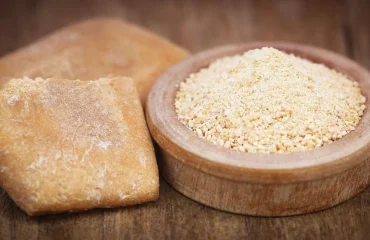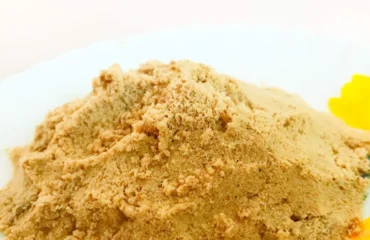

Why Compound Hing Dominates the Market is an important question for anyone involved in the Hing industry, from consumers and retailers to restaurants, seasoning companies, food manufacturers, distributors, and exporters. Although pure Asafoetida resin remains highly valued for its concentrated aroma and distinctive characteristics, Compound Hing has become the practical choice for a large part of the modern food market.
The reason is straightforward: commercial food production requires ingredients that are easier to handle, measure, transport, store, and use consistently. Compound Hing addresses many of these requirements while retaining the characteristic aroma and flavor associated with Asafoetida.
As food manufacturing becomes more standardized and consumers increasingly prefer convenient packaged products, the advantages of Compound Hing have helped establish it as a major format across multiple food applications.
What Is Compound Hing?
Compound Hing is a formulated form of Asafoetida made by combining Asafoetida resin with suitable food ingredients or carriers to create a more manageable product.
Raw Asafoetida resin is naturally very strong, sticky, and difficult to measure accurately in everyday applications. Compounding makes the ingredient easier to handle and allows manufacturers to develop products with controlled characteristics.
The exact formulation can vary depending on the product specification, intended application, and market requirements. Buyers should therefore always review the ingredient declaration and product specifications before selecting a Compound Hing product.
Why Compound Hing Dominates the Market
Why Compound Hing Dominates the Market becomes clearer when its practical advantages are compared with the requirements of modern food production.
Food businesses need ingredients that can deliver predictable results at scale. A restaurant preparing hundreds of servings, a seasoning company producing large batches, or a packaged food manufacturer running an automated production line cannot rely on difficult-to-measure raw materials.
Compound Hing provides a more convenient format for these applications.
Its popularity is driven by several important advantages:
- Consistent dosing
- Easy handling
- Better flow characteristics
- Convenient storage
- Efficient transportation
- Suitable commercial formats
- Repeatable flavor performance
- Compatibility with modern food production
Ease of Dosing Is a Major Advantage
One of the strongest reasons Why Compound Hing Dominates the Market is its easier dosing characteristics.
Pure resin is extremely concentrated and can be difficult to measure consistently. A small difference in quantity can significantly change the aroma and flavor of a preparation.
Compound Hing provides a more manageable format, allowing users to measure and distribute the ingredient more easily.
This is particularly valuable in commercial kitchens and food manufacturing environments where consistent recipes are essential.
Consistency Across Production Batches
Food manufacturers need ingredients that behave consistently from one production batch to another. Variations in ingredient intensity can affect the taste, aroma, and overall quality of finished products.
Compound Hing is designed to provide a standardized form that can be incorporated into repeatable formulations.
This consistency is particularly important for:
- Snack manufacturers
- Spice blend companies
- Ready-to-cook food manufacturers
- Instant food producers
- Restaurants and foodservice businesses
- Packaged food brands
For businesses producing standardized products, predictable ingredient performance is a major commercial advantage.
Why Compound Hing Dominates the Market in Food Manufacturing
Large-scale food manufacturing requires ingredients that can integrate efficiently into production systems.
Compound Hing can be supplied in suitable powder, granule, or other application-specific formats, allowing manufacturers to incorporate it into different formulations.
It can be used in dry seasoning systems, spice blends, snack coatings, instant mixes, convenience foods, and numerous other applications.
The ability to integrate an ingredient into standardized production processes is one of the strongest reasons Why Compound Hing Dominates the Market.
Commercial Applications of Compound Hing
Compound Hing is used across a broad range of food applications.
- Snack seasonings
- Namkeen and savory products
- Spice blends
- Ready-to-cook foods
- Instant food mixes
- Soup mixes
- Packaged meals
- Restaurant food preparation
- Foodservice operations
- Traditional Indian food products
This wide application range reduces dependence on a single market segment and supports continued commercial demand.
Compound Hing in Snack Manufacturing
Snack manufacturers require seasoning ingredients that can be distributed evenly across a product. Uneven seasoning can create differences in taste between individual pieces and affect consumer satisfaction.
Compound Hing can be incorporated into dry seasoning systems and blended with other spices to create consistent flavor profiles.
This makes it useful for namkeen, savory snacks, roasted products, flavored chips, extruded snacks, and other commercial food categories.
As snack manufacturers continue to develop regional and Indian-inspired flavor profiles, Compound Hing can support new product formulations.
Compound Hing in Restaurants and Foodservice
Commercial kitchens also benefit from ingredients that are easy to measure and reproduce.
Restaurants often need to maintain the same flavor profile across different shifts, chefs, locations, and production volumes. Ingredient consistency can make this process easier.
Compound Hing provides a practical solution for kitchens that need dependable flavor contribution without handling concentrated resin directly.
This makes it suitable for restaurants, catering businesses, cloud kitchens, institutional kitchens, and other foodservice operations.
Role of Compound Hing in Seasoning Systems
Seasoning systems are carefully designed combinations of spices and flavor ingredients. Each component must perform predictably so that the final blend remains consistent.
Compound Hing can contribute aroma and savory flavor while working alongside cumin, coriander, chili, turmeric, mustard, pepper, and other spices.
Its compatibility with dry seasoning systems makes it valuable for commercial formulation.
Manufacturers can evaluate the appropriate level of Compound Hing according to the target flavor profile and application.
Why Compound Hing Dominates the Market Through Better Handling
Handling is often overlooked when consumers compare different forms of Hing, but it becomes extremely important at commercial scale.
Raw resin can be sticky and highly concentrated, making storage, measuring, and processing more challenging.
Compound Hing is designed to be more manageable for routine use. Better flow and easier measurement can improve operational efficiency and reduce handling difficulties.
For food manufacturers working with large ingredient volumes, these practical benefits can have a significant impact on production workflows.
Storage and Transportation Advantages
Food ingredients must survive transportation, warehousing, and repeated handling before reaching the final user.
Compound Hing can be packaged in formats designed to support easier storage and distribution. Proper packaging remains essential because Hing is an aroma-sensitive ingredient and can be affected by moisture and environmental exposure.
For distributors and exporters, packaging and storage performance are therefore important parts of supplier evaluation.
Why Compound Hing Dominates the Retail Market
Retail consumers generally prefer ingredients that are convenient and easy to use. Most households do not need highly concentrated raw resin for everyday cooking.
Compound Hing offers a practical format that can be measured in small quantities and incorporated into common recipes.
Retail packaging can also provide clear ingredient information, usage guidance, storage instructions, and product specifications.
This combination of convenience and usability has helped Compound Hing become an important retail format.
Cost Efficiency and Commercial Use
Cost is another factor influencing the popularity of Compound Hing. Food businesses must consider not only the purchase price of an ingredient but also its handling, dosing, wastage, storage, and production efficiency.
A product that is easier to measure and use can help reduce unnecessary variation and simplify production workflows.
For commercial buyers, the right comparison is therefore not simply price per kilogram. It is the overall cost and performance of the ingredient within the intended application.
Compound Hing and Product Development
Modern food companies are continuously developing new products based on consumer preferences, regional flavors, and convenience trends.
Compound Hing provides flexibility for product developers because it can be incorporated into different seasoning and food formulations.
Manufacturers can test different levels and combinations to create flavor profiles suited to specific products.
This flexibility supports innovation across both traditional and modern food categories.
Quality Still Matters in Compound Hing
The popularity of Compound Hing does not mean every product offers the same quality.
Manufacturers and commercial buyers should evaluate the product carefully before selecting a supplier.
Important factors include:
- Quality of Asafoetida resin
- Product formulation
- Ingredient transparency
- Aroma consistency
- Flavor performance
- Batch uniformity
- Moisture control
- Packaging quality
- Supplier reliability
A well-formulated Compound Hing product should provide predictable performance for its intended application.
Compound Hing for Bulk Buyers
Bulk buyers have different requirements from retail consumers. They may purchase large quantities for manufacturing, distribution, foodservice, private labeling, or export.
These buyers often need consistent specifications, commercial packaging, documentation, dependable production capacity, and reliable delivery schedules.
For this reason, supplier selection is an important part of the purchasing process.
A manufacturer capable of supporting different pack sizes and application requirements can provide greater value to B2B customers.
Why Compound Hing Dominates the Market Globally
The growth of Indian cuisine and Indian-inspired food products has created opportunities for Hing in international markets.
International restaurants, food manufacturers, spice companies, and specialty retailers may require Hing in forms that are easy to handle and integrate into commercial products.
Compound Hing can meet many of these practical requirements, particularly when supplied with appropriate specifications and packaging.
This makes it relevant not only to the Indian domestic market but also to global food supply chains.
Pure Hing vs Compound Hing
Pure Hing and Compound Hing serve different purposes, so one should not automatically be considered better than the other.
Pure resin provides highly concentrated Asafoetida characteristics and can be suitable for specialized applications where precise dosing is possible.
Compound Hing is generally more practical for routine use, commercial production, and applications where controlled handling and consistent dosing are priorities.
The right choice depends on the product, formulation, production process, and customer requirements.
Future of Compound Hing in the Food Industry
The future demand for Compound Hing is closely connected to the continued growth of packaged foods, convenience products, snack manufacturing, seasoning systems, foodservice, and international food markets.
As manufacturers seek efficient ways to incorporate traditional flavors into modern products, practical ingredient formats will remain important.
Compound Hing is well positioned to serve this demand because it combines the distinctive characteristics of Asafoetida with greater usability for modern food applications.
What Food Manufacturers Should Look For
Food manufacturers considering Compound Hing should evaluate the product according to their specific application rather than choosing solely on price.
A practical evaluation can include:
- Product specification review
- Ingredient declaration review
- Aroma and flavor testing
- Application trials
- Batch consistency assessment
- Packaging evaluation
- Supplier capability assessment
- Documentation review
Testing the ingredient within the actual food formulation is particularly valuable because laboratory or standalone evaluation may not always predict final product performance.
Conclusion
Why Compound Hing Dominates the Market can ultimately be explained by practicality. Modern food businesses need ingredients that are consistent, manageable, scalable, and suitable for standardized production. Compound Hing meets many of these requirements while continuing to provide the distinctive flavor characteristics associated with Asafoetida.
Its applications now extend across household cooking, restaurants, foodservice, snacks, seasoning systems, convenience foods, packaged products, and large-scale food manufacturing. This broad application base gives Compound Hing a strong position within the modern Hing industry.
For food manufacturers, distributors, wholesalers, exporters, and retail brands, choosing the right Compound Hing supplier remains essential. Product quality, consistency, formulation transparency, packaging, and supply reliability should all be considered before making a purchasing decision.
RB Industries manufactures and supplies Compound Hing, Hing Powder, Hing Granules, and other Asafoetida solutions for retail, foodservice, food manufacturing, wholesale, distribution, and export requirements.
Frequently Asked Questions
Why does Compound Hing dominate the market?
Compound Hing offers easier dosing, better handling, consistent performance, and greater convenience than highly concentrated raw Asafoetida resin. These characteristics make it suitable for households, restaurants, foodservice businesses, and large-scale food manufacturing.
Is Compound Hing lower quality than pure Hing?
Not necessarily. Compound Hing and pure Hing serve different applications. Quality depends on the raw material, formulation, manufacturing standards, consistency, packaging, and supplier reliability rather than simply whether the product is compounded.
Why do food manufacturers prefer Compound Hing?
Food manufacturers often prefer Compound Hing because it is easier to measure, blend, store, and incorporate into standardized formulations. Consistent performance also helps manufacturers maintain the same flavor profile across production batches.
Can Compound Hing be used in seasoning blends?
Yes. Compound Hing can be incorporated into seasoning systems for snacks, namkeen, convenience foods, spice blends, instant products, and other food applications. The appropriate level depends on the formulation and desired flavor profile.
What should bulk buyers check before purchasing Compound Hing?
Bulk buyers should review product specifications, ingredient composition, aroma and flavor performance, batch consistency, packaging, documentation, production capacity, and supplier reliability. Application testing can also help confirm that the product meets the intended manufacturing requirements.